Human orientation
More focused on the pack and the trail than on the person, although it is attached to the owner.
THE PAW CATALOG
Origin: France
Bred in France at the end of the 19th century by crossing billy hounds with English foxhounds. In 1957, breeds of this type were officially given the name "Anglo-French". The word "gran" indicates working with large game, not just the size of the dogs. The breed is bred primarily for pack hunting.
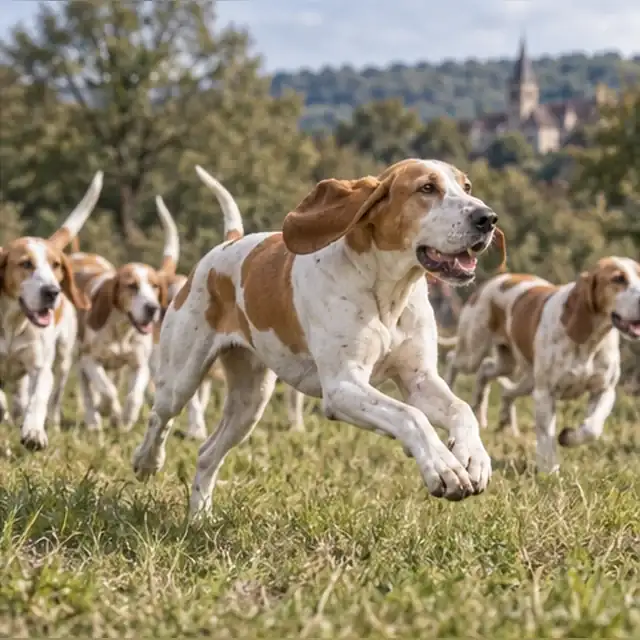
French white and red hound (grand Anglo-French blanc é orange) - a large (60-70 cm) strong hound with long legs, long hanging ears and white-orange color. Designed for hunting a pack of large animals: roe deer, wild boar, and fox. Hardy and loud, with a strong sense of smell. This is a working dog, and it is not usually chosen for a quiet city life.
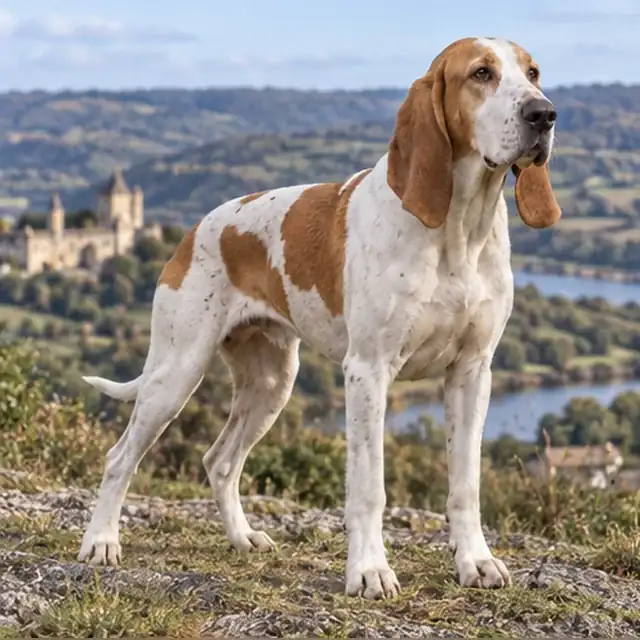
Suitable for hunters or people with a large area where the dog can move a lot. In the apartment and in the city, it is difficult to provide him with the necessary load. A loud voice will create problems for the neighbors.
Very high. He needs long daily runs or work in hunting. Boredom causes howling, flight and destruction.
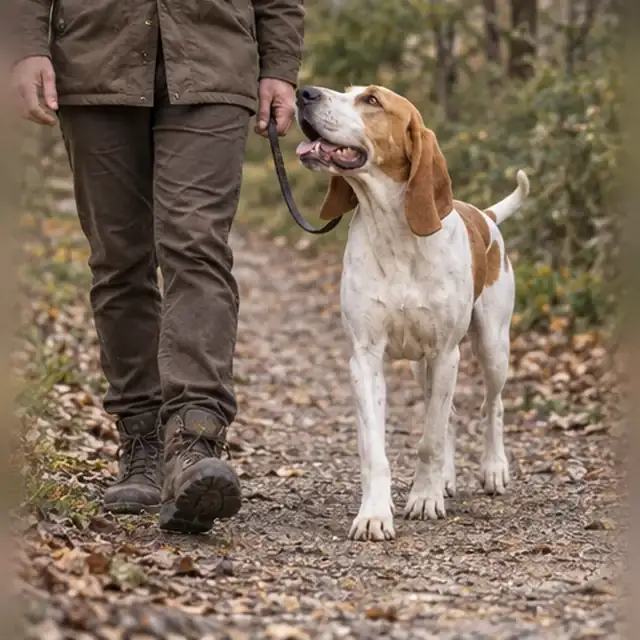
Independent and passionate about scents, can ignore commands when sniffing a trail. Patience, early recall practice and safe fencing are required. You can only safely let off-leash where it is safe to do so.
Short dense wool is combed once a week, more often during shedding. Long hanging ears are carefully cleaned so that there is no inflammation. After hunting, paws, skin and ears are inspected for damage and ticks.
Generally good-natured, but large and energetic, so may inadvertently push a child. Communication with children is controlled. A dog that grew up in a pack is not always used to everyday life and children's games.
Used to working in a pack and usually gets along well with other dogs. The hunting instinct is aimed at small animals, so cats and rodents are not trusted to him without supervision.
Estimates help compare breeds. For zooaggression, 5/5 means less tendency to aggression towards dogs. The behavior and health of a particular dog depend on many factors.
More focused on the pack and the trail than on the person, although it is attached to the owner.
Intelligent, but independent, the response in the presence of the smell is difficult.
Gets along well with dogs in a pack, and perceives small animals as prey.
There is no comparable survival estimate for the breed in the British cohort used. The absence of the mentioned risk does not prove the absence of hereditary diseases.
The short coat is easy, but the ears and paws need regular attention.
Breed screening: detailed data on hereditary diseases of the "French White and Red Hound" breed are scarce. Ask the breeder for documentary results of examinations of both parents and current recommendations of the club.
Musculoskeletal system: growth, weight and load of the "French Red and White Hound" breed should correspond to the age. Pain, lameness, or reluctance to move require a veterinary examination.
Eyes and heart need regular attention from a doctor. Narrow examinations, for example by an ophthalmologist or a cardiologist, are prescribed as needed. Ask the breeder what tests the parents have passed.