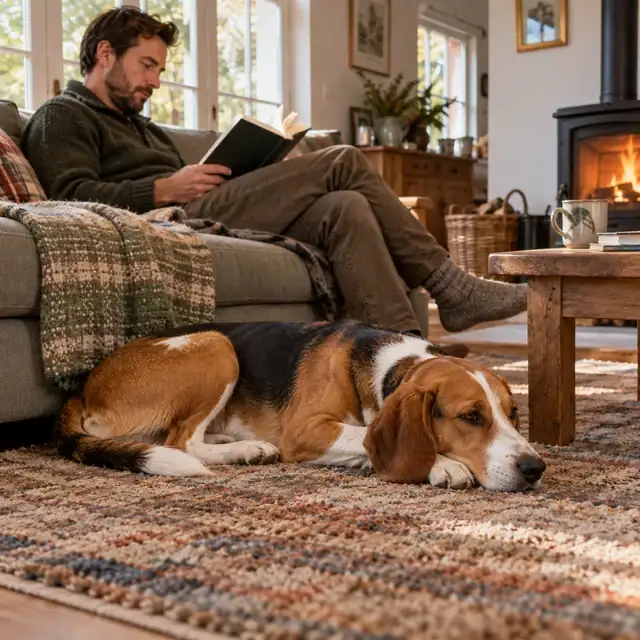
Human orientation
Medium-high rating: affectionate in the family. Behavior depends on upbringing.
THE PAW CATALOG
Origin: Germany
It originates from Westphalia in Germany and was registered as a separate breed in 1900. The German Breeding Club was founded in 1896 and is still responsible for breeding and testing. Local types of brakes were combined into one breed, previously known by regional names: Alpine and Westphalian brakes. The breed was recognized by the FCI (No. 299).
The German Hound (Deutsche Bracke) is a medium-small (40-53 cm) hunting hound with a short, stiff, almost bristly coat, usually three-colored: red-yellow with a black crest. Affectionate in the family, persistent in following and has a great sense of direction. Requires a lot of movement and hunting work.
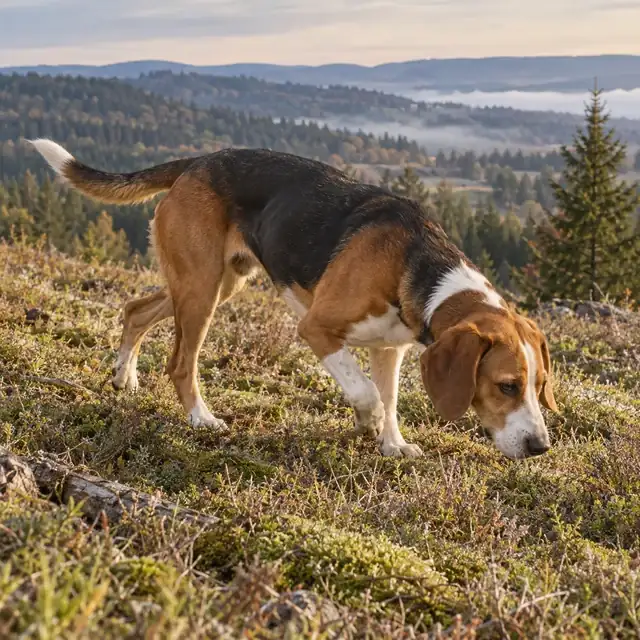
A hunting dog that feels best in a family, not in an enclosure. Suitable for hunters or very active owners.
Long walks, running and olfactory work are required. Traditionally, it hunts mainly deer, as well as hares and foxes.
Persistent on the trail, flair and passion prevail over commands. It takes patience, drive and a reliable recall signal.
The short, hard coat is combed once a week. Ears are examined especially, nails are trimmed, teeth are cleaned.
Friendly in the family. Vigorous games with children are supervised.
He works both in a pack and alone, so he gets along with dogs. Small animals for the hound prey.
Estimates help compare breeds. For zooaggression, 5/5 means less tendency to aggression towards dogs. The behavior and health of a particular dog depend on many factors.
Medium-high rating: affectionate in the family. Behavior depends on upbringing.
Average score: persistent on the trail, but the sense of smell prevails.
Average score: gregarious, small animals - prey.
There is no comparable survival estimate for the breed in the British cohort used. The absence of the mentioned risk does not prove the absence of hereditary diseases.
High rating: short coat requires minimal maintenance.
Breed screening: descriptions of hereditary diseases of the "German Hound" breed are few. Ask the breeder for the written results of the parents' examinations and the current requirements of the club.
Musculoskeletal system: the growth and load of the "German Hound" breed should correspond to its age. Lameness, pain, or reluctance to move require a veterinary examination.
The condition of the eyes and heart is included in the routine examination. Narrow examinations, for example by an ophthalmologist or a cardiologist, are prescribed as needed.