Human orientation
Average score: hardworking, but a hunter of character. Behavior depends on upbringing.
THE PAW CATALOG
Origin: Germany
After the First World War, German hunters broke away from the great fox terrier club to breed a dog exclusively for hunting. They chose black and tan terriers, and the zoo director provided four founders of the Old English type. The German Hunting Terrier Club was founded in 1926.
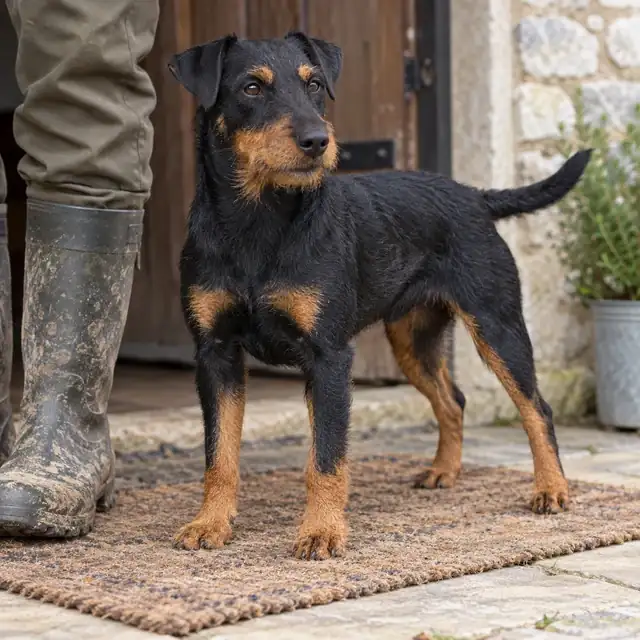
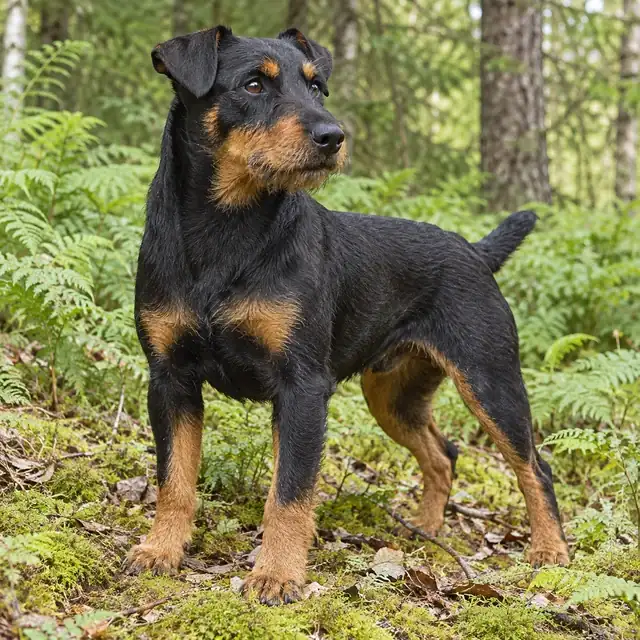
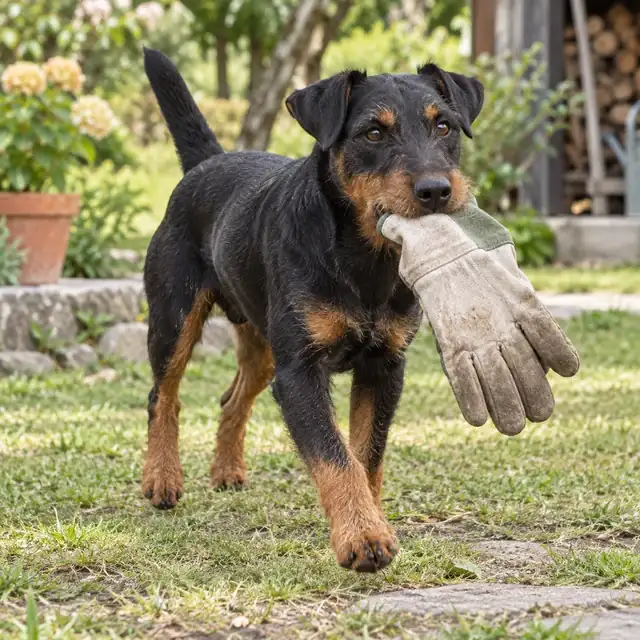
The German Jagdterrier is a compact (33-40 cm) hunting terrier with a stiff or smooth coarse coat, black or dark brown with tan. Brave, hardworking and very energetic, with a strong hunting instinct. Needs a lot of movement, a reliable fence and an experienced owner.
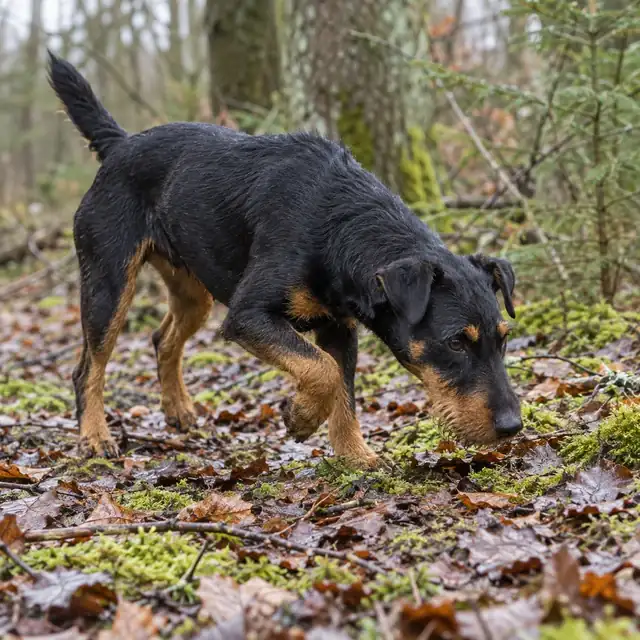
Suitable for hunters or very active owners. Not suitable for the limited space of a small yard. A reliable fence is required.
Requires significant daily activity and a securely fenced yard.
Brave and hardworking, but with a strong hunting instinct. The breed should be reliable, sociable and trainable, without timidity and aggression. Early socialization is a must.
The coat only needs brushing and occasional bathing, and is rarely trimmed or sheared. Ears are examined, nails are trimmed, teeth are cleaned.
Energetic and adventurous, so games with children are supervised.
The hunting instinct is strong: cats, rabbits and chickens can be perceived as prey. Dogs require socialization.
Estimates help compare breeds. For zooaggression, 5/5 means less tendency to aggression towards dogs. The behavior and health of a particular dog depend on many factors.
Average score: hardworking, but a hunter of character. Behavior depends on upbringing.
High score: hardworking and trainable, but the hunting instinct is strong.
Average score: small animals are prey, socialization is required.
There is no comparable survival estimate for the breed in the British cohort used. The absence of the mentioned risk does not prove the absence of hereditary diseases.
High score: wool requires minimal maintenance.
Breed Screening: Little is known about hereditary diseases of the German Jagdterrier breed. The breeder is asked for documents with the results of examinations of both parents and current recommendations of the club.
Musculoskeletal system: the height and load of the German Jagdterrier dog are adjusted to its age. If lameness or pain occurs, a veterinary examination is required.
Heart and eyes are included in the list of annual examination. Narrow examinations, for example by an ophthalmologist or a cardiologist, are prescribed as needed.