
Human orientation
Average score: reserved with strangers, attached to the hunter. Behavior depends on upbringing.
THE PAW CATALOG
Origin: Germany
German breed. At the beginning of the 19th century, there were several varieties of hard-coated dogs, which were almost never standardized. Later, the blood of old German shepherds was added to them, which explains the word "hard-coated" in the name. By the middle of the century, the breed had almost disappeared, but it was saved by one breeder. Serious standardization began in the second half of the century, and at the end of the year, his breed was accepted as a district breed. It has never been as popular as other German lagavs and is rarely found outside of Germany.
The German Stichelhaar is a medium-large (58-70 cm) versatile hunting dog with a hard bristly coat of brown, brown-brown or light-brown color. Careful with strangers, merciless with predators. Requires active hunting work and an experienced owner.
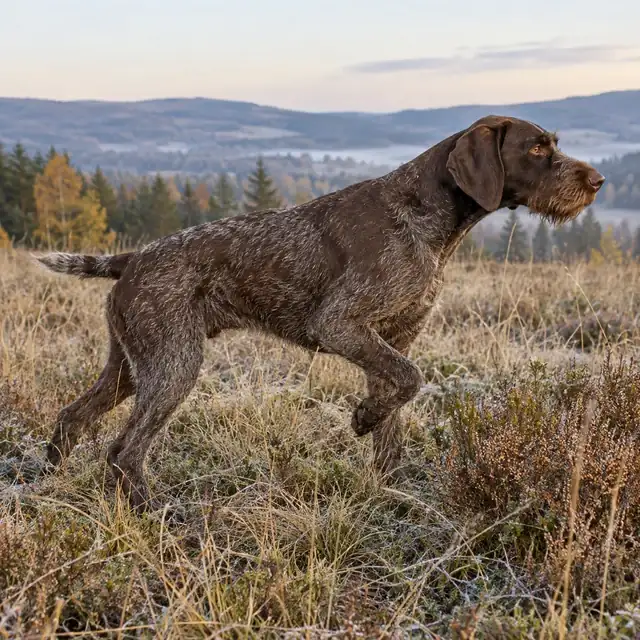
Suitable for hunters. A working dog that needs a field, a forest and a task.
Long daily walks, running and hunting work are required.
Discreet towards others, independent in work. Early socialization, consistent upbringing and regular work are needed.
Hard bristly wool is combed once a week, trimmed from time to time. Ears are examined, nails are trimmed, teeth are cleaned.
There are few detailed descriptions of behavior with children, so contacts are supervised, and the hunter's energy is taken into account.
He reacts especially sharply to predatory animals, and alien animals are prey or rivals for him. Dating is careful.
Estimates help compare breeds. For zooaggression, 5/5 means less tendency to aggression towards dogs. The behavior and health of a particular dog depend on many factors.
Average score: reserved with strangers, attached to the hunter. Behavior depends on upbringing.
Average score: able to work, but independent.
Low score: reacts sharply to predators, hunting instinct is strong.
There is no comparable survival estimate for the breed in the British cohort used. The absence of the mentioned risk does not prove the absence of hereditary diseases.
Average score: hard coat needs trimming.
Breed screening: detailed data on hereditary diseases of the "German Stichelhaar" breed are scarce. Ask the breeder for documentary results of examinations of both parents and current recommendations of the club.
Musculoskeletal system: for the "German Stichelhaar" breed, the load is selected according to age and condition. Limping, pain or reluctance to move is a reason to consult a veterinarian.
Eyes and heart need regular attention from a doctor. Narrow examinations, for example at an ophthalmologist or cardiologist, are prescribed as needed.


