Human orientation
Very loyal and protective of his family, wary of strangers.
THE PAW CATALOG
Origin: Great Britain
The breed appeared in the early 1600s as the "black and fawn setting dog." It got its name in honor of the fourth Duke of Gordon and his Scottish estate. It was bred to search for game in the harsh Scottish wilderness.
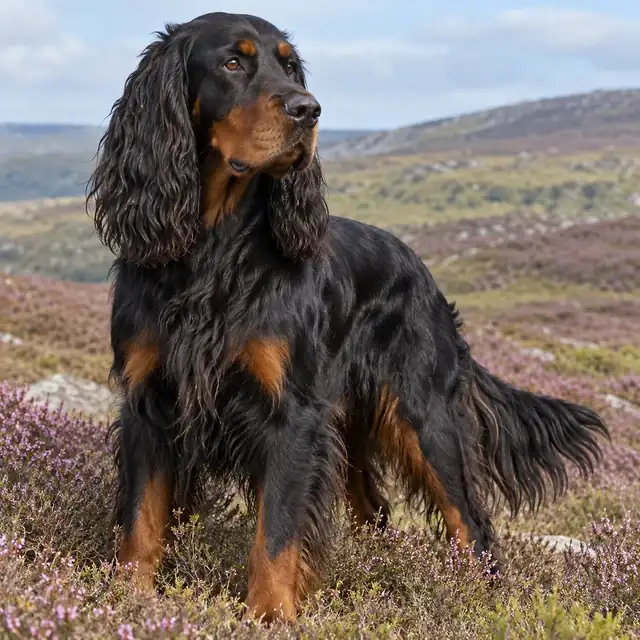
Scottish Setter (Gordon) - a large (males about 66 cm and 29.5 kg, bitches about 62 cm and 25.5 kg) black and tan setter with a silky coat. Quick, attentive, brave and sociable, with an even character. Wary of strangers, but not timid; very loyal and protective of his family. It matures slowly, so it behaves like a noisy puppy for a long time.

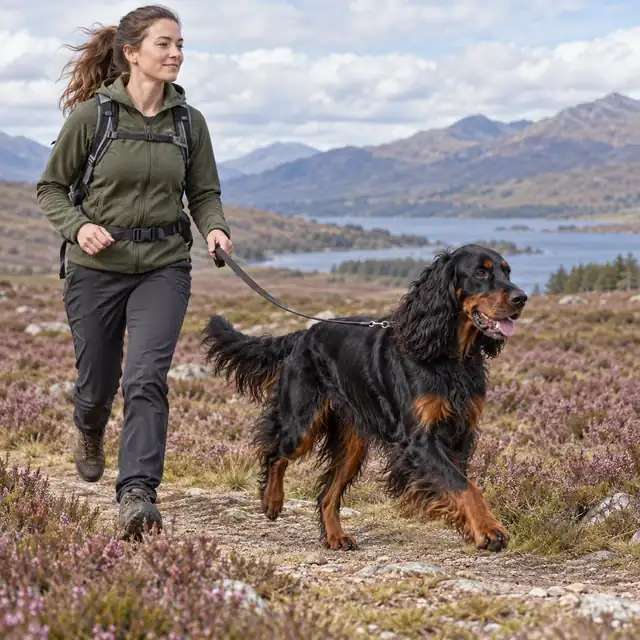
Suitable for active families who love hiking and have a securely fenced yard. Needs communication and does not tolerate prolonged loneliness.
High Regular long walks, hikes, running in the fenced area. Needs both movement and communication.
It is necessary to start early, and it is useful to send the puppy to socialization courses. Sensitive, does not respond to harsh discipline. Learning is calm, consistent and varied, because monotony is boring. Successful in obedience and field trials.
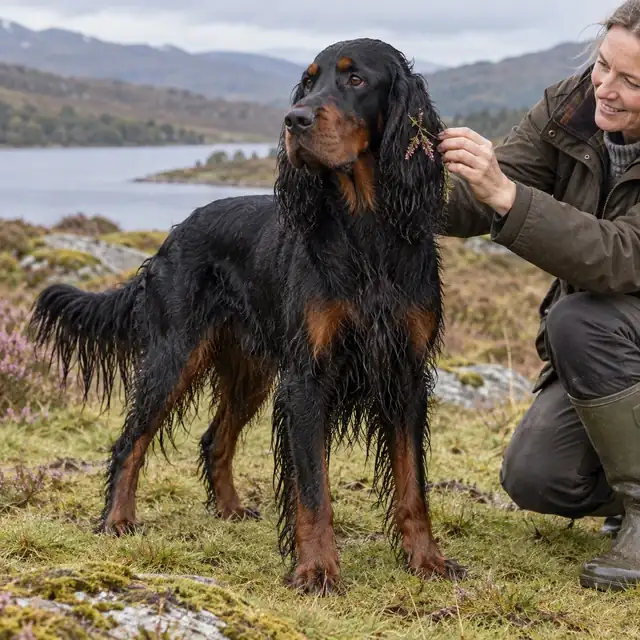
Silk wool of medium length is combed and combed at least once a week. The fur on the throat, ears and paws is trimmed to keep it neat and free of mud and grass seeds. The dog sheds throughout the year.
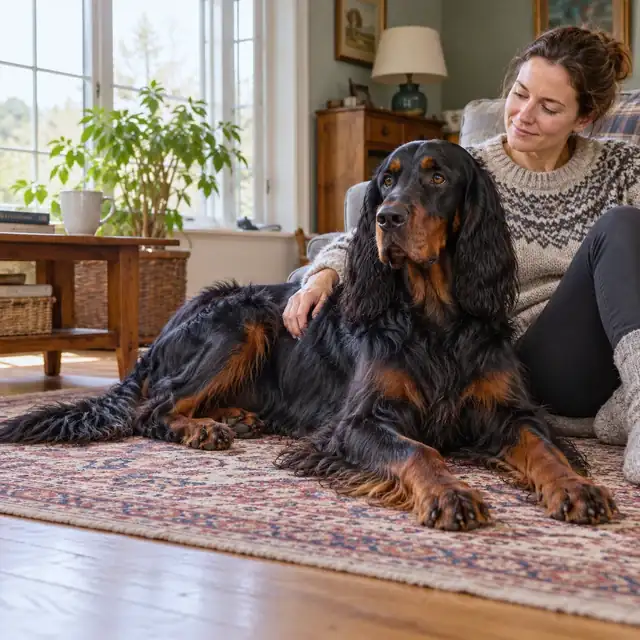
It is considered an excellent family dog due to its loyalty and intelligence. Children and the dog are always under the supervision of an adult, because he is big and energetic.
The hunting instinct is aimed at birds and small animals. It usually gets along with dogs after early socialization. Acquaintance with cats is carried out gradually.
Estimates help compare breeds. For zooaggression, 5/5 means less tendency to aggression towards dogs. The behavior and health of a particular dog depend on many factors.
Very loyal and protective of his family, wary of strangers.
Intelligent but sensitive and needs gentle, varied training.
The hunting instinct needs attention for birds and small animals.
In the British cohort, the median lifespan of the breed was 12.4 years. Among the described birth risks: dysplasia of the hip joints, bloat or twisting of the stomach; examination of the parents is confirmed with the veterinarian.
Silky wool requires weekly brushing and trimming.
Hip Dysplasia: Parents look at joint health before choosing a puppy. Excess weight increases the load on the joints, so the puppy should not be overfed. Stiffness after rest is not attributed to age without an examination.
Bloating or stomach upset: the portion is divided into several feedings, and the dog is allowed to rest after eating. A swollen, hard stomach, restlessness and futile urges to vomit are a reason to go to the clinic immediately.