Human orientation
Average score: The breed is friendly to people, but works independently in a pack. Actual behavior depends on socialization.
THE PAW CATALOG
Origin: France
The tricolor hound comes from crossing tricolor poitevins with foxhounds. In herds, it was used for red deer, wild boar and roe deer, and sometimes for fox. "Large" refers to the type of pack for big game, not the size. The French Federation recognizes the breed, the FCI recognized it in 1983, and on the North American continent it is registered by the UKC.
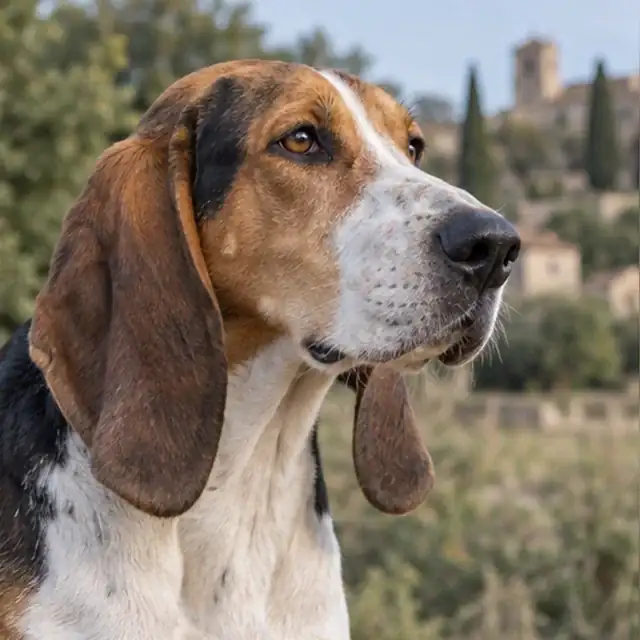
Large Anglo-French Tricolor Hound - a powerful French Hound with black, white and tan coloring. Friendly but hardy, made for long hunts. Suitable for hunters or active people with a large plot.

Described as good-natured, but requires a lot of exercise and usually lives in large packs in rural areas. Adapting to city and family life is difficult. Because of the strong hunting instinct, free running without a fence is risky.
The need for movement is very high: long runs and sniffing work are required every day. Free running only in a fenced area. Puppies and older dogs are dosed together with a veterinarian.
Good-natured, but independent: sense of smell prevails over commands. Olfactory games, patience and valuable treats work. Calling is practiced on a long leash from an early age.
The short double coat is combed once a week, more often during shedding. After walks, ears, skin and paws are examined, claws are trimmed, and teeth are regularly brushed.
Kind to people, but big and strong. An adult monitors the contact, and the rules of a calm game are explained to the child.
He lives peacefully with the dogs he grew up with. The attitude towards cats and small animals is evaluated separately, and introductions are conducted under control.
Estimates help compare breeds. For zooaggression, 5/5 means less tendency to aggression towards dogs. The behavior and health of a particular dog depend on many factors.
Average score: The breed is friendly to people, but works independently in a pack. Actual behavior depends on socialization.
Neutral assessment: there is no sufficient comparative data on the Great Anglo-French Tricolor Hound breed. The behavior of a particular dog depends on socialization and experience.
Average score: With other dogs, the Great Anglo-French Tricolor Hound breed is usually peaceful, and small animals are judged separately due to their hunting instinct.
The British cohort does not provide a comparable survival estimate for the Great Anglo-French Tricolor Hound breed. The absence of the mentioned risks does not prove the absence of hereditary diseases, and parents should be checked in any case.
Average rating: The coat is combed once a week, and ear and paw inspections are required after the hunt.
Breed Screening: Little is known about the health of this breed, and all conclusions are usually based on working packs. Ask the breeder for the test results of the parents.
Musculoskeletal system: growth and load should correspond to age. Pain, lameness, or reluctance to run require a veterinary examination.
A preventive examination includes an assessment of the eyes, heart and long ears, which are cleaned and dried after rain.