Human orientation
Moderately low score: independent and pack-oriented, attached to those he respects. Behavior depends on upbringing.
THE PAW CATALOG
Origin: Greenland
One of the oldest surviving breeds: comes from the arctic regions where people used such dogs as a draft. The Inuit kept them as mounts for carrying goods and hunting. The breed still preserves the working type.
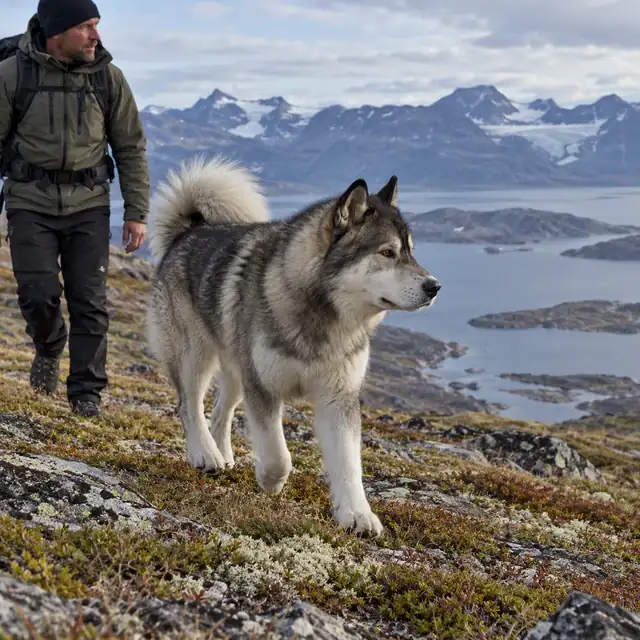
The Greenland dog is a large, stocky spitz with thick fur that has been pulling Inuit sleds for centuries. Height approximately 56-64 cm. Independent, loud, energetic, behaves like a team worker, not a couch potato. Requires more than two hours of movement per day, a cold climate and an experienced owner.

Best suited to owners who have space, secure fencing and are ready for daily traffic. It suffers in the heat, so a cool place is needed. It can howl loudly, and in the pack it shows hierarchy.
Working dog: more than two hours of daily movement, long walks and active games. Willingly runs alongside a bicycle or pulls a cart or sled. Without it, it is boring and destructive.
Independent and capricious, attached to those whom he respects. Learning requires calm consistency and authority, not force. Early socialization is a must.
Thick wool is combed regularly, especially during shedding. Claws are trimmed, teeth are cleaned, ears are examined. The undercoat is shed twice a year, then care is intensified.
Often friendly to people, but noisy and strong, so may be too rough for small children. The games are supervised, and the rules are set from the first days.
Can be aggressive towards other dogs, especially strangers and of the same sex, and has a strong hunting instinct. He usually gets along with the dogs he grew up with.
Estimates help compare breeds. For zooaggression, 5/5 means less tendency to aggression towards dogs. The behavior and health of a particular dog depend on many factors.
Moderately low score: independent and pack-oriented, attached to those he respects. Behavior depends on upbringing.
Average Score: Smart but willful, so patience and consistency are required.
Average score: possible aggression towards dogs, and a strong hunting instinct towards small animals.
There is no comparable survival estimate for the breed in the British cohort used. Among the described breed risks: hip dysplasia; examination of the parents is confirmed with the veterinarian.
Medium-high rating: thick coat needs brushing, especially during the shedding season.
Hip dysplasia is mentioned among possible risks. Elbow dysplasia is also described. Before the purchase, they ask for the results of examinations of both parents.