Human orientation
High Score: The Greyhound bonds closely with the family and follows the owner from room to room. Behavior depends on the dog's experience.
THE PAW CATALOG
Origin: Great Britain
Ancient greyhound: similar dogs are seen in images dating back to about 6000 BC. e. in Turkey, on Iranian and Egyptian monuments. In the Middle Ages, only rulers and nobles could own them. Modern pedigrees lead to English stud books of the 18th century. Organized racing began in England in 1926, and after the tracks closed, many former racers are looking for new homes.
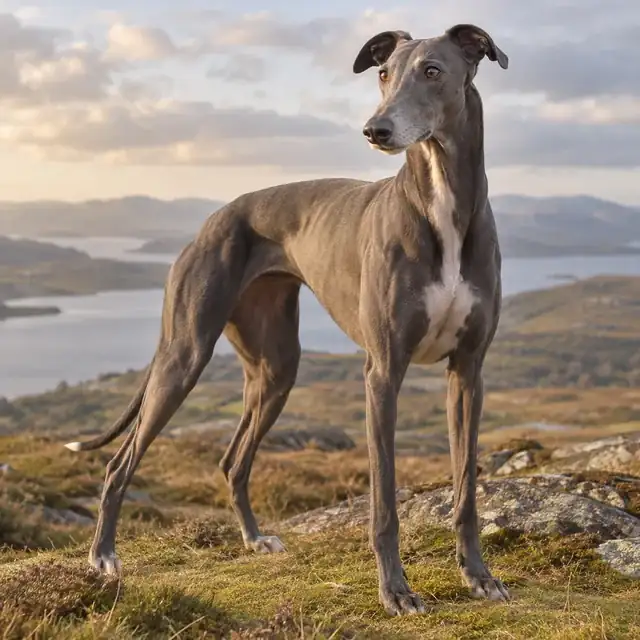
The Greyhound is an ancient Greyhound with a light muscular build, deep chest and very short smooth coat. Males 71-76 cm, females 66-71 cm. Calm and gentle at home, extremely fast outside. Needs warmth, safe places to run and sensitivity.

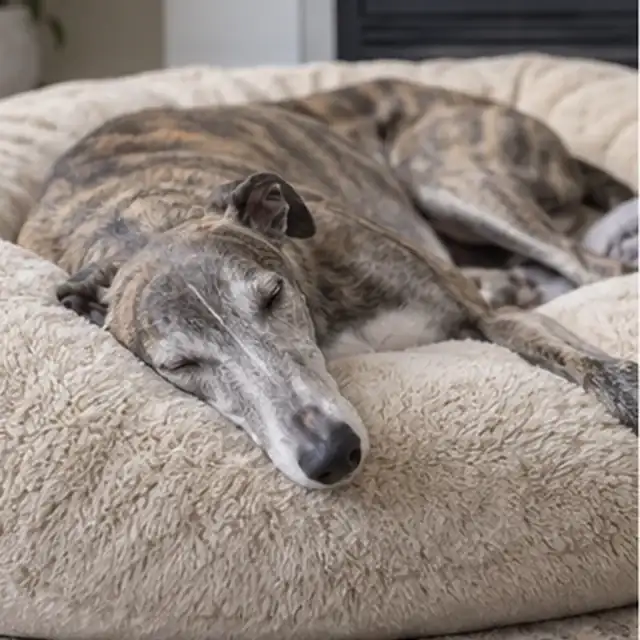
Having overcome the distance, he rests on the sofa: at home he is calm, inconspicuous, occasionally barks. Due to low fat and lack of undercoat, it does not tolerate cold and heat well, so it lives at home. Former racers are used to stairs, mirrors and glass doors.
A sprinter, not a marathoner: doesn't need long walks every day, but regular movement is essential. A safe fenced area is required for free running. An adult greyhound willingly sleeps most of the day.
Sensitive to rough handling: calm commands and encouragement work best. Recall is unreliable, because the pursuit of a moving target is stronger than the voice, so it walks on a leash or in a fenced area.
Very short hair does not require complex care. It is enough to wipe her, bathe her as needed, cut her nails and brush her teeth. Calluses may appear on the pads of the paws, so the paws are inspected.
Gentle and good-natured, gets along well with children who know how to handle dogs. Annoyed, usually walks away instead of growling. He wakes up suddenly, he can get scared because he often sleeps with half-open eyes.
Friendly to dogs, but the hunting instinct for small animals, especially cats, is strong. Cats are introduced to former racers under supervision, and they are not allowed outside without a leash.
Estimates help compare breeds. For zooaggression, 5/5 means less tendency to aggression towards dogs. The behavior and health of a particular dog depend on many factors.
High Score: The Greyhound bonds closely with the family and follows the owner from room to room. Behavior depends on the dog's experience.
Average score: Intelligent and sensitive, but hunting instinct and poor recall require patience.
High score: peaceful with dogs, but needs supervision for cats and small animals.
In the British cohort, the median lifespan of the breed was 11.5 years. Among the described breed risks: bloating or stomach twist; examination of the parents is confirmed with the veterinarian. Also known features: sensitivity to some anesthetics, unusual blood counts and delayed bleeding after operations.
High score: Short coat requires almost no care, but warmth and paw hygiene are important.
Bloating or twisting of the stomach is a life-threatening condition characteristic of deep-chested dogs. They feed in small portions, avoid loads before and after meals, and immediately go to the veterinarian at the first signs.