Human orientation
Average score: friendly, but bred to work independently. Behavior depends on upbringing.
THE PAW CATALOG
Origin: Norway
Norwegian Hound, named after the town of Halden in southeastern Norway. Formed at the beginning of the 20th century, probably from Norwegian hounds with the addition of Swedish, German and English. The standard was approved in the 1950s. Belongs to the three Norwegian hare hounds and is the smallest of them. Rare outside of Norway.
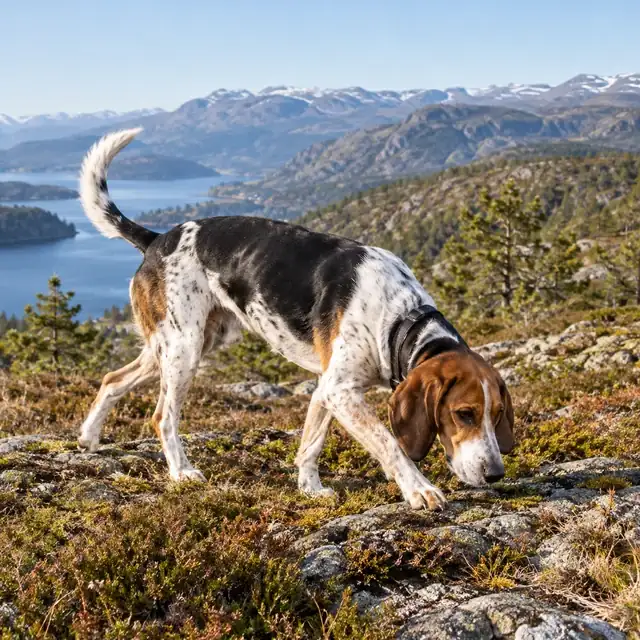
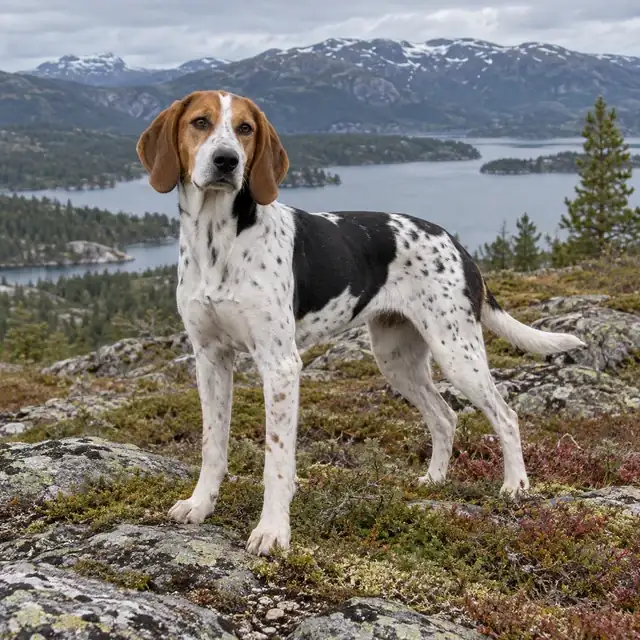
The Halden Hound is a medium-sized Norwegian Hound (43-54 cm, 18-24 kg) with a short, dense white-black coat and red markings. Hardy, energetic and friendly. Needs a spacious yard, long walks and activities related to the sense of smell.

Needs a lot of space or long daily walks. He becomes restless for a long time without movement. Unlike many hounds, bred to work alone with a hunter, not in a pack. It tolerates cold well.
High: Daily long walks, sniff work and free running in a safe area. Snow and cold weather are good for dense fur and strong paws.
Friendly and intelligent, but the hunting instinct requires consistency. Recall is practiced from an early age, and on walks in open places without a fence, the dog can follow the scent.
Short dense wool is easy: weekly combing is enough. Ears are inspected after walks, claws are trimmed.
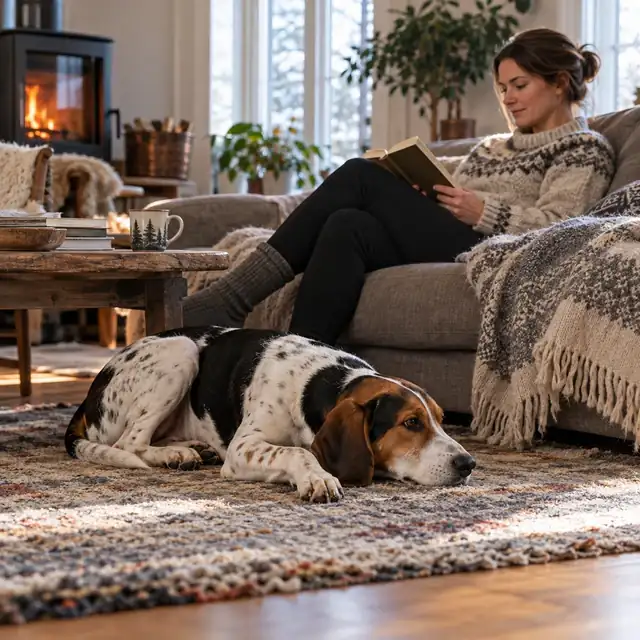
Described as a good family dog that gets along with children. High energy needs supervision when playing with small children.
He is a solitary hunter, so he treats small animals as prey. With dogs, it is usually peaceful during socialization, and cats are introduced gradually.
Estimates help compare breeds. For zooaggression, 5/5 means less tendency to aggression towards dogs. The behavior and health of a particular dog depend on many factors.
Average score: friendly, but bred to work independently. Behavior depends on upbringing.
Average score: the hunting instinct requires consistent and patient training.
Average score: peaceful with dogs, and small animals are evaluated separately due to their hunting instinct.
There are no comparable survival data for the Halden Hound breed in the UK cohort used. Just because no risk is listed doesn't mean it doesn't exist: screening parents remains important.
Average Rating: Short coat is easy, but requires long walks and ear care.
Pedigree screening: there is little reliable data on hereditary diseases of the Halden Hound breed, so the results of examinations of both parents should be requested in writing.
Musculoskeletal system: height, weight and load of the "Halden Hound" breed should correspond to the age. Pain, lameness, or reluctance to move require a veterinary examination.
A preventive examination includes the eyes, heart and ears. For the "Haldensky Hound" breed, the frequency of special inspections is determined by the advice of the club and the veterinarian.