Human orientation
High score: the harrier is friendly, attached to people and does not like solitude. Behavior depends on upbringing.
THE PAW CATALOG
Origin: Great Britain
The Harrier developed in medieval England as a pack hound for hunting hares. Its exact origins are unknown, but ancient English hounds are cited as possible ancestors. Flocks of harriers existed in Britain as early as the XIII-XIV centuries. Nowadays it is mainly a family dog and a hunter in the pack.
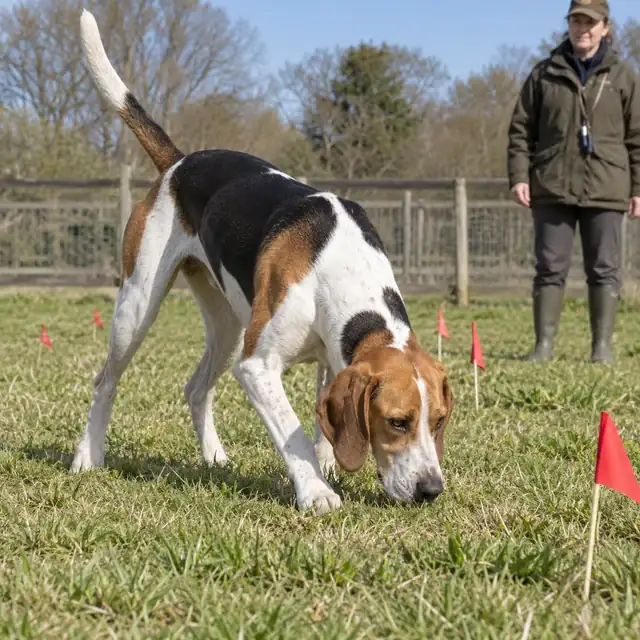
Harrier is a medium-sized English hare hound (48-53 cm, 20-27 kg) with a short dense coat. Friendly, energetic, gregarious and cheerful. Needs two hours of movement a day, a safe fence and companionship: loneliness is bad.

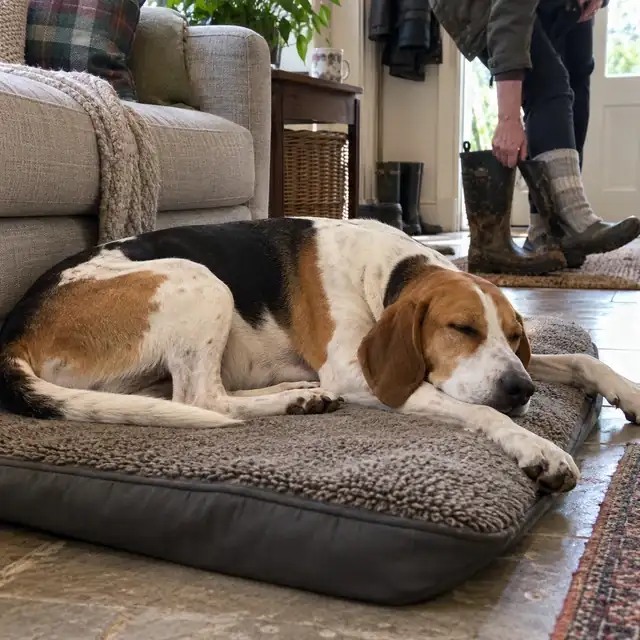
Needs a house with a spacious yard and a family that finds time for long walks every day. He does not tolerate loneliness well, he can bark, howl and dig. A good choice where there is always someone at home.
Approximately one and a half to two hours of movement: walks, runs, hikes and games in a fenced area. Olfactory games and searches are a good way to tire the mind.
Friendly and sensitive, responds best to positive reinforcement. Smell is easily distracting, so consistent training and early socialization are required. Olfactory games, search paths help to use instinct.
Short, hard wool is combed once or twice a week. They bathe once every few weeks or as needed. Ears are cleaned regularly, because the hanging shape retains moisture and dirt. Claws are trimmed, teeth are cleaned.
Friendly, cheerful and gets along with children, especially under the supervision of adults. Great energy can knock the little ones off their feet, so games with toddlers are controlled.
A pack dog and usually gets along peacefully with other dogs. Rodents, rabbits and cats outside the home can turn on the hunting instinct, so acquaintances are carried out gradually.
Estimates help compare breeds. For zooaggression, 5/5 means less tendency to aggression towards dogs. The behavior and health of a particular dog depend on many factors.
High score: the harrier is friendly, attached to people and does not like solitude. Behavior depends on upbringing.
High Score: Sensitive and willing to learn, although the sense of smell is often distracting.
High score: A pack dog, generally peaceful with other dogs, although caution is required around small animals.
There is no comparative assessment of Harrier breed survival in a British cohort. The absence of said risk does not prove the absence of hereditary diseases, so screening of parents is important.
High rating: the short coat needs weekly brushing and the rest of the care is easy.
Breed screening: possible risks for the breed include hip and elbow dysplasia, progressive retinal atrophy and cataracts. Ask the breeder for the test results of both parents.
Musculoskeletal system: the hip and elbow joints of a large, active dog require weight control and careful loading during growth. Lameness, pain, or reluctance to move require a veterinary examination.
Ears and eyes: Long hanging ears are prone to otitis, so they should be cleaned regularly. Eyes are checked during preventive examinations.