Human orientation
High score: The Havanese Bichon is very attached to people and does not like to be alone. Behavior depends on upbringing.
THE PAW CATALOG
Origin: Cuba
Belongs to the Bichon family and is the national dog of Cuba. It comes from the extinct Blanquito de la Habana, which was crossed with other bichons, in particular with poodles. The origins of the breed are associated with the Western Mediterranean, and early dogs were brought to Cuba by Italian sailors. The local lines disappeared due to political upheaval, so the current stock comes from dogs that ended up in the US.
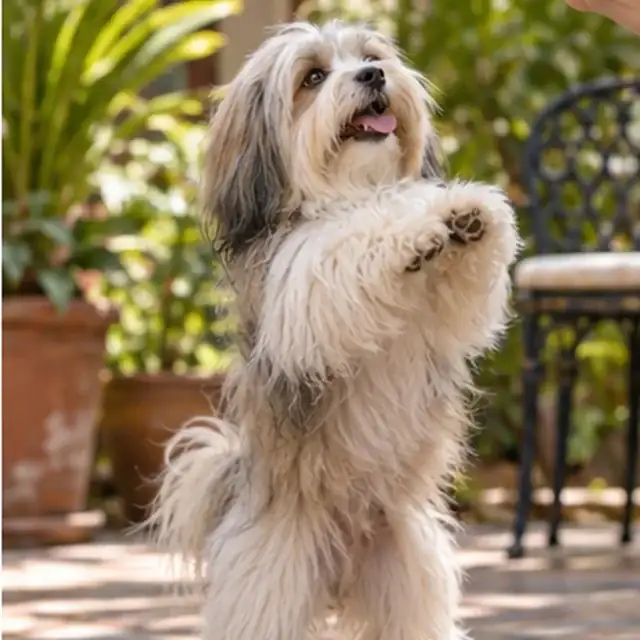
The Havanese Bichon is a small Cuban dog (21-29 cm, up to 11 kg) with a long, soft coat that is usually wavy. Cheerful, playful, very attached to people. Needs regular grooming and attention, does not tolerate loneliness well.

Suitable for an apartment and a house, but does not like to be alone for a long time. It barks relatively little, although it warns about strangers well. Delights guests and company.
Moderate: about twenty minutes a day. A quick walk, a game in the yard or at home is enough. Excessive load is undesirable.
Smart and willing to please. Responds to positive, soft training, and harshness upsets him. Useful tricks, olfactory games and simple exercises. Learning to care begins at an early age.
High need: long wool requires daily brushing for show dogs and approximately weekly for natural coats of domestic dogs. The corners of the eyes are wiped every day so that there are no traces of tears. Ears are checked and cleaned. Many owners cut their dogs short to make grooming easier.
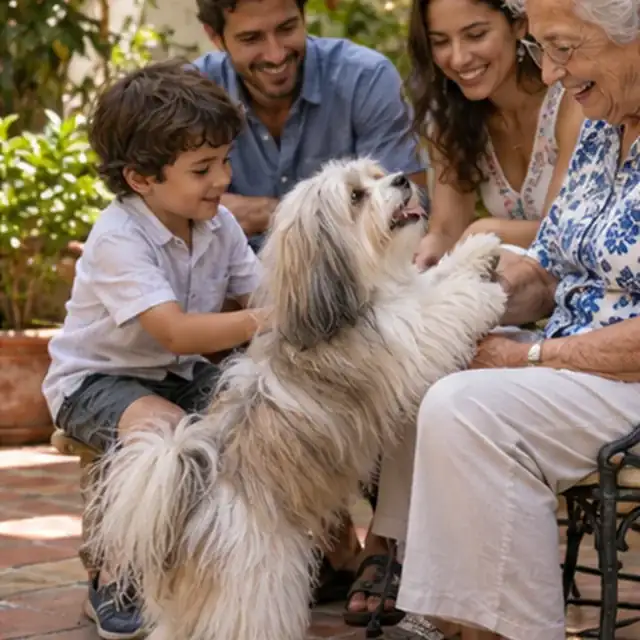
Cheerful and kind, gets along well with children. Due to the small size, supervision is required with babies to prevent injury in case of inept handling.
Usually gets along peacefully with other dogs and cats. Early socialization helps, and small rodents in a shared home remain under control.
Estimates help compare breeds. For zooaggression, 5/5 means less tendency to aggression towards dogs. The behavior and health of a particular dog depend on many factors.
High score: The Havanese Bichon is very attached to people and does not like to be alone. Behavior depends on upbringing.
High Score: Clever and eager to please, a gentle approach with rewards works best.
High Score: Usually gets along well with other dogs and cats, although individual differences remain.
In the British cohort, the median lifespan of the breed was 14.5 years; small sample: 56 deaths. Among the described breed risks: dislocation of the patella, hearing impairment, eye diseases; examination of the parents is confirmed with the veterinarian.
Average score: Long coat care is noticeable, but can be simplified with a short haircut.
Dislocation of the patella occurs in the breed. Signs: periodic jumping on the hind paw. The veterinarian evaluates the degree.
Hearing impairment is listed among possible risks. Hearing is checked by a veterinarian, and the breeder is asked for the results of examinations of the parents.
Eye diseases include hereditary lesions. Pedigree eyes are checked according to the club's recommendations, and vision changes require an examination.