Human orientation
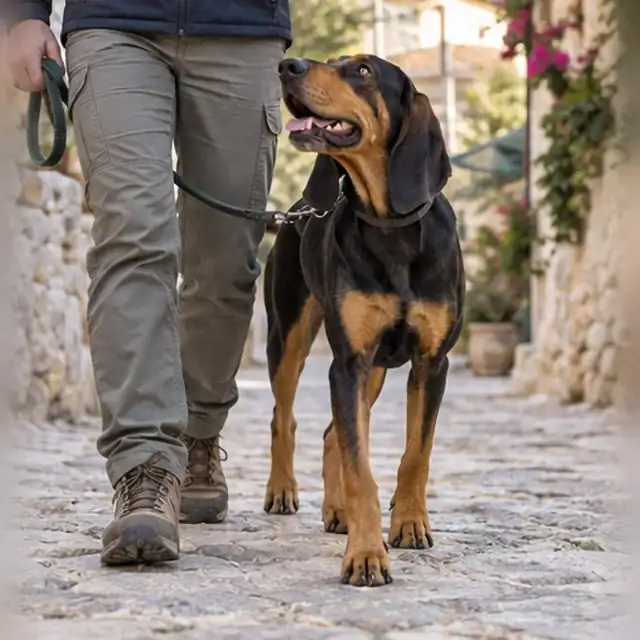
Average score: the hound sticks to people, but works independently. Behavior depends on upbringing.
THE PAW CATALOG
Origin: Greece
The breed is believed to be descended from the Laconian dog, an ancient Greek breed that became extinct. Due to the isolation of the Greek mountains, the genes remained stable for a long time. FCI recognized the Greek Hound in 1996. He was bred to track and chase the hare in the south of Greece.
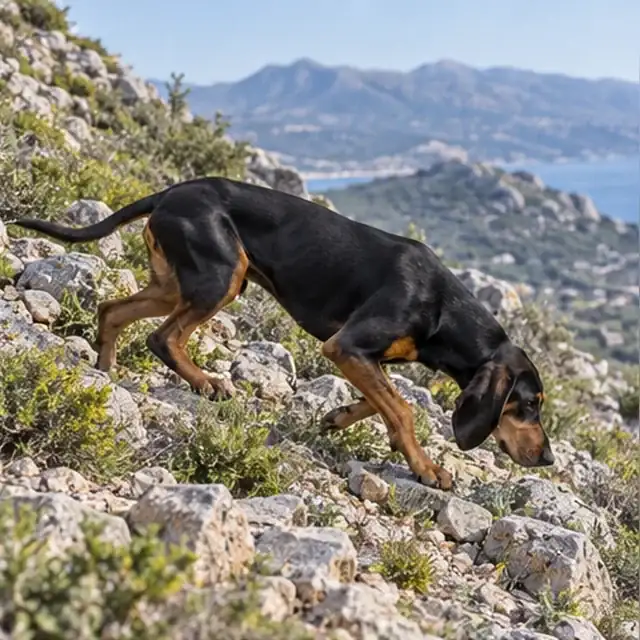
The Greek Hound is a medium-sized hound (46-56 cm, 17-20 kg) with a short black coat and red highlights. A hare hunter with fine sense and endurance. Needs daily long walks, space and an owner who understands hunting dogs.
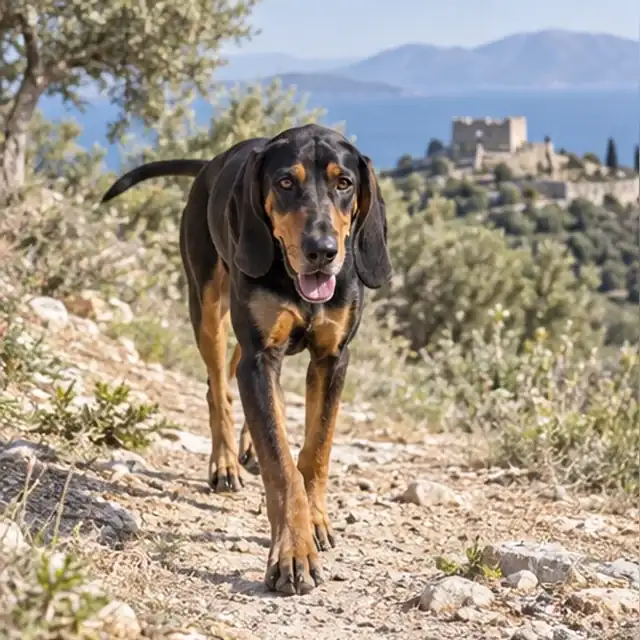
Suitable for living in the countryside with a large plot. The job of a hunter requires movement, olfactory tasks and space. One gets bored in a cramped apartment without activity.
Daily long walks, running in a safe area and sniff work. Idle at home barks and looks for entertainment alone.
A sense of smell is stronger than a request, so recall is practiced from puppyhood. Short sessions with rewards without coercion work best.
Short dense wool is combed once a week. Ears are examined after walks, nails are trimmed, teeth are brushed according to schedule.
There are few detailed descriptions of behavior with children, so acquaintance is built gradually and under supervision. The energetic hound can knock the kids off their feet in the game.
A hound bred to chase a hare, so small animals are perceived as prey. Acquaintance with cats and rodents is carried out carefully.
Estimates help compare breeds. For zooaggression, 5/5 means less tendency to aggression towards dogs. The behavior and health of a particular dog depend on many factors.
Average score: the hound sticks to people, but works independently. Behavior depends on upbringing.
Average Score: Smell distracts from commands, so patience and consistency are required.
Average score: the hunting instinct for small animals needs to be controlled.
There are no comparable survival data for the Greek Hound breed in the UK cohort used. Just because no risk is listed doesn't mean it doesn't exist: screening parents remains important.
High rating: short coat requires minimal maintenance.
Breed Screening: Little is known about hereditary diseases of the Greek Hound breed. The breeder is asked for documents with the results of examinations of both parents and current recommendations of the club.
Musculoskeletal system: the height and load of the Greek Hound dog are adjusted to its age. If lameness or pain occurs, a veterinary examination is required.
During preventive examinations, the eyes, heart and ears of the Greek Hound breed are evaluated. The frequency of additional checks is agreed with the breed club and the veterinarian.