Human orientation
Loyal and devoted to his family, although he keeps a low profile.
THE PAW CATALOG
Origin: Japan
According to legend, it is descended from medium-sized Japanese dogs that accompanied immigrants from Honshu to Hokkaido around the 1140s. The Ainu, the former inhabitants of the island, bred these dogs to hunt bears and other game, which is why the breed has the name Ainu-ken. In 1937, it was declared a "natural monument" of Japan. The name is related to the region of origin.
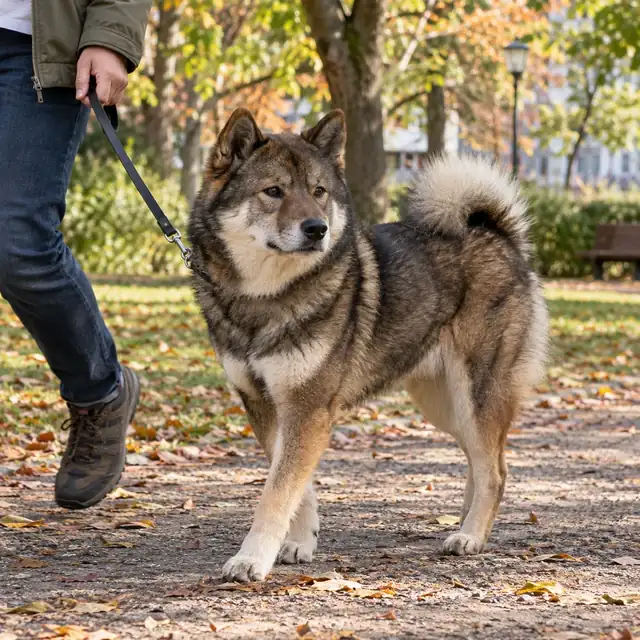
Hokkaido (Ainu-ken) - medium (45.5-51.5 cm) Japanese Spitz with standing ears, thick double coat and curled tail. Faithful, obedient, very alert and courageous, with good judgment and great endurance. Restrained, dignified, holds himself confidently. A hunter and companion who needs exercise, exercise and an experienced owner.

Suitable for active owners with experience with primitive and hunting breeds. It feels best outside the city, where there is space and the ability to move. Loneliness and boredom lead to destruction.
High Daily long walks, running in a safe area and mental tasks. Hardy and strong, used to work in the mountains.
Intelligent and independent, so consistency and respect are required. Early socialization and various activities help to grow balanced. The hunting instinct requires reliable recall and protection.
The double coat is combed once or twice a week, during the seasonal shedding every day. They rarely bathe. Ears, teeth and claws are examined regularly.
Loyal to family, usually patient. Small children and a dog under the supervision of an adult. Children are taught not to pull the tail and ears and to respect the calmness of the dog.
The hunting instinct is aimed at small animals and birds. Conflicts are possible with other people's dogs, especially of the same sex. Early introductions and controlled walks reduce the risk.
Estimates help compare breeds. For zooaggression, 5/5 means less tendency to aggression towards dogs. The behavior and health of a particular dog depend on many factors.
Loyal and devoted to his family, although he keeps a low profile.
Intelligent, but independent; experience and consistency are required.
Hunting instinct and possible conflicts with dogs need control.
There is no comparable survival estimate for the breed in the British cohort used. Among the described breed risks: dysplasia of the hip joints, epilepsy, dislocation of the patella; examination of the parents is confirmed with the veterinarian.
The thick double coat requires regular brushing, especially during shedding.
Dysplasia of the hip joints: the results of X-ray evaluations of the parents are studied before the purchase. A flat surface and moderate walks help the joints during the growing season. If the dog is limping or reluctant to get up, it is examined by a doctor.
Epilepsy is manifested by convulsive attacks, which must be shown to the veterinarian. The breeder is asked about cases of epilepsy in the pedigree.
With dislocation of the patella, the dog suddenly bends its hind leg while walking. The degree is determined by the veterinarian, mild cases are only observed. It is better to ask the breeder about similar cases in the pedigree.