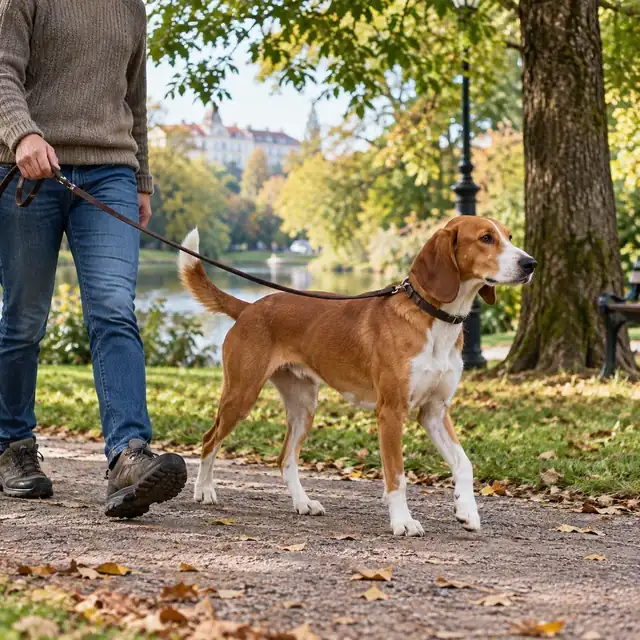
Human orientation
Average Score: Friendly, but works independently as a hunter. Behavior depends on upbringing.
THE PAW CATALOG
Origin: Norway
The name of the breed was given by Hans Fredrik Hygen, who bred local hounds in eastern Norway. His sons continued the work, and the Special Norwegian Hound Club helped prepare the standard. At first, Hygienic and Norwegian hounds were defined as separate breeds, then they were briefly united and separated again. To expand the gene pool, Norwegian, Finnish and Hamilton hounds were added. The breed is very rare: only a few dozen puppies are registered every year.
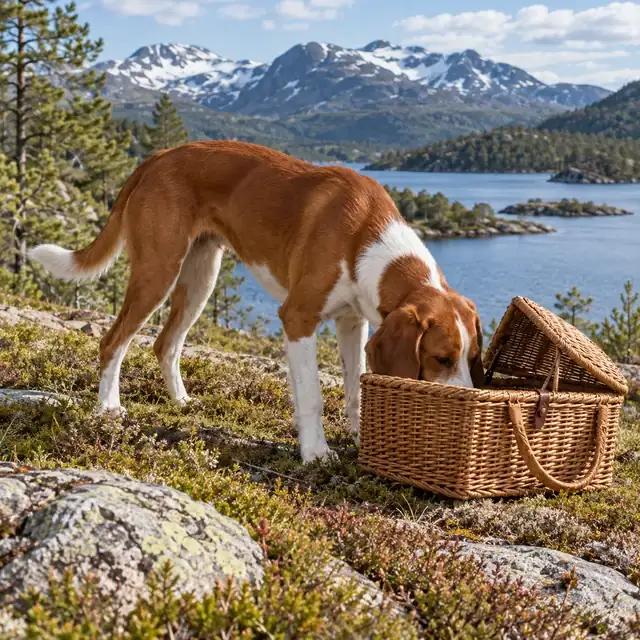
The Hygen Hound is a Norwegian Hound of medium size, with a strong but not heavy build, with a dense, smooth coat. Most often red with white markings. Friendly, willing to learn and calm with people, and has a strong hunting instinct. Needs daily movement and olfactory work.
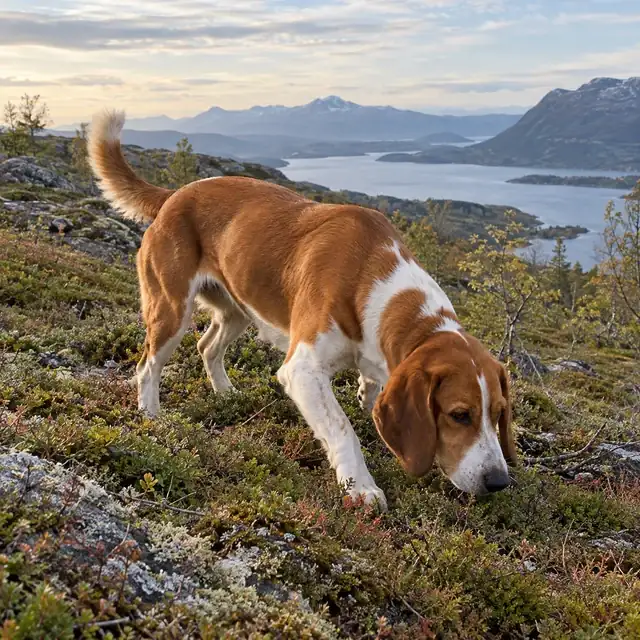
He feels best in a country house with a large area where he can move. A hound with a pronounced hunting passion begins to look for a trail early, so on walks without a leash, he risks getting lost.
High: Daily long walks, trail work and free running in a safe place. A strong hunting drive needs an outlet.
Friendly and willing to learn, usually at ease with people, so suitable for training. Recall is practiced from an early age, and olfactory games help keep the mind busy.
Dense, smooth wool is combed once a week. Ears are examined, nails are trimmed, teeth are cleaned.
Friendly, usually calm, so suitable as a family dog. The energy of the hound needs supervision during games with the little ones.
The hunting instinct determines the attitude towards small animals. Usually sociable with dogs. Early introduction to pets makes coexistence easier.
Estimates help compare breeds. For zooaggression, 5/5 means less tendency to aggression towards dogs. The behavior and health of a particular dog depend on many factors.
Average Score: Friendly, but works independently as a hunter. Behavior depends on upbringing.
Average score: Willing to learn, but hunting drive needs consistency.
Average score: usually peaceful with dogs, but small animals need supervision.
The British cohort does not provide a comparable survival estimate for the Huygens breed. The absence of the mentioned risks does not prove the absence of hereditary diseases, and parents should be checked in any case.
High rating: short dense coat is combed once a week.
Pedigree Screening: There is little reliable data on the hereditary diseases of the Huguenot breed, so the results of examinations of both parents should be requested in writing.
Musculoskeletal system: the growth, weight and load of the "Hyggen hound" breed should correspond to its age. Pain, lameness, or reluctance to move require a veterinary examination.
A preventive examination includes the eyes, heart and ears. For the "Hyggen hound" breed, the frequency of special inspections is determined by the advice of the club and the veterinarian.