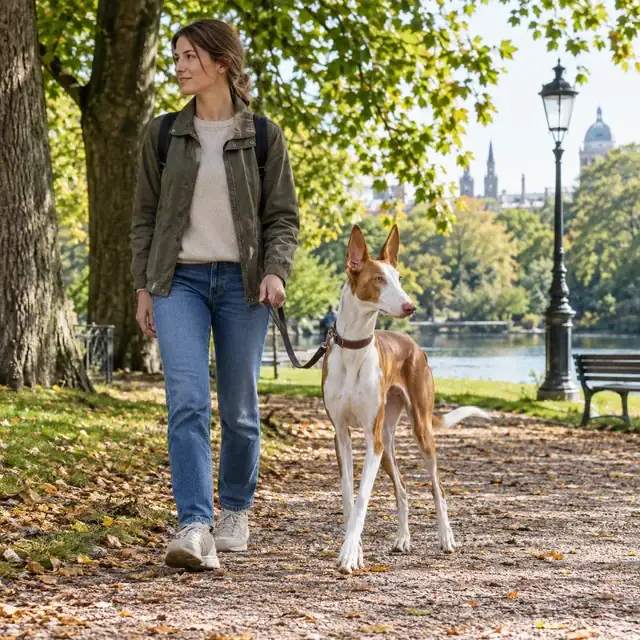
Human orientation
Devoted to the family, at the same time independent.
THE PAW CATALOG
Origin: Balearic Islands, Spain
Similar dogs are depicted on ancient Egyptian frescoes and records: they were hunting dogs and favorites of kings and priests. They are believed to have been transported to the western Mediterranean by Phoenician traders around 2000 BC. The breed took its modern form on the isolated islands of Ibiza and Formentera, where it hunted rabbits on rocky slopes.
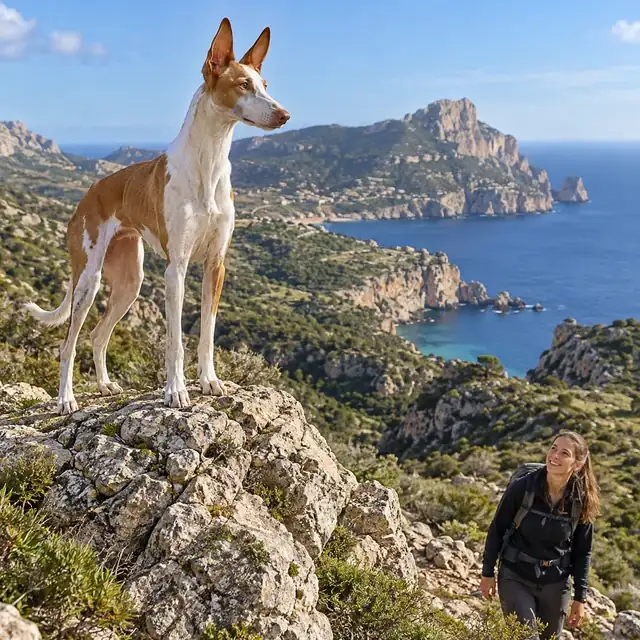
The Ibizan Podengu is a tall (56-74 cm), slender, but strong and light greyhound with a short or stiff coat. Dignified, intelligent and independent, alert and inquisitive, wary of strangers, but never aggressive. It has great stamina and can jump vertically about 2 meters from a place, so it needs a high secure fence.
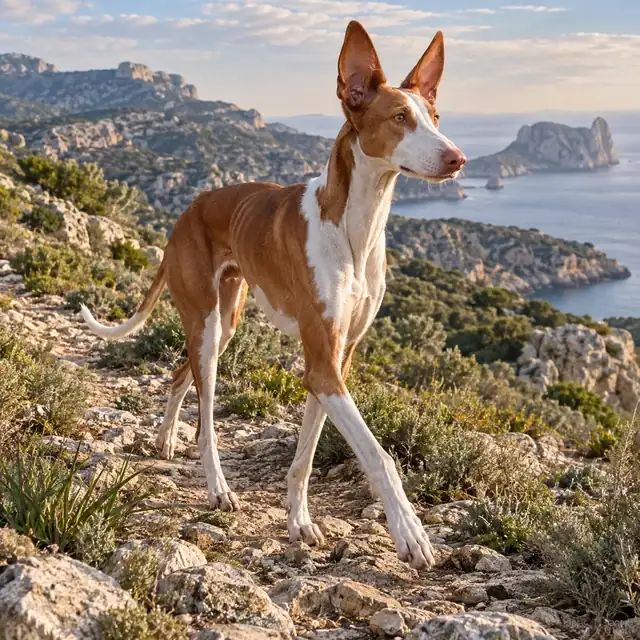
Suitable for active owners with a high reliable fence and daily walks. You can live in the apartment provided there is enough traffic. Does not like loneliness and boredom.
High Daily walks and runs in a safe area. Has great endurance.
Glad to please, but sensitive. Soft positive methods work best, as rudeness and yelling upsets the dog. Basic obedience is recommended. The recall will not be reliable, therefore, without a leash, she is kept only in safe places.
Care is simple. There are short-haired and hard-haired varieties, both need brushing once a week and infrequent bathing. Ears, teeth and claws are examined regularly.
It is considered a very suitable family dog, gets along well with the family. Children and the dog are always supervised by an adult. Children are taught to behave calmly.
Gets along well with other dogs. The hunting instinct is aimed at small animals, so be careful with cats and rodents.
Estimates help compare breeds. For zooaggression, 5/5 means less tendency to aggression towards dogs. The behavior and health of a particular dog depend on many factors.
Devoted to the family, at the same time independent.
Happy to please, but sensitive and needs soft methods.
Good with dogs, and small animals cause hunting interest.
There is no comparable survival estimate for the breed in the British cohort used. Among the described breed risks: hip dysplasia, thyroid gland dysfunction, hearing impairment; examination of the parents is confirmed with the veterinarian.
The coat is simple, but the tall stature and need for fencing require attention.
Dysplasia of the hip joints: the results of X-ray evaluations of the parents are studied before the purchase. The puppy is not forced to make sharp jumps and long runs while the bones are growing. Stiffness after rest is not attributed to age without an examination.
Dysfunction of the thyroid gland: hormones are checked for inactivity, weight gain, and skin problems.
Hearing impairment: congenital deafness is confirmed by a puppy hearing test. Kennels check hearing.
Autoimmune diseases: unexplained skin disorders, weight loss or weakness require veterinary examination. Ask the breeder for the health history of the ancestors.
Eye diseases: it is worth planning regular visits to an ophthalmologist. Redness, cloudiness or excessive tearing are not ignored.