Human orientation
Good-natured, gentle and attached to the family.
THE PAW CATALOG
Origin: Ireland
Considered the oldest of the two Irish setter breeds, its origins date back to the 16th century. Numbers plummeted when the red Irish setter became popular, with only about twenty dogs registered in Great Britain after World War II. It is currently the most endangered breed in Great Britain.
The Irish Red and White Setter is an athletic hunting dog, shorter and heavier than the Irish Setter, with a silky coat that is shorter and lighter than other setters. Happy, good-natured and gentle, very intelligent and willing to please, although he can be stubborn and mischievous. Needs a lot of movement and open spaces. The breed is very rare.
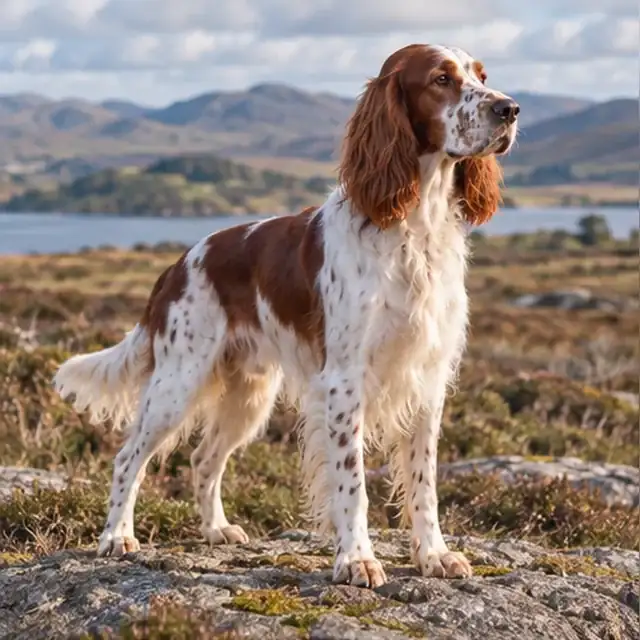
Suitable for active families with a large yard and the possibility of long walks. Boredom leads to unwanted behavior. Recall is trained from an early age.
High Athletic, needs a lot of activity and open spaces where you can run freely.
It is necessary to start early and act consistently, otherwise the dog becomes difficult to control. Basic obedience is a must. Puppies need socialization because they can be shy. Well-trained dogs make loyal companions.
The coat is shorter and lighter than that of other setters because the breed remains a working breed. Regular combing is required during shedding. Ears, paws and skin are examined after walks.
Good-natured and gentle. Children and the dog are under the supervision of an adult, because the dog is large and energetic.
Gets along well with other dogs, and with cats - if he grew up together. The hunting instinct is aimed at birds and small animals.
Estimates help compare breeds. For zooaggression, 5/5 means less tendency to aggression towards dogs. The behavior and health of a particular dog depend on many factors.
Good-natured, gentle and attached to the family.
Intelligent and willing to please, but stubborn and mischievous.
Good with dogs, hunting instinct needs control.
There is no comparable survival estimate for the breed in the British cohort used. The absence of the mentioned risk does not prove the absence of hereditary diseases.
The coat is silky, but shorter than that of other setters.
Breed Screening: Detailed data on hereditary diseases of the Irish Red and White Setter breed are scarce. Ask the breeder for documentary results of examinations of both parents and current recommendations of the club.
Musculoskeletal system: growth, weight and load of the breed "Irish Red and White Setter" should correspond to the age. Pain, lameness, or reluctance to move require a veterinary examination.
Heart and eyes are included in the list of annual examination. The need for individual tests is determined by club recommendations and the dog's age. Do not delay new symptoms, such as blurred vision or shortness of breath, until your next appointment.