Human orientation
He considers himself part of the family and enjoys spending time together.
THE PAW CATALOG
Origin: Ireland
The exact origin is unknown, but it is believed that the breed developed from Spanish hunting dogs. Early Irish Setters were often red and white, and solid red was prevalent in the late 19th century. In Australia, the breed has been known since the 1880s.
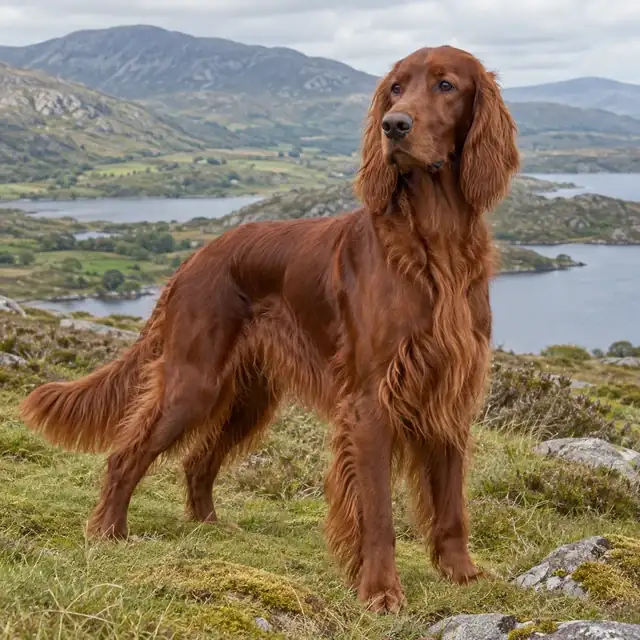
The Irish Setter is a medium-large hunting dog with a silky red coat. Cheerful, playful and gentle, at the same time mischievous, independent, intelligent and stubborn, although usually willing to please. Considers himself a part of the family. Very active, needs daily walks or runs and a fenced yard.

Suitable for active families who can walk and run with their dog every day. Can't stand loneliness. A securely fenced yard is desirable.
Very high. Daily walk or run and fenced yard. Without movement, it becomes restless and mischievous.
Intelligent, but stubborn, so training requires patience and consistency. Good habits are established early, and a puppy about six months old is enrolled in an obedience and socialization course. Basic obedience is a must.
Silk wool is regularly combed and bathed so that it is free of dirt, burps and coots. Trimming the fur around the paws and under the ears prevents mud from accumulating. Combing removes dead hair and distributes natural oils, providing shine.
Playful and gentle, usually gets along well with children. Because of their energy, children and the dog are under the supervision of an adult.
Generally friendly with other dogs. The hunting instinct is aimed at birds and small animals. Acquaintances are carried out gradually.
Estimates help compare breeds. For zooaggression, 5/5 means less tendency to aggression towards dogs. The behavior and health of a particular dog depend on many factors.
He considers himself part of the family and enjoys spending time together.
Smart, but stubborn and mischievous.
Generally friendly, but the hunting instinct needs to be controlled.
In the British cohort, the median lifespan of the breed was 12.9 years. Among the described birth risks: dysplasia of the hip joints, bloating or twisting of the stomach, eye diseases; examination of the parents is confirmed with the veterinarian.
Silk wool needs regular combing and inspections after walks.
Hip Dysplasia: Parents look at joint health before choosing a puppy. The puppy is not forced to make sharp jumps and long runs while the bones are growing. Stiffness after rest is not attributed to age without an examination.
Bloating or stomach upset: the portion is divided into several feedings, and the dog is allowed to rest after eating. If the stomach hardens, and the dog is restless and tries to vomit in vain, go to the clinic immediately.
Eye diseases: regular examinations by a veterinary ophthalmologist. With any changes in the eyes, such as cloudiness or excessive discharge, consult a doctor.