Human orientation
Protective and loyal, likes to be with his family.
THE PAW CATALOG
Origin: Ireland
They were bred by people with limited funds, so she had to be hardy and unpretentious. Served as a family companion, guard and hunting dog that hunted rabbits, foxes and badgers.
The Irish Terrier is a medium (about 48 cm for males and 46 cm for females) slender reddish terrier breed with a stiff wavy or straight coat. Independent, playful and protective, with a good sense of humor. Likes to solve tasks, rarely looks for trouble, but will not back down in a fight. It is called an excellent family dog.
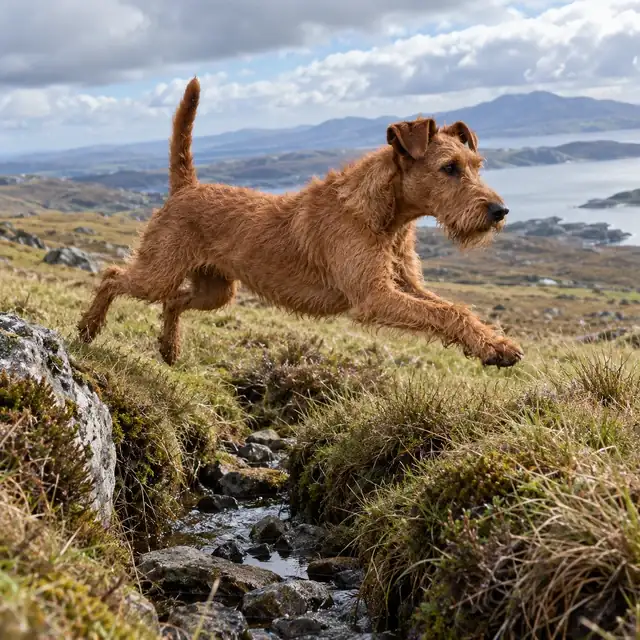
Suitable for active families who have time for daily walks and activities. It needs reliable fencing, it is not allowed off the leash in parks.
Moderately high. Daily walks and sports: agility, bait coursing, sniffing and tracking.
Very teachable, but thinks independently, therefore responds best to creative, positive methods. Basic obedience is a must. Classes are varied, with rewards.
Hard wavy or straight wool is trimmed by hand or cut 3-4 times a year, combed and combed weekly. The hair between the pads of the paws and in the hygienic areas is trimmed. Ears and teeth are examined.
Adaptable, known for being at ease around the very young and the elderly. Children and the dog are always supervised by an adult.
Usually gets along with cats if properly introduced. Chickens are difficult if they are not securely closed. It is better to keep two Irish terriers of different sexes.
Estimates help compare breeds. For zooaggression, 5/5 means less tendency to aggression towards dogs. The behavior and health of a particular dog depend on many factors.
Protective and loyal, likes to be with his family.
Very trainable, but independent.
He can get along with cats, but it is difficult with small animals and chickens.
In the British cohort, the median lifespan of the breed was 13.5 years. Among the described breed risks: urolithiasis; examination of the parents is confirmed with the veterinarian.
Hard wool needs regular combing and trimming.
Urinary stone disease: stones in the urinary bladder are manifested by frequent urination, straining, blood in the urine. Plenty of water and a vet's advice on diet are required.