Human orientation
Tied to his family, humorous, but reserved with strangers.
THE PAW CATALOG
Origin: Ireland
Probably arose from two early Irish lines: South County and North County. The breed appeared in the 1830s, the modern dog most closely resembles the South County type.
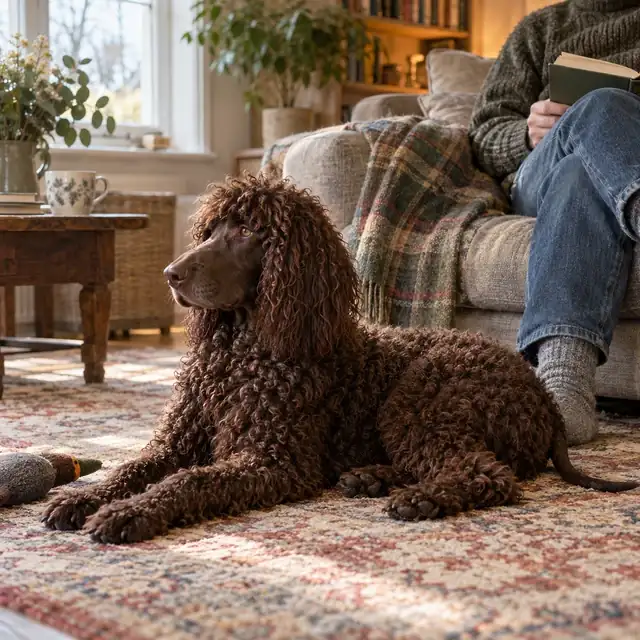
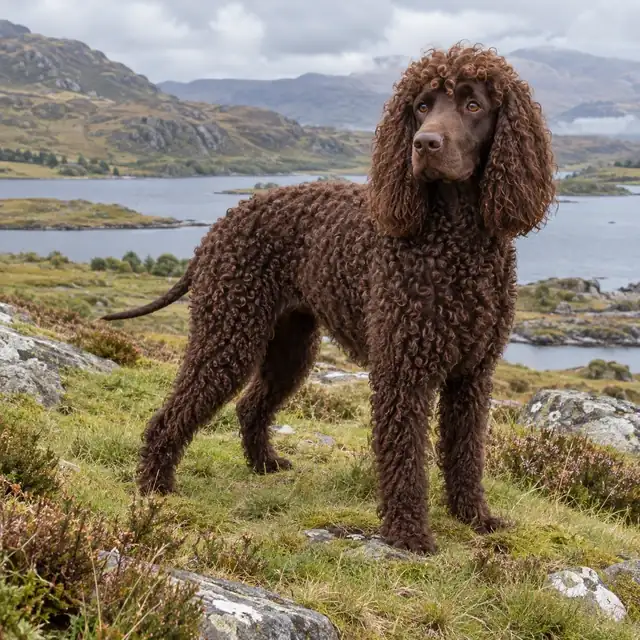
The Irish Water Spaniel is a medium (53-58 cm and 25-30 kg in males, 51-56 cm and 20-25 kg in females) strong compact dog with thick curly liver coat. Vigilant, inquisitive, active and persistent. Humorous, for which he is called "the clown of the dog world". He can be reserved with strangers, but not timid. An excellent swimmer and retriever.

Suitable for active families, adapts to conditions from small houses to spacious plots. Needs daily movement and communication. He enjoys swimming, so swimming is natural for him.
High Daily movement, swimming, fetching, agility, flyball. It also requires communication.
Trainable, performs successfully in obedience, agility, rally and exhibitions. Basic obedience is a must. Early socialization helps to avoid excessive restraint with strangers.
The thick curly coat is combed and combed once or twice a week to prevent tangles from forming. Or take it to the groomer every 4-6 weeks. Ears are dried and cleaned after water.
Suitable for active families. Children and the dog are always supervised by an adult.
Generally friendly, especially during early socialization. The hunting instinct is aimed at birds and small animals.
Estimates help compare breeds. For zooaggression, 5/5 means less tendency to aggression towards dogs. The behavior and health of a particular dog depend on many factors.
Tied to his family, humorous, but reserved with strangers.
Educable, successful in sports.
In general, the friendly, hunting instinct is aimed at game.
In the British cohort, the median lifespan of the breed was 10.8 years; small sample: 68 deaths. Among the described breed risks: dysplasia of the elbow joints, allergic skin diseases; examination of the parents is confirmed with the veterinarian.
Thick curly hair needs regular combing or grooming.
Dysplasia of the elbow joints: the results of X-ray evaluations of the parents are studied before the purchase. Excess weight increases the load on the joints, so the puppy should not be overfed. Lameness is shown to the veterinarian.
Allergic skin diseases: itching, redness and baldness require a veterinary examination.