Human orientation
High Score: Kangal is loyal to his family, which he considers a herd, although independent. Behavior depends on upbringing.
THE PAW CATALOG
Origin: Turkey
It got its name from the town of Kangal near Sivas in Central Anatolia. The breed is ancient: for centuries it protected sheep in the Sivas region from jackals, wolves and bears. The exact origin is unknown, there is a hypothesis that connects it with Turkic migrations to Anatolia in the 11th century. Currently, Kangals are common in Turkey, and the popularity of the breed is growing abroad.
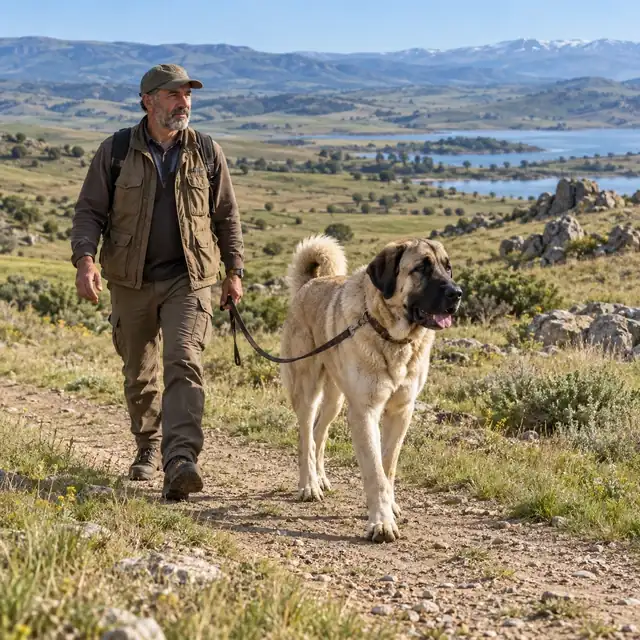
The Kangal is a large, muscular Turkish shepherd guard with short, dense fawn to wolf-sable coloration and a black mask. Calm, independent, brave and gentle with "his". Needs space, early socialization and an experienced owner.

Suitable only for owners of large plots with a strong fence. It does not require special training to protect livestock: it quickly gets used to the herd. He considers his family and animals to be a "herd" and carefully protects them.
Does not require exhausting loads, but requires space, daily walks and the ability to patrol the territory. Grows slowly, so puppies are restricted from jumping and running.
Smart and independent, so it requires consistent education without rudeness. Early socialization helps distinguish guests from threats. The breed is not suitable for beginners.
Short hair 3-7 cm long is combed once a week, and more often in the spring, during the main shedding. Claws are trimmed, teeth and ears are inspected.
Gentle and devoted to the children of his family, but his size and protective instinct require supervision, especially when visiting other people's children.
He perceives his livestock and family animals as a "herd", protects them and is usually gentle. Unfamiliar dogs and predators can cause reactions, so introductions are controlled.
Estimates help compare breeds. For zooaggression, 5/5 means less tendency to aggression towards dogs. The behavior and health of a particular dog depend on many factors.
High Score: Kangal is loyal to his family, which he considers a herd, although independent. Behavior depends on upbringing.
Medium-low score: intelligent but strong-willed, needs an experienced handler.
Average score: soft towards "own", but perceives unfamiliar animals as a threat.
The British cohort does not provide a comparative survival estimate for the Kangal breed. The absence of the mentioned risks does not prove the absence of hereditary diseases, and parents should be checked in any case.
High score: short coat is easy, and shedding occurs once a year.
Breed screening: hip dysplasia is important for large breeds. Ask the breeder for the test results of both parents and current club recommendations.
Musculoskeletal system: The rapid growth of a large breed puts stress on the joints, so the puppy is fed a balanced diet so that growth is slow and even. Lameness, pain, or reluctance to move require a veterinary examination.
A preventive examination includes the eyes, heart and ears. For the "Kangal" breed, the frequency of special inspections is determined by the advice of the club and the veterinarian.