Human orientation
Average score: independent hunter, at the same time not aggressive towards people. Behavior depends on upbringing.
THE PAW CATALOG
Origin: Finland
It comes from the Koma dog, or the Zyryan dog. Breeding began in 1936, aiming to get a strong dog that barks at big game. The first standard was adopted in 1945, and the first dogs were registered in 1946. Nowadays, the breed is widespread in Finland.
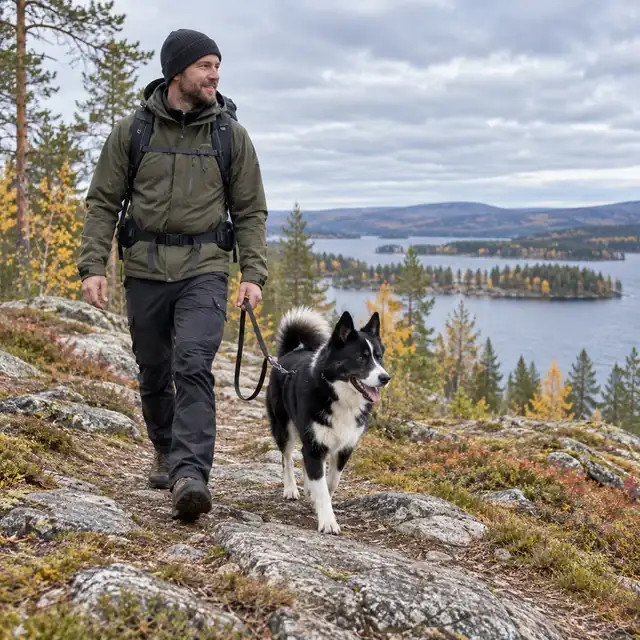
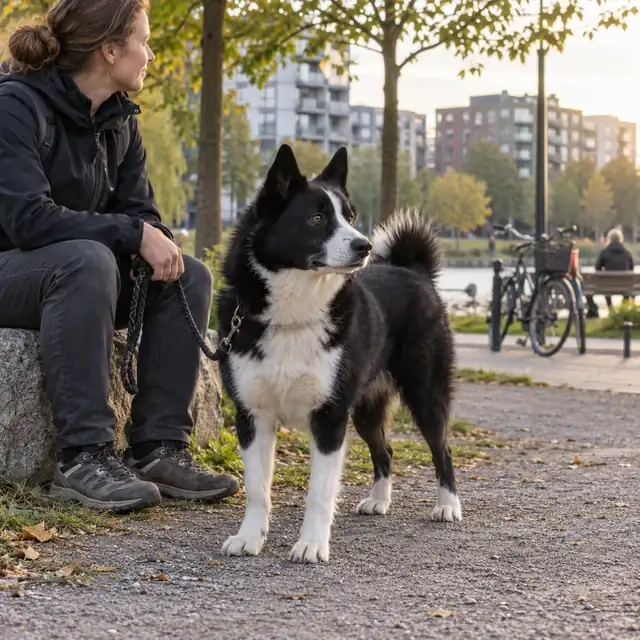
The Karelian bear dog is a medium-sized black hunter (49-60 cm, 17-28 kg) with white markings and a dense, stiff coat. Brave, persistent and independent, with a sharp sense. Requires early socialization, daily exercise and an experienced owner.

Suitable for active owners with a yard. Energetic, feels best during morning and evening walks, games and hunting. Under the condition of education, it can be a good family dog.
Energetic breed: regular morning and evening walks, lots of games and work.
Independent, so early socialization and obedience training are necessary. Classes are short, with a reward. Recalls work from puppyhood.
Dense hard wool is combed weekly, and more often during the shedding season. Claws are trimmed, ears and teeth are inspected.
Not aggressive towards people, but independent and a little reserved. At home, his contacts with children are supervised.
May be territorial with other males. Works together with other dogs on the hunt. Small animals are treated like prey.
Estimates help compare breeds. For zooaggression, 5/5 means less tendency to aggression towards dogs. The behavior and health of a particular dog depend on many factors.
Average score: independent hunter, at the same time not aggressive towards people. Behavior depends on upbringing.
High score: intelligent and persistent, although independent.
Average score: Territorial conflicts with males and instinct for small animals need control.
The survival rate of the Karelian Bear Dog breed in the British cohort is not comparable. The absence of the described risks does not guarantee the absence of hereditary diseases, so the breeder is asked for the results of the parents' examinations.
Average score: combing weekly and increased during the shedding season.
Pedigree screening: There is little reliable data on the hereditary diseases of the Karelian Bear Dog breed, so the results of examinations of both parents should be requested in writing.
Musculoskeletal system: growth, weight and load of the "Karelian bear dog" breed should correspond to the age. Pain, lameness, or reluctance to move require a veterinary examination.
A preventive examination of the "Karelian bear dog" breed includes an evaluation of the eyes, heart and ears. The frequency of special inspections is determined by the recommendations of the club and the veterinarian.