Human orientation
Average score: follows the owner, but independent and reserved with strangers. Behavior depends on upbringing.
THE PAW CATALOG
Origin: Kazakhstan
One of the oldest breeds in the world, the homeland is Kazakhstan. The origin is uncertain, but there is a genetic affinity with similar dogs of North Africa, the Middle East, and Central Asia. During the nomadic life, the Taz was valued as a hunter, and he had a special cultural status. There are less than three hundred purebred dogs left, and the state is taking measures against their disappearance. FCI recognized the breed in September 2024.
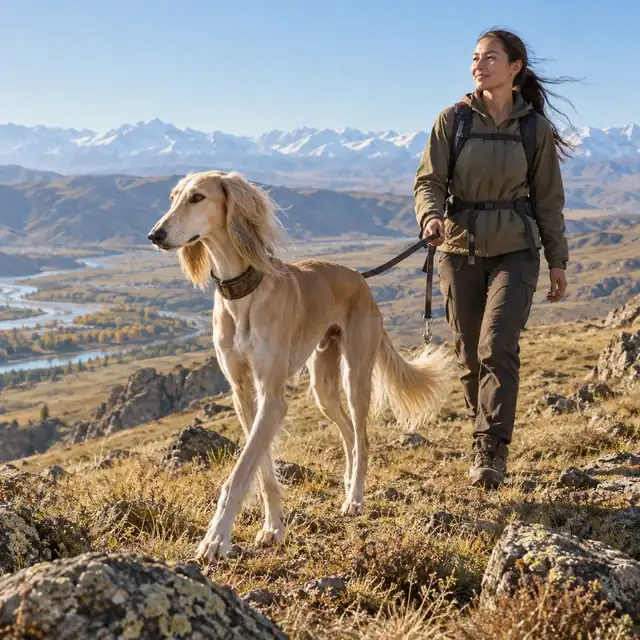
The Kazakh Taz is a long-legged, deep-chested greyhound with short hair on the body and longer on the ears and tail. Males 60-72 cm, females 55-60 cm. Discreet with strangers, independent, graceful and hardy. Needs space, safe places to run and a responsive owner.

Needs space and safe areas to run. Independent and reserved with strangers. You can live in a house with a yard, and an apartment is possible only with regular access to open spaces.
A hardy runner capable of covering long distances at a speed of about 12-15 km/h. Daily walks and regular opportunity to run freely in a safe place are required.
Independent and sensitive, like most greyhounds. Short sessions with rewards and patience work better than pressure. Recall is unreliable when there is a moving target, so you can't go for a walk without a fence or leash.
Short hair requires minimal maintenance: wiping and weekly combing is enough. The longer hair on the ears and tail is combed. Claws are trimmed, teeth are cleaned.
Playful and alert, but independent and restrained, therefore contacts with small children are managed. Calm children find a common language with him more easily.
He once hunted wolves, hares, wild boars, foxes, badgers, deer and saigas, so the hunting instinct is strong. Cats and small animals are introduced carefully.
Estimates help compare breeds. For zooaggression, 5/5 means less tendency to aggression towards dogs. The behavior and health of a particular dog depend on many factors.
Average score: follows the owner, but independent and reserved with strangers. Behavior depends on upbringing.
Average score: sensitive and independent, needs patience.
Average score: peaceful with dogs, and small animals are evaluated separately due to their hunting instinct.
The British cohort does not provide a comparative survival estimate for the Kazakh Taz breed. The absence of the mentioned risks does not prove the absence of hereditary diseases, and parents should be checked in any case.
Average score: Short coat is easy, but needs protection from the cold and control of walking.
Pedigree screening: there is little reliable data on the hereditary diseases of the Kazakh Taz breed, so the results of examinations of both parents should be requested in writing.
Musculoskeletal system: height, weight and load of the Kazakh Taz breed should correspond to the age. Pain, lameness, or reluctance to move require a veterinary examination.
A preventive examination includes the eyes, heart and ears. For the "Kazakh Taz" breed, the frequency of special inspections is determined by the advice of the club and the veterinarian.