Human orientation
High score: a gentle companion who wants to be close. Behavior depends on upbringing.
THE PAW CATALOG
Origin: Great Britain
Miniature spaniels appeared in Europe in the 16th century and were associated with the English royal family. The breed is named after Charles II (1660-1685), who loved small spaniels. At the beginning of the 19th century, they were crossed with pugs and oriental breeds to shorten the nose. In 1903, the British Kennel Club united four varieties of toy spaniels into one breed. The Cavalier King Charles Spaniel originated in the 1920s as an attempt to reproduce an older type with a longer muzzle.
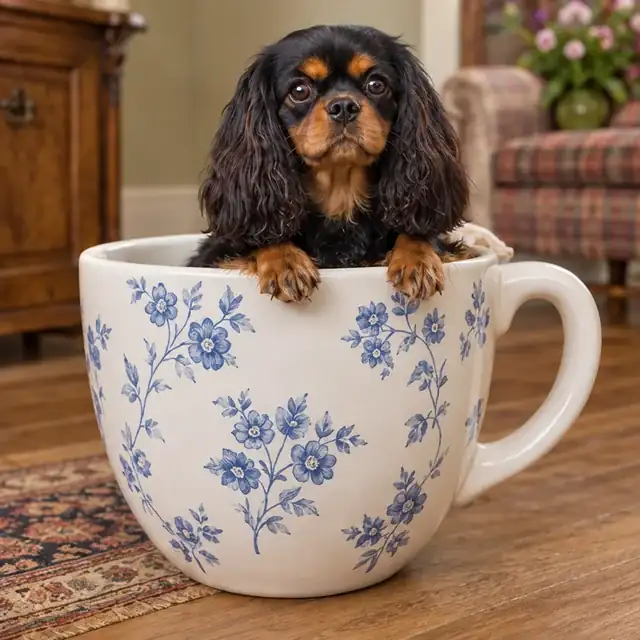
The King Charles Spaniel, or English Toy Spaniel, is a small (23-28 cm, 3.6-6.4 kg) dog with a domed head, short nose, large dark eyes, and long silky hair. Gentle, calm companion, suitable for an apartment. Does not tolerate loneliness and rough treatment.

Suitable for an apartment. He doesn't like to be alone for a long time, so he feels best in a house where someone is at home. Quiet and unobtrusive.
Low: moderate walks and games at home. In the heat and during physical exertion, they monitor their breathing, because a short nose makes it difficult to cool down.
Clever and subject to obedience training, suitable even for therapeutic work. A soft tone, treats and short sessions are suitable.
The long coat is combed several times a week, especially the ears and feathers on the paws. Eyes are wiped, long ears are examined, teeth are brushed.
Gets along well with children, but does not tolerate rough treatment. Games with children are supervised.
In general, it is tolerant of other animals, although it can chase small ones due to its hunting instinct.
Estimates help compare breeds. For zooaggression, 5/5 means less tendency to aggression towards dogs. The behavior and health of a particular dog depend on many factors.
High score: a gentle companion who wants to be close. Behavior depends on upbringing.
Average score: intelligent, but not too hardworking.
Average score: generally tolerant, small animals may attract hunting interest.
There is no comparable survival estimate for the breed in the British cohort used. Among the described breed risks: eye diseases; examination of the parents is confirmed with the veterinarian.
Medium-Low Rating: Long coat, ears and eyes need regular attention.
Eye diseases in the breed include cataracts, corneal dystrophy, extra eyelashes, and ptosis. Regular examinations by a veterinary ophthalmologist help to notice changes in time.