Human orientation
Moderately high score: the breed is attached to the family, but territorial and independent. Actual behavior depends on socialization.
THE PAW CATALOG
Origin: Bali, Indonesia
The breed comes from the Indonesian island of Bali, from the Kintamani area. It was formed from free local dogs, whose ancestors got to the island about 3000 years ago. A ban on the importation of foreign dogs due to the fight against rabies in 1926 left the island dogs in their own gene pool. FCI recognized the breed in 2019.
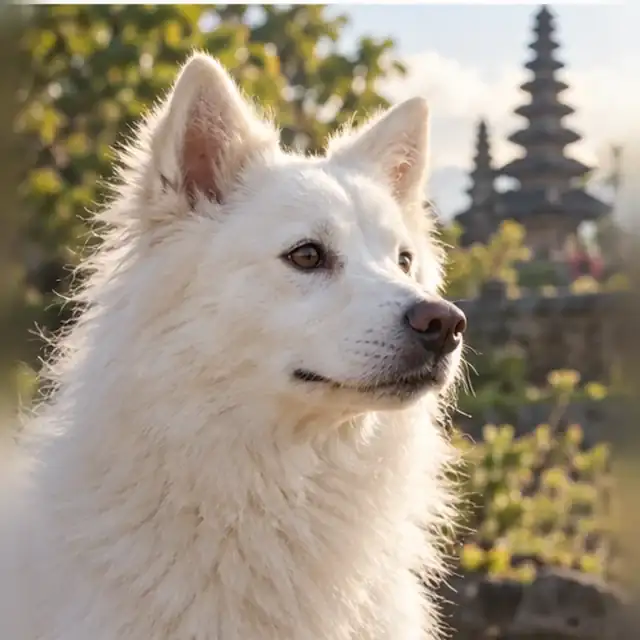
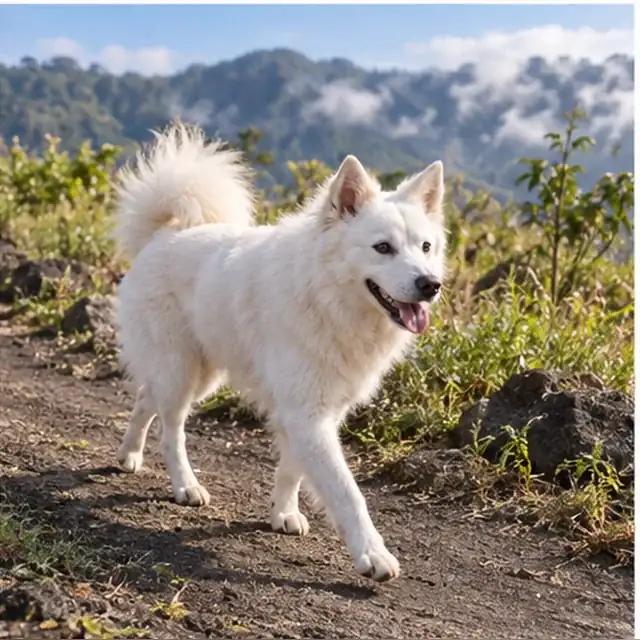
The Kintamani Balinese dog is a medium-sized Balinese spitz with a thick coat, a collar and an alert character. Tied to the family, territorial and loud. Needs socialization, fenced space and moderate loads.

Suitable for people who can provide space, safe enclosure and active life. Kintamani is a watchful watchman, willingly barks at strangers. Likes to climb walls and roofs.
A healthy adult dog needs daily walks, play and mental challenges. Safe free running only in a fenced area, because the dog climbs and jumps over. The load of puppies and elderly dogs is adjusted with the veterinarian.
Independent and territorial, early socialization and consistent rules are important. Positive reinforcement and short sessions work. Calling and a calm attitude towards guests is practiced from the puppy age.
The thick double coat is combed several times a week, and during the shedding period every day. They bathe as needed. Claws are regularly trimmed, ears and teeth are cleaned.
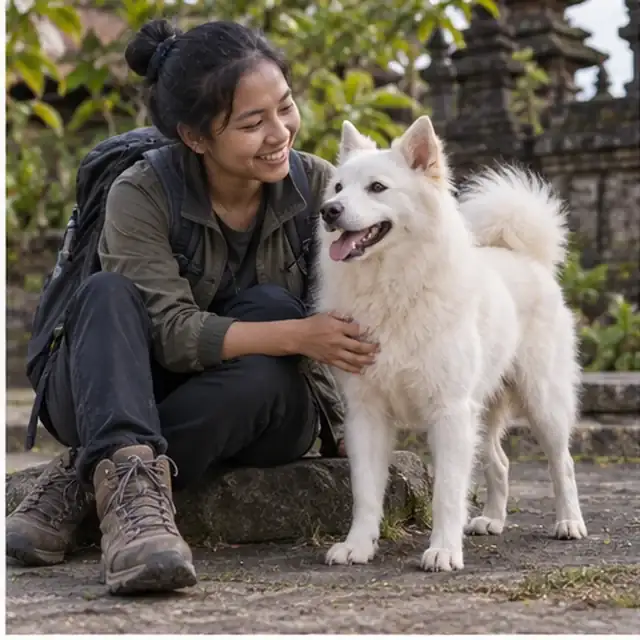
Gentle to the family, but territorial and loud. An adult monitors the contact, and the rules of calm behavior are explained to the child. The dog needs a place to rest.
Territoriality can occur with other dogs, so early socialization and supervision is essential. Acquaintance with other pets is carried out gradually.
Estimates help compare breeds. For zooaggression, 5/5 means less tendency to aggression towards dogs. The behavior and health of a particular dog depend on many factors.
Moderately high score: the breed is attached to the family, but territorial and independent. Actual behavior depends on socialization.
The breed usually quickly masters teams, but is independent. Consistency and patience are required.
Average score: territoriality needs socialization and supervision in contact with other dogs.
There are no comparable survival data for the Balinese Kintamani breed in the UK cohort used. Just because no risk is listed doesn't mean it doesn't exist: screening parents remains important.
Below average: the thick double coat is combed several times a week, and sheds daily.
Breed screening: detailed data on hereditary diseases of the Balinese Kintamani breed are scarce. Ask the breeder for documentary results of examinations of both parents and current recommendations of the club.
Musculoskeletal system: the growth and load of the "Balinese Kintamani Dog" breed should be age-appropriate. Lameness, pain, or reluctance to move require a veterinary examination.
A preventive examination includes an evaluation of the eyes, heart and teeth. The frequency of special inspections is determined by the recommendations of the club and the veterinarian.