Human orientation
Very high score: Closely connected to the family. Behavior depends on socialization.
THE PAW CATALOG
Origin: Germany
The breed originated in Germany: Ilse Schleifenbaum bred it near Siegen, in the southern part of North Rhine-Westphalia. The name comes from the area "Crom Fore", which means "crooked furrow". Ancestors include the wire-haired fox terrier and the large Vendean griffon. Internationally recognized since 1955, in the FCI system it belongs to group 9, companions and decorative dogs.
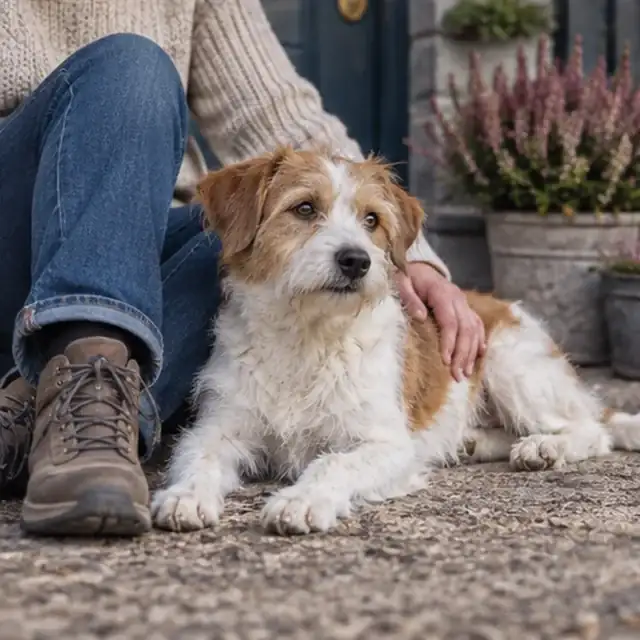
Cromforlander is a medium-sized German companion (38-46 cm, 9-16 kg), white with brown markings. It can be hard-coated with a beard or smooth-coated without it. Gentle, lively and responsive, reserved towards strangers. Attracts people who want an active pet dog.

Suitable for a family ready to spend time with a dog. It is a domestic companion that gets attached to people and does not feel well alone or in an enclosure.
A lively dog needs daily walks, games and mental exercises. Hardy, but does not require excessive loads.
Usually smart and sensitive. Aggressiveness and timidity in the breed are undesirable, so socialization and gentle upbringing from a puppy age are important. Classes are short, with praise.
The wool is combed once or twice a week, more often during the molting period. Ears and claws are examined, teeth are cleaned.
Adaptable and gentle, so usually gets along well with children. Games with children are left under supervision.
The hunting instinct of the breed is weak, but it is there, so the treatment of small animals is controlled. Usually gets along with dogs.
Estimates help compare breeds. For zooaggression, 5/5 means less tendency to aggression towards dogs. The behavior and health of a particular dog depend on many factors.
Very high score: Closely connected to the family. Behavior depends on socialization.
High Score: Sensitive and willing to learn with a gentle approach.
Average score: generally gets along, but hunting instinct needs control.
There is no comparable survival estimate for the breed in the British cohort used. Among the described breed risks: von Willebrand's disease, autoimmune diseases; examination of the parents is confirmed with the veterinarian.
Very high rating: the coat is combed once or twice a week.
Von Willebrand's disease is a hereditary blood coagulation disorder that can manifest itself in prolonged bleeding. Diagnosed by analysis, breeders check the pair.
Autoimmune diseases are conditions when the immune system acts against its own tissues. Suspicion of them (persistent lethargy, skin changes, joint damage) is referred to a veterinarian.