Human orientation
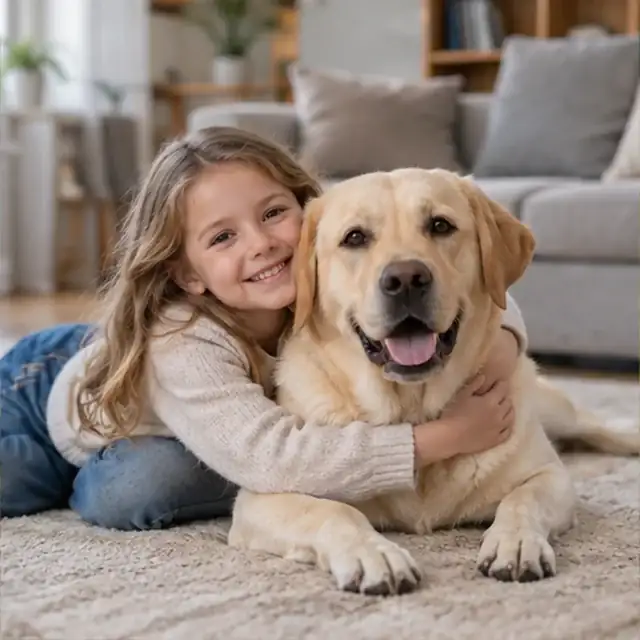
Very high score: friendly, drawn to people. Behavior depends on upbringing.
THE PAW CATALOG
Origin: Great Britain, Newfoundland
Bred in Great Britain from St. John's water dogs brought from the colony of Newfoundland, and named after the Labrador region of that colony. In the 1830s the Earl of Home and the Duke of Bucklew imported the first ancestors for hunting, and the Earl of Malmesbury bred them for water game hunting. The modern breed was formed in the 1880s by three noble breeders. The British Kennel Club recognized it in 1903.
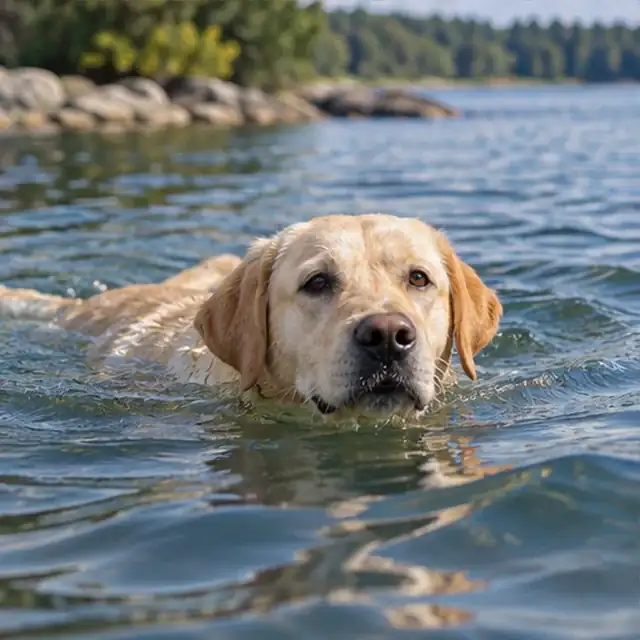
The Labrador retriever is a medium-large (about 54-57 cm, 25-36 kg) dog with a short, dense, water-resistant coat of black, yellow (from cream to red) or chocolate color. Friendly, energetic, playful and intelligent. He works as a hunter, guide, assistant and rescuer. Requires movement and weight control.

Suitable for families with an active lifestyle. It requires both physical and mental stress, otherwise it can get bored and spoil things. Does not like prolonged loneliness.
Long daily walks, running, swimming and fetching are required. Lack of movement together with appetite quickly leads to excess weight.
Intelligent and willing to cooperate, so he learns easily. Classes are short, with treats. Labradors are widely used as handlers, human helpers, and in rescue and therapy work. Weight is monitored, because the breed has a high appetite.
Dense short hair is combed once or twice a week, more often during shedding. Ears are examined after bathing, nails are trimmed, teeth are brushed.
Friendly and playful, usually gets along well with children. Due to its size and energy, the puppy can knock the baby off its feet, so the games are supervised.
Generally sociable to dogs and other animals. The retriever's hunting instinct is preserved, so birds and small animals are not left unattended.
Estimates help compare breeds. For zooaggression, 5/5 means less tendency to aggression towards dogs. The behavior and health of a particular dog depend on many factors.
Very high score: friendly, drawn to people. Behavior depends on upbringing.
Very high score: intelligent and willing to cooperate.
High score: usually sociable with dogs and other animals.
In the British cohort, the median lifespan of the breed was 13.1 years. Among the described breed risks: dysplasia of the hip joints, progressive retinal atrophy, bloat or twisting of the stomach; examination of the parents is confirmed with the veterinarian.
Medium-Low Rating: Short coat, but heavy shedding and need to watch weight.
Hip and elbow dysplasia is more common in large dogs. They ask for the results of examinations of both parents, do not overfeed, and show the lameness to the veterinarian.
Eye diseases in the breed include progressive retinal atrophy, cataracts and corneal dystrophy. Progressive retinal atrophy is associated with an inherited PRCD mutation, which is detected by the test. Regular examinations by a veterinary ophthalmologist help to notice changes in time.
Exertion-induced collapse is manifested by weakness, staggering, and overheating after brief vigorous movement. Hereditary risk is checked by a DNA test.
Centronuclear myopathy is a hereditary muscle disease manifested by weakness, rapid fatigue and stiffness. The carrier of the gene is checked by a DNA test.