Human orientation
High score: gentle to the owner. Behavior depends on socialization.
THE PAW CATALOG
Origin: England
Bred in England as a shepherd and cattle driver, and also as a farm dog for hunting rats. It is believed to be descended from the corgi and the Manchester terrier. In Lancashire, such dogs have been known for over 150 years. Gwen McIntosh began breeding them in the early 1960s, and the Lancashire Heeler Club was founded in 1978. The British Kennel Club recognized the breed in 1981 and lists it as a vulnerable rare breed. The FCI provisionally recognized the heeler in 2016, and the AKC in 2024.
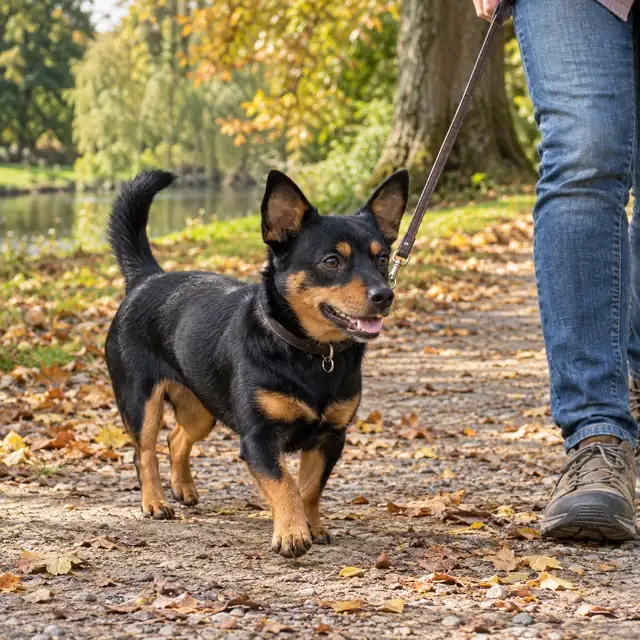
The Lancashire Heeler is a small (25-30 cm, 6-8 kg) but strong English shepherd and rat dog, black-tan or liver-tan, with a short, stiff coat. Lively, loyal and intelligent, sometimes "smiles". Requires daily activity and attention to the eyes.

Suitable for active owners: this is a small but energetic working dog. It feels good both in the house and in the apartment, when it has enough movement.
Daily walks, games and mental tasks are needed. Boring without load.
Smart and eager to learn. The shepherd's habit of nipping at the heels needs correction from puppyhood. Classes are short, with a reward.
The coat is hard and smooth, care is simple: weekly combing, and more often during molting. Ears are examined, nails are trimmed, teeth are cleaned.
He is attached to his family and usually gets along well with children. Shepherd's heeling habit can manifest itself during play, so children will play under supervision.
The hunting and herding instinct is preserved, so small animals are prey for him. Gets along with dogs during socialization.
Estimates help compare breeds. For zooaggression, 5/5 means less tendency to aggression towards dogs. The behavior and health of a particular dog depend on many factors.
High score: gentle to the owner. Behavior depends on socialization.
Medium-high rating: smart and willing to learn.
High score in socialization: generally gets along with dogs, but small animals are prey for him.
In the British cohort, the median lifespan of the breed was 15.4 years. Among the described breed risks: lens dislocation, eye diseases; examination of the parents is confirmed with the veterinarian.
High rating: The short, stiff coat requires minimal maintenance.
Lens dislocation is a hereditary eye disease associated with the ADAMTS17 gene. The breed is considered one of the most frequently affected, so breeders undergo a DNA test.
Eye diseases in the breed include eye circle anomaly and persistent pupillary membranes. Puppies and adult dogs are examined by a veterinary ophthalmologist.