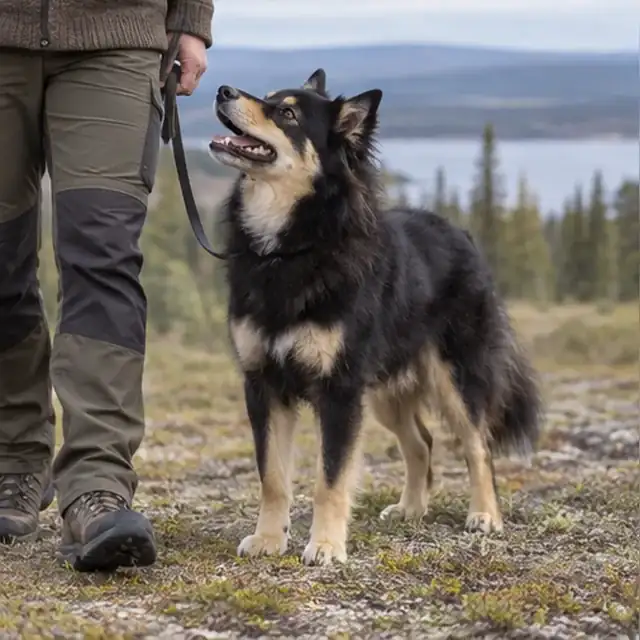
Human orientation
High score: friendly to people. Behavior depends on socialization.
THE PAW CATALOG
Origin: Finland
The Sami have long used herding spitz to herd reindeer, but this was a local population without a defined appearance. Swedish and Finnish fanciers began to record the type in the 1930s, but during World War II most of the dogs died. After the war, breeders in Sweden and Finland restored the breed. In 1966, the varieties were divided according to the length of the coat: one became a lapdog, and the other retained the name Lapinporokoira, that is, a Lapland shepherd dog. The FCI classifies the breed as group 5, section of northern guard and herding dogs.
The Lapland Shepherd Dog is a medium-sized (46-51 cm, 25-29 kg) spitz from northern Finland, bred by the Sami to herd deer. Double coat of medium length, black, dark gray or brown. Calm, friendly and energetic, needs daily movement and work.
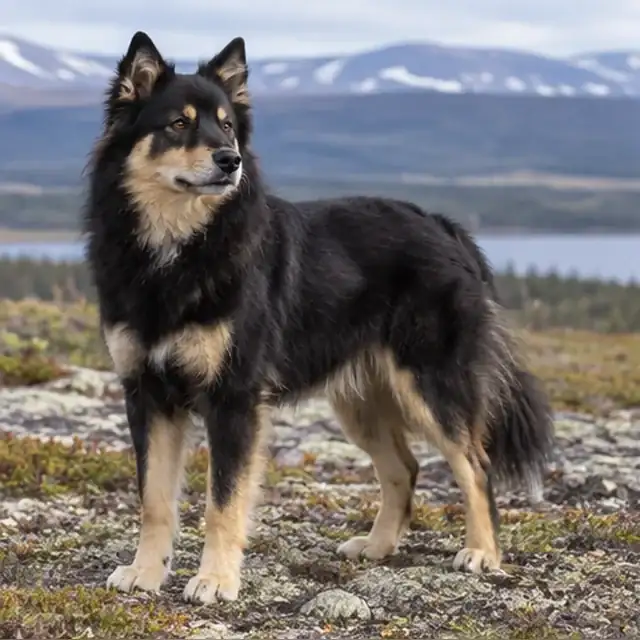
Suitable for active owners, especially outside the city. Shepherd breed that loves work, not lazy life in an apartment.
Like most herding breeds, it needs regular exercise: long walks, herding activities and games.
Calm, friendly and obedient, but energetic. It is also suitable for sports: agility, obedience, herding trials.
The double coat is combed weekly, and more often during shedding. Ears are examined, nails are trimmed, teeth are cleaned.
Friendly to people. The herding instinct can manifest itself during the run, so the games are supervised.
Herding instinct remains, so the dog can chase small animals and children. Acquaintances take place gradually.
Estimates help compare breeds. For zooaggression, 5/5 means less tendency to aggression towards dogs. The behavior and health of a particular dog depend on many factors.
High score: friendly to people. Behavior depends on socialization.
Medium-high rating: obedient, energetic, willing to work.
Average score: herding instinct needs correction.
There is no comparable survival estimate for the breed in the British cohort used. The absence of the mentioned risk does not prove the absence of hereditary diseases.
Average score: The double coat is combed weekly, and more often during shedding.
Breed screening: detailed data on hereditary diseases of the Lapland Sheepdog breed are scarce. Ask the breeder for documentary results of examinations of both parents and current recommendations of the club.
Musculoskeletal system: for the Lapland Sheepdog breed, the load is selected according to age and condition. Limping, pain or reluctance to move is a reason to consult a veterinarian.
Eyes and heart need regular attention from a doctor. The frequency of special examinations is determined according to the recommendations of the club and the veterinarian.