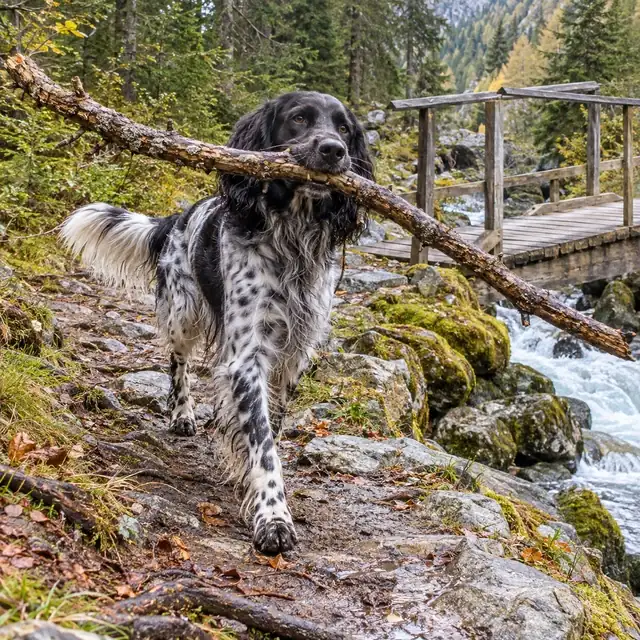
Human orientation
High score: willingly cooperates with the person and is closely attached to the family, especially to one person. Behavior depends on socialization.
THE PAW CATALOG
Origin: Germany
Bred in Münster, Germany as a versatile dog for working on feathered and fur game on land and in water. It was recognized as a separate breed at the beginning of the 20th century, although similar long-haired dogs have existed since the Middle Ages.
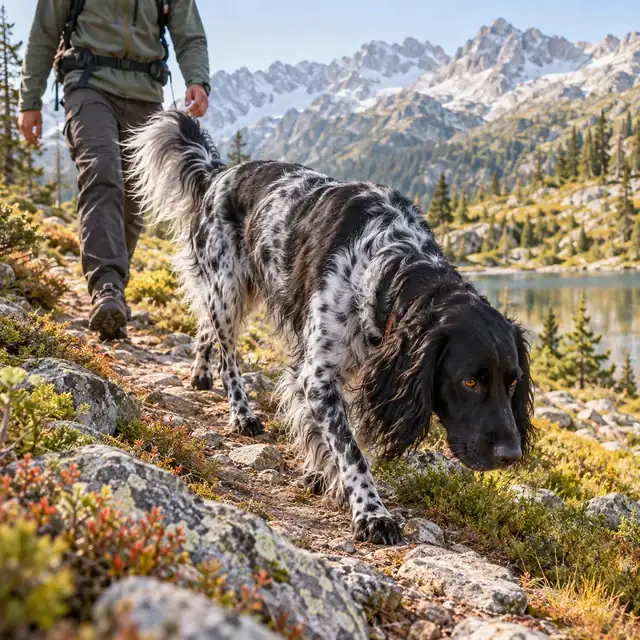
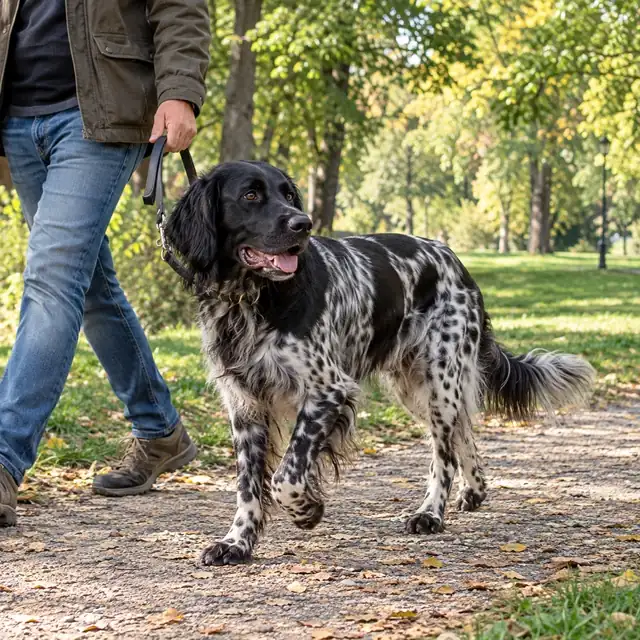
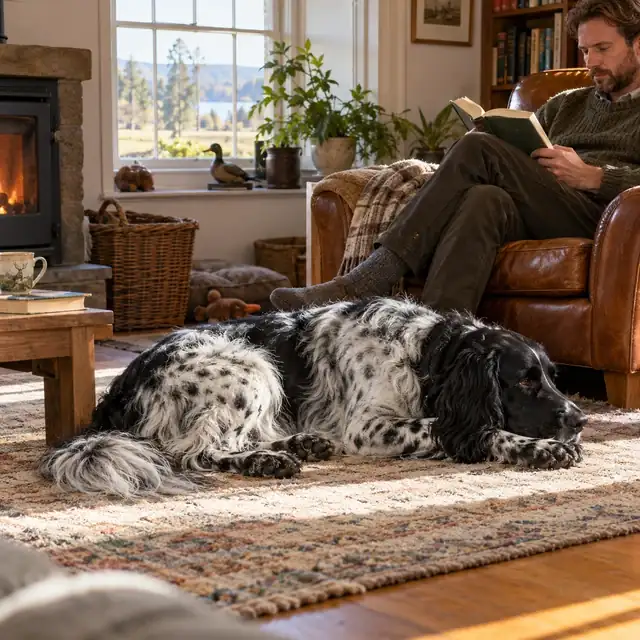
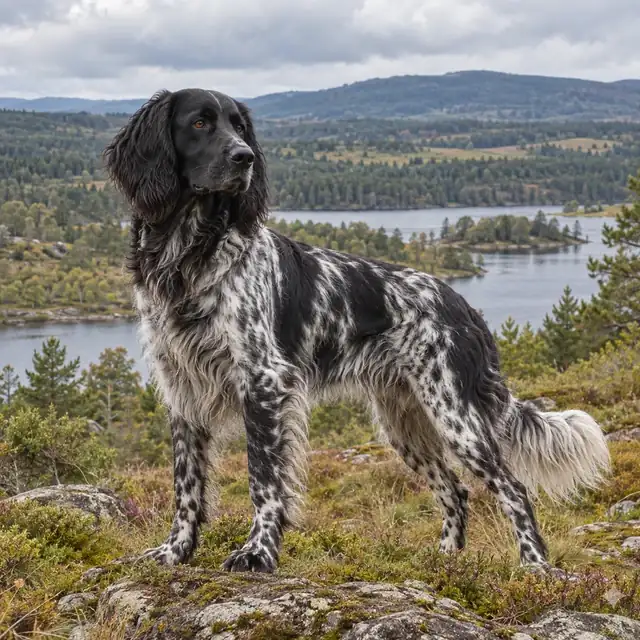
The large Münsterlander is a versatile German breed with a black head, white or blue-speckled body and long, wavy coat. The height of males is about 60-65 cm. Loyal, calm at home and very hardworking in the field. Requires daily movement, mental tasks and real work.
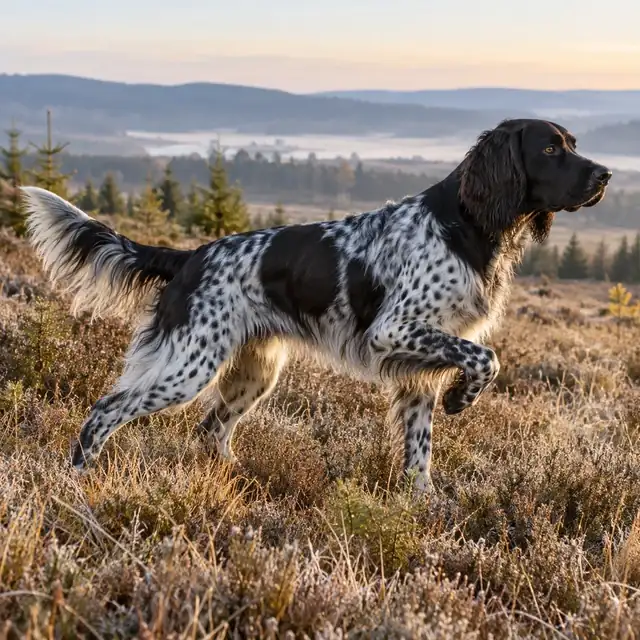
Best suited for an active out-of-town family or hunter. In an apartment without enough movement, it becomes boring and noisy. He is attached to the family, but most closely - to one person.
Every day requires long physical and mental work: jogging, swimming, fetching. An adult dog can run alongside its owner for long distances. Without a load, it makes you nervous and destroys things.
Willing to learn, alert, energetic and eager to work. Positive reinforcement produces the best results. Helpful fetching, sniffing exercises and dog sports such as agility or obedience.
The long coat is brushed about twice a week, especially behind the ears, under the armpits and on the chest, to prevent matting. Ears are examined after swimming. Claws are trimmed, teeth are cleaned regularly.
Usually gets along well with children, calm and gentle. Vigorous games with babies are supervised, because a large dog can accidentally knock a child off his feet.
With dogs, it is usually peaceful with early socialization. The hunting instinct is aimed at birds and small game, so ornamental birds and rodents in a shared home are a risk.
Estimates help compare breeds. For zooaggression, 5/5 means less tendency to aggression towards dogs. The behavior and health of a particular dog depend on many factors.
High score: willingly cooperates with the person and is closely attached to the family, especially to one person. Behavior depends on socialization.
High score: quick learner and eager to work. A variety of tasks are needed so that the dog does not get bored.
Average score: usually peaceful with dogs, but hunting instinct for birds and small animals needs control.
In the British cohort, the median lifespan of the breed was 14.1 years; small sample: 26 deaths. The absence of the mentioned risk does not prove the absence of hereditary diseases.
High score: despite its long coat, it does not need trimming, and brushing twice a week is usually enough.
Breed screening: dysplasia of the hip and elbow joints, hereditary cataracts and hyperuricosuria are called for the breed (for the latter there is a DNA test). Ask the breeder for the test results of both parents.
Musculoskeletal system: hip and elbow joints require weight control and careful loading during growth. Lameness, pain, or reluctance to move require a veterinary examination.
Eyes and Urinary System: An eye examination is recommended because of the risk of hereditary cataracts and a test for hyperuricosuria. The frequency of inspections is determined by the veterinarian together with the breed club.