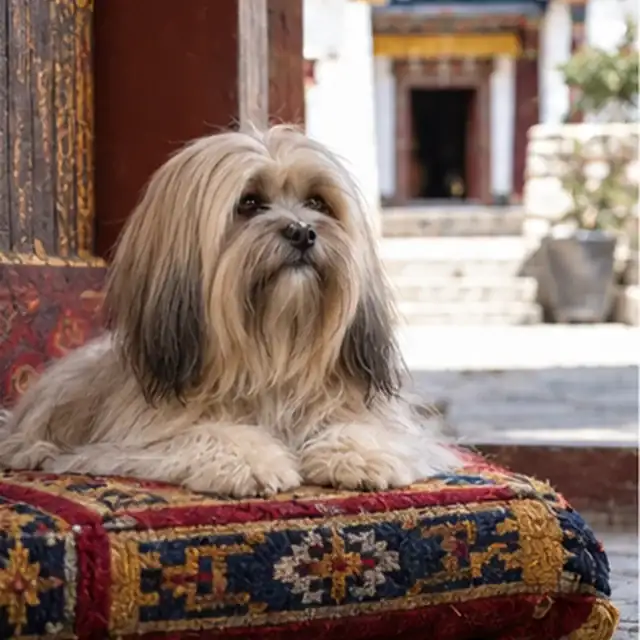
Human orientation
Medium-high rating: loyal and gentle in the family, but reserved with strangers. Behavior depends on socialization.
THE PAW CATALOG
Origin: Tibet; patronage of Great Britain
An ancient companion and guardian breed, bred in Tibetan monasteries. The name is associated with Lhasa, the capital of Tibet. For centuries, dogs have been kept as home sensitive guards, so vigilance and independence are built into the character.
The Lhasa Apso is a small (25-28 cm, 6-7 kg) compact dog with long dense fur that often reaches the floor. Confident, vigilant and independent, devoted to his family, reserved towards strangers. Needs daily grooming and early socialization.
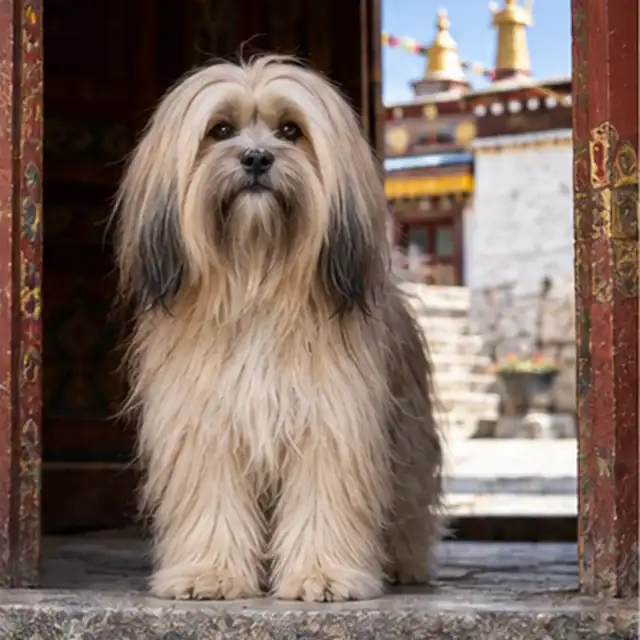
Suitable for an apartment: short walks and games at home are enough. A natural watchman who reacts vigilantly to strangers.
Moderate: Short walks and games at home are mostly sufficient.
Stubborn, therefore, without a calm, consistent upbringing, he shows a temper. Without early socialization, may become territorial or react violently. Classes are short, with treats.
The wool is combed daily to prevent tangles from forming. Bathe regularly, carefully clean eyes and ears; over time, visits to the groomer also help. The long coat traps dirt and moisture, so the skin and eyes are on the lookout for irritation.
Loyal and gentle with his family, but independent and does not like rough treatment. Games with children are supervised.
Can be territorial with other dogs. Gets along with animals in the family with early socialization.
Estimates help compare breeds. For zooaggression, 5/5 means less tendency to aggression towards dogs. The behavior and health of a particular dog depend on many factors.
Medium-high rating: loyal and gentle in the family, but reserved with strangers. Behavior depends on socialization.
Average score: intelligent, but stubborn.
Average score: May be territorial without socialization.
In the British cohort, the median lifespan of the breed was 14.0 years. Among the described breed risks: hip dysplasia, progressive retinal atrophy; examination of the parents is confirmed with the veterinarian.
Low rating: Long coat requires daily brushing and regular bathing.
Dysplasia of the hip joints: the results of X-ray evaluations of the parents are studied before the purchase. The weight is kept normal. Lameness is shown to the veterinarian.
Progressive retinal atrophy is a hereditary eye disease that gradually leads to vision loss. There are DNA tests for many breeds, so kennels are vetted.