Human orientation
High score: attached to the family, but independent and wary of strangers.
THE PAW CATALOG
Origin: Great Britain
It comes from the black and tan terrier, one of the ancient English terriers. In the 19th century, John Gulm from Manchester crossed it with a whippet, getting an exceptionally agile rat-catching and running dog. Later, Italian greyhounds were added, and possibly Chihuahuas, and this is how the Toy variety appeared. In 1959, the AKC recognized standard and toy sizes as two varieties of the same breed.
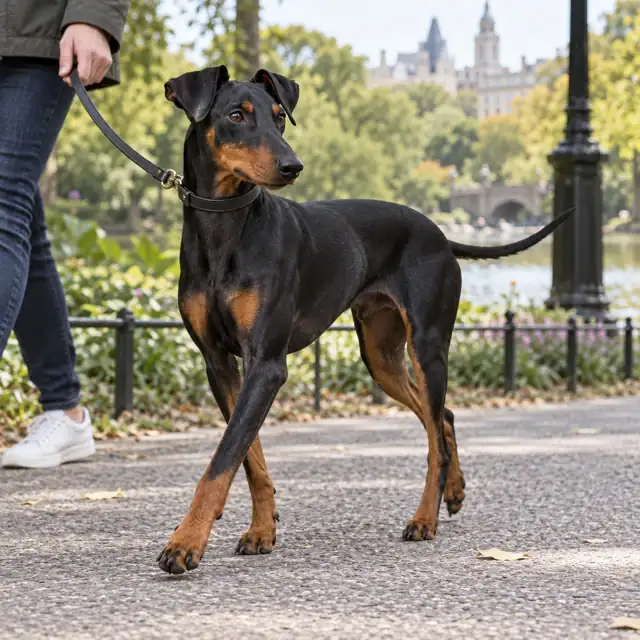
The Manchester Terrier is a slender black and tan English terrier in two sizes: standard (about 38-41 cm, 5.5-10 kg) and that (25-30 cm, up to 5.5 kg). Smooth shiny coat, lively and responsive character. Wary of strangers, barks, needs daily activity and early socialization.

Suitable for both an apartment and a larger house. Can stay alone for a while after enough movement. He barks, so it is important to educate neighbors in a timely manner.
Moderate: daily walks or games. Athletic and energetic, loves sports.
Independent and intelligent, so consistency, positive reinforcement and early socialization are needed. Suitable for agility, obedience and rally.
Smooth wool is wiped weekly with a rubber glove or a brush made of natural bristles. They bathe infrequently, because the skin is sensitive and dry. Claws are trimmed, teeth are brushed, weight is monitored.
Attached to the family, vigilant and protective. Games with children are supervised.
Usually gets along with dogs, although an exception is possible. Small animals are chased by terrier instinct.
Estimates help compare breeds. For zooaggression, 5/5 means less tendency to aggression towards dogs. The behavior and health of a particular dog depend on many factors.
High score: attached to the family, but independent and wary of strangers.
Average score: smart but independent.
Average score: usually gets along with dogs, but chases small animals.
There is no comparable survival estimate for the breed in the British cohort used. Among the described breed risks: dislocation of the patella, cardiomyopathy; examination of the parents is confirmed with the veterinarian.
High rating: smooth coat requires minimal maintenance, but frequent bathing does not dry out the skin.
Dislocation of the patella is manifested by periodic "jumping" on the hind leg. Mild forms are often only controlled, and severe ones may require surgery.
Cardiomyopathy is a disease of the heart muscle. Owners should be aware that new fatigue, coughing or shortness of breath require a veterinary examination.