Human orientation
Average score: a working hunter, there is little detailed information about the character. Behavior depends on upbringing.
THE PAW CATALOG
Origin: Italy
An Italian hound from the Maremma coastal plains in Tuscany. The Italian National Cynological Society ENCI recognized the breed in 2009, and in the same year more than 6,600 dogs were registered, the most among Italian breeds. FCI provisionally recognized it in 2018. A 2015 genetic analysis found no significant distance from the Apennine Segujio.
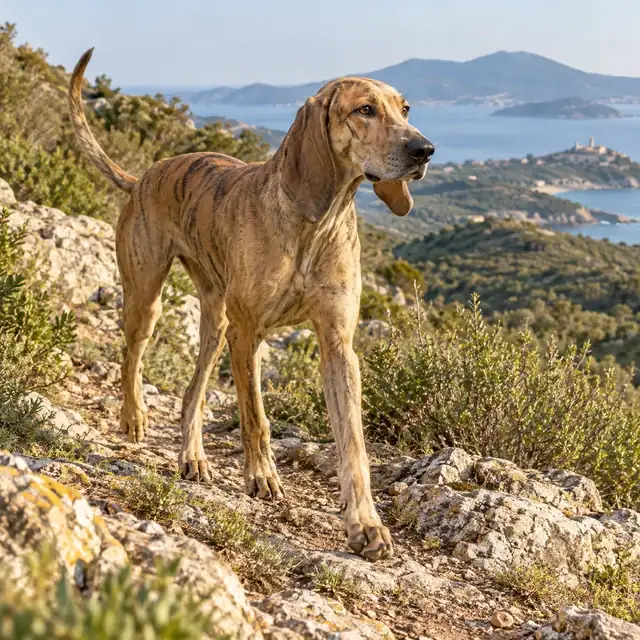
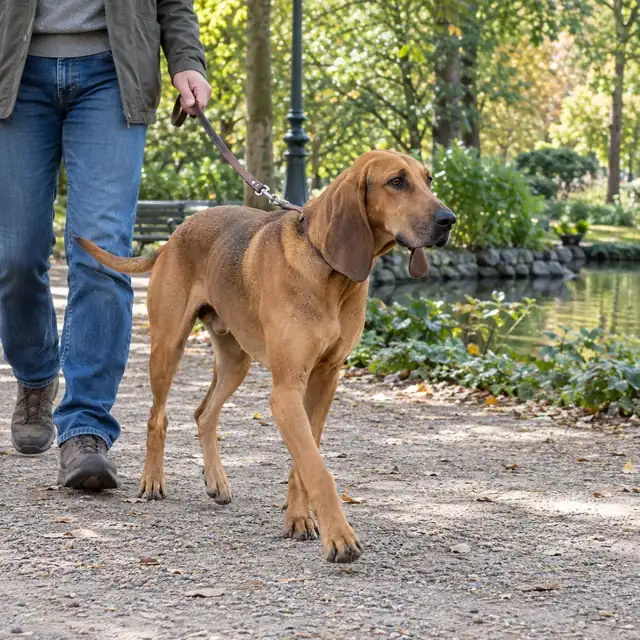
The Maremma Hound, or Seguggio Maremmano, is a medium-sized (48-54 cm, 16-23 kg) Italian Hound from the Maremma coast in Tuscany, with a smooth or stiff fawn, tan, or brindle coat. The main purpose is boar hunting. Needs a lot of movement and an experienced owner.

A working hunting dog, suitable for active hunting owners. Keeping in an apartment without hunting and movement is not suitable.
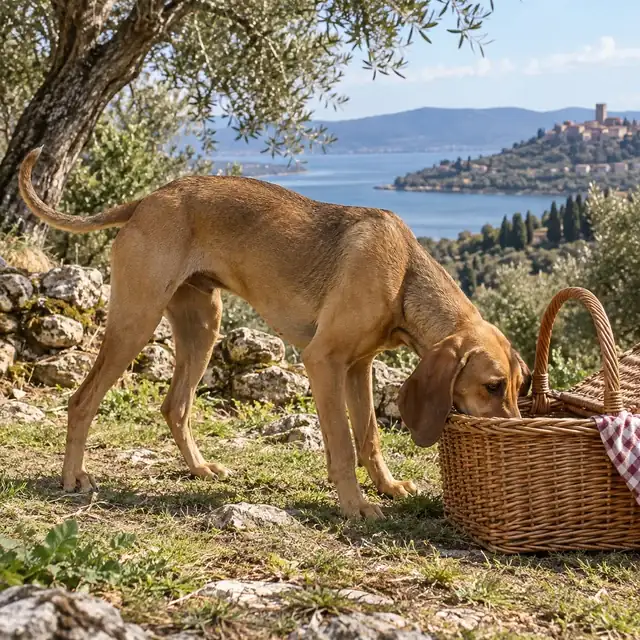
Long daily walks, running and olfactory work are required. The main prey is a wild boar, but it can also work for a hare.
Smell and excitement prevail, so patience, a recall signal and reliable equipment are required. Works best in a pack or pair with an experienced hunter.
Smooth wool is wiped, hard combed once a week. Ears are examined, nails are trimmed, teeth are cleaned.
There are few detailed descriptions of behavior with children, so contacts are supervised, and the activity of the hound is taken into account.
A hunter, therefore small animals are prey for him. It is usually sociable to dogs due to pack work.
Estimates help compare breeds. For zooaggression, 5/5 means less tendency to aggression towards dogs. The behavior and health of a particular dog depend on many factors.
Average score: a working hunter, there is little detailed information about the character. Behavior depends on upbringing.
Average score: flair and excitement distract from teams.
Average score: gregarious, but small animals are prey.
There is no comparable survival estimate for the breed in the British cohort used. The absence of the mentioned risk does not prove the absence of hereditary diseases.
High rating: short coat requires minimal maintenance.
Breed screening: detailed data on hereditary diseases of the "Maremman hound" breed are scarce. Ask the breeder for documentary results of examinations of both parents and current recommendations of the club.
Musculoskeletal apparatus: for the "Maremman hound" breed, the load is selected according to age and condition. Limping, pain or reluctance to move is a reason to consult a veterinarian.
Eyes and heart need regular attention from a doctor. The schedule of in-depth checks is coordinated with the veterinarian and the breed club.