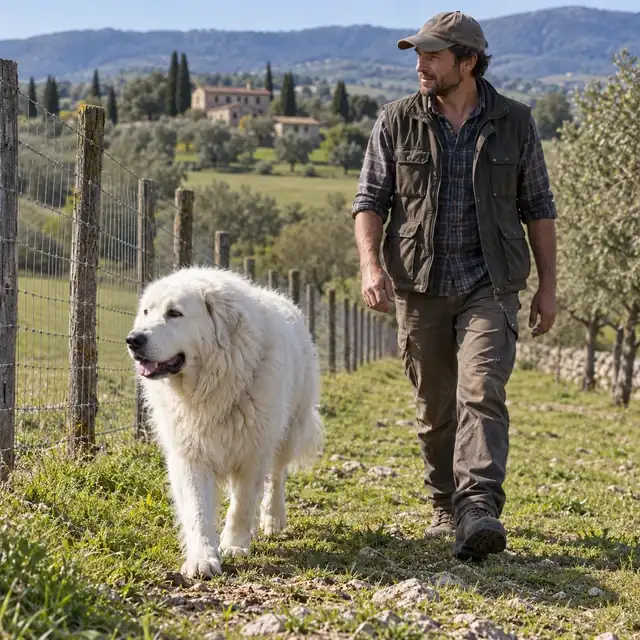
Human orientation
Average score: attached to the flock and family, wary of strangers. Behavior depends on socialization.
THE PAW CATALOG
Origin: Italy
Italian shepherd breed from central Italy: primarily Maremma in Tuscany, Lazio and Abruzzo. Roman authors Columella and Varro described white dogs for guarding flocks. In the 18th century, Abruzzo dogs were imported to France. The first record of the breed dates back to 1898, and the first standard was drawn up in 1924. The Maremma and Abruzzo herding dogs were considered separate breeds until the Italian Kennel Club ENCI united them in 1958, citing a natural fusion due to seasonal herd races.
The Maremma-Abruzzo Sheepdog is a large (60-73 cm, 30-45 kg) Italian flock guard with long thick white wool and a black nose. For centuries she protected sheep from wolves, was attached to the flock and family, wary of strangers. Needs space, early socialization and an experienced owner.
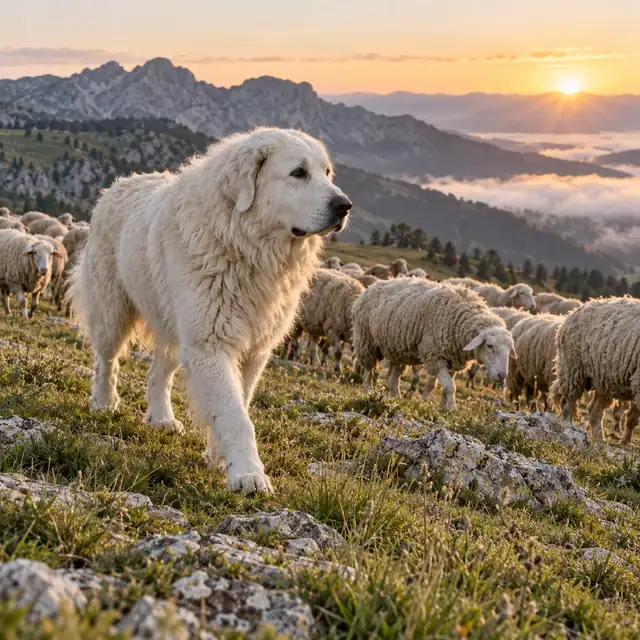
Suitable only for owners with a large area and experience working with guard breeds. This is a working guard who is used to a herd, not an apartment. They usually work in groups of three or four dogs.
Space for patrolling and daily walks are required. Puppies are not overloaded during growth to protect the joints.
Self-reliant and independent, makes his own decisions. Early socialization, calm consistency and clear boundaries are needed. You cannot force him.
The long thick coat is combed weekly, during the molting period daily. Ears are examined, nails are trimmed, teeth are cleaned.
Protects his family, but his size and protective instinct require constant supervision, especially for other people's children.
He protects cattle and his flock. Strange animals on the territory are perceived with caution, and small animals can seem like a threat.
Estimates help compare breeds. For zooaggression, 5/5 means less tendency to aggression towards dogs. The behavior and health of a particular dog depend on many factors.
Average score: attached to the flock and family, wary of strangers. Behavior depends on socialization.
Medium-low rating: independent, makes decisions by herself.
Average score: protects his own, is intolerant of other animals.
There is no comparable survival estimate for the breed in the British cohort used. Among the described breed risks: hip dysplasia; examination of the parents is confirmed with the veterinarian.
Low rating: Long thick white coat, size and heavy shedding.
Hip Dysplasia: Parents look at joint health before choosing a puppy. The weight is kept normal. Lameness is shown to the veterinarian.