Human orientation
Very high score: closely tied to the family. Behavior depends on upbringing.
THE PAW CATALOG
Origin: United States of America
Created in the USA in the late 1960s among dogs that were considered small Australian Shepherds. By the mid-1970s, the breed had reached its current size. Originally called the Miniature Australian Shepherd, then the AKC requested a name change. AKC fully recognized the breed on July 1, 2015 as the 186th, and FCI - in September 2019.
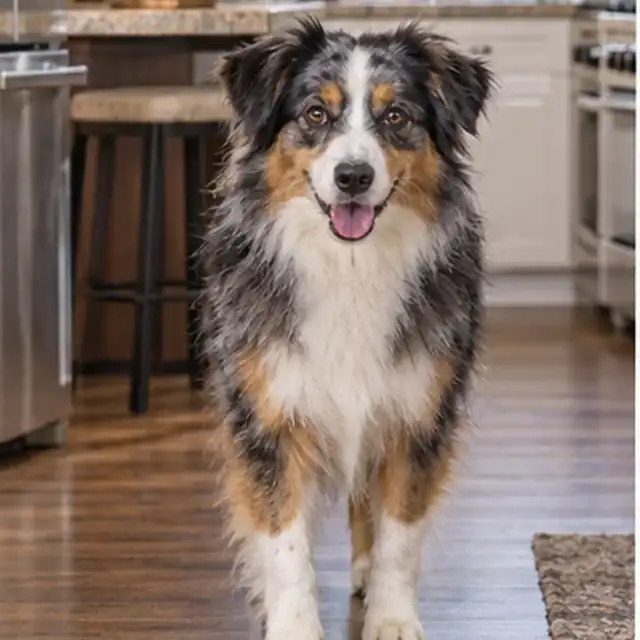
The Miniature American Shepherd is a compact (33-46 cm) energetic herding dog with a double coat of medium length: tricolor, blue or red merle, red (liver), tan or white. Very intelligent and obedient. Needs daily movement and mental tasks.

Suitable for active families who love movement and sports. Not for an apartment without sufficient load.
High: Needs frequent walks, runs, games and mental exercises.
She is very smart and obedient, so she quickly learns commands. Often performs in herding work, agility, obedience, freestyle and flyball.
The double coat is combed 2-3 times a week, during the shedding period every day. Ears are examined, nails are trimmed, teeth are cleaned.
Tied to the family, however, the shepherd's instinct may manifest itself, and the dog will chase the cubs. Supervised games.
The shepherd's instinct is preserved. Early socialization is required and small animals require supervision.
Estimates help compare breeds. For zooaggression, 5/5 means less tendency to aggression towards dogs. The behavior and health of a particular dog depend on many factors.
Very high score: closely tied to the family. Behavior depends on upbringing.
Very high score: intelligent and obedient.
Medium-high rating: herding instinct needs socialization.
There is no comparable survival estimate for the breed in the British cohort used. The absence of the mentioned risk does not prove the absence of hereditary diseases.
Low rating: The double coat requires frequent brushing and the dog needs activity.
Pedigree screening includes a DNA test for drug sensitivity (MDR1), screening for progressive retinal atrophy and hereditary cataracts, and a hip check. Ask the breeder for documents about the results of both parents.
Musculoskeletal apparatus: hip joints are examined, growth and load are selected according to age. Lameness, pain, or reluctance to move require a veterinary examination.
Eyes and heart are checked during routine examinations. Known eye problems include progressive retinal atrophy, cataracts, iris coloboma, and microphthalmia; a veterinary ophthalmologist examines the dog regularly.