Human orientation
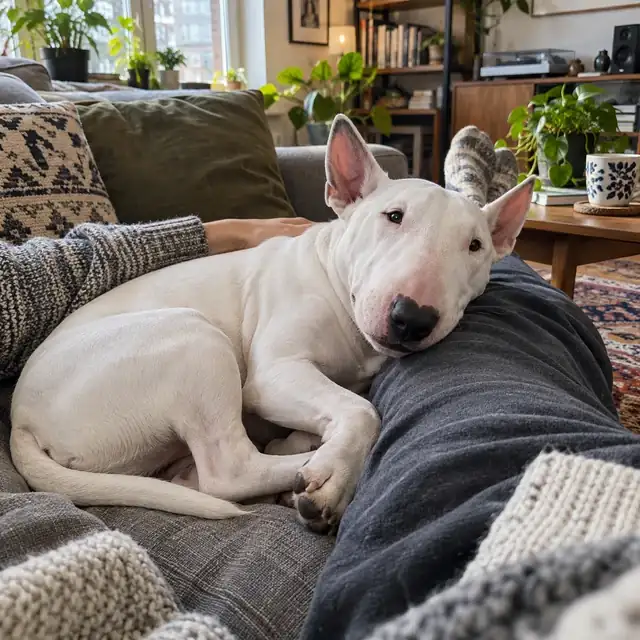
High score: gets along well with people and is happy in the family. Behavior depends on upbringing.
THE PAW CATALOG
Origin: Great Britain
Bred in England at the beginning of the 19th century by crossing an old bulldog with several terriers. By 1862, a pure white, cleaner-lined version was fashionable. The colored dogs were later recognized as Staffordshire bull terriers. The miniature variety belongs to the same breed, differing only in height.
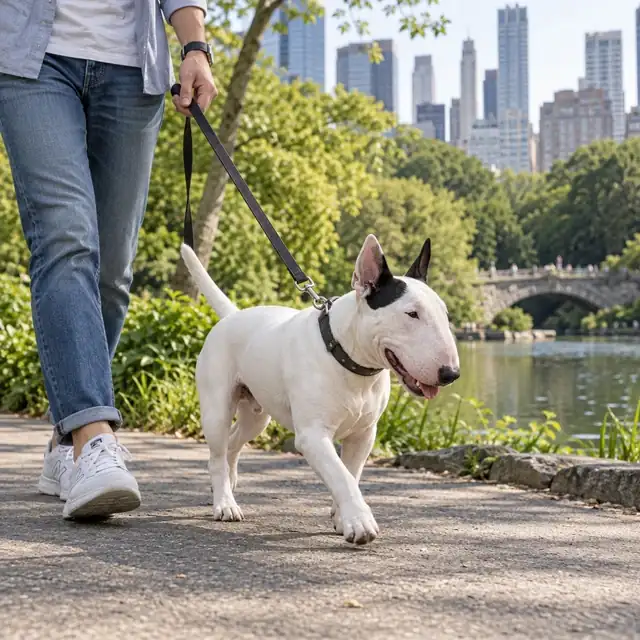
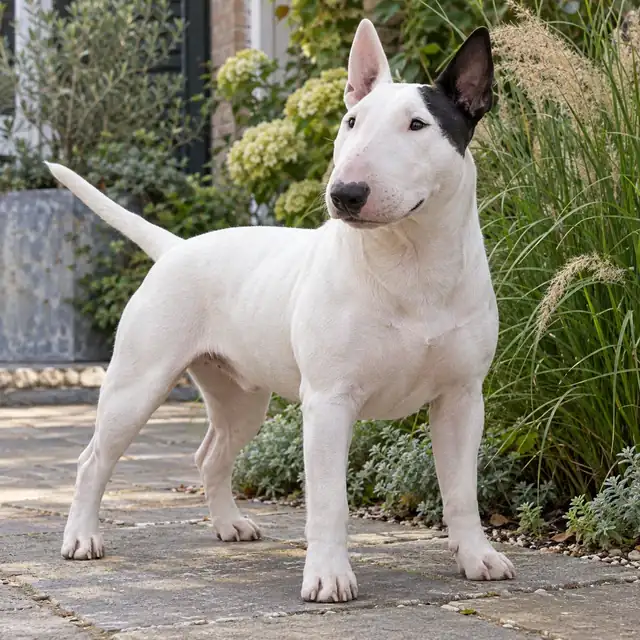
The miniature bull terrier is a compact (up to 35.5 cm) dog with short, smooth white, spotted, brindle, red or tricolor fur. Balanced, very understanding, cheerful, sometimes stubborn. Needs early socialization, attention to hearing and eyes and health care.

Suitable for both the village and the apartment. He feels best in a family where he has the attention of people and sufficient movement.
Adapts to rural areas and apartments, and the load depends on the owner's wishes. Daily walks and games are necessary in any case.
Shy, but sometimes stubborn and independent. Early socialization, patience and consistency are required. Young dogs are powerful and mischievous.
Short hair requires minimal maintenance. If the dog spends a lot of time in the sun, the white skin is protected with sun cream. Claws are trimmed, teeth are cleaned.
Gets along well with people, but young dogs are powerful and rambunctious, so contact with small children under supervision.
Early socialization is required to avoid conflicts with other dogs. Small animals need control.
Estimates help compare breeds. For zooaggression, 5/5 means less tendency to aggression towards dogs. The behavior and health of a particular dog depend on many factors.
High score: gets along well with people and is happy in the family. Behavior depends on upbringing.
Average score: shy, but stubborn and independent.
Average score: needs socialization and control.
In the British cohort, the median lifespan of the breed was 12.2 years; small sample: 94 deaths. Among the described breed risks: dislocation of the patella, hearing impairment, dislocation of the lens; examination of the parents is confirmed with the veterinarian.
High rating: short coat requires minimal maintenance.
With dislocation of the patella, the dog suddenly bends its hind leg while walking. Mild forms are often only controlled, and severe ones may require surgery.
Hearing impairment: the breed is prone to deafness, especially white and spotted dogs. Hearing is checked by a veterinarian with a test even in puppyhood.
Dislocation of the lens is a hereditary eye disease; there is a DNA test for the Miniature Bull Terrier. Kennels check carriers, and adult dogs are examined by a veterinary ophthalmologist.