Human orientation
He is very loyal and protective of his family, reserved towards strangers.
THE PAW CATALOG
Origin: Germany
German breed, which was bred as a rat catcher for houses and stables. Exact ancestry is not documented, but the breed has been around for at least 150 years longer than the Doberman. Over time, she was loved as a companion.
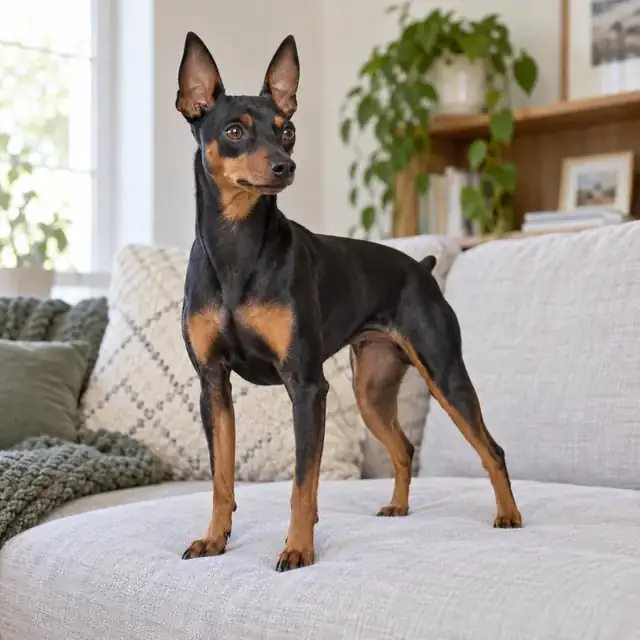
Miniature Pinscher is a compact (25-30 cm) fragile-looking, but cheeky dog with a big personality. Bold, lively, confident. Treats strangers discreetly until they gain trust, very loyal and protective of family. It requires training and firm, consistent management, otherwise it quickly starts to solve everything on its own.

Suitable for living in an apartment if there are daily walks and classes. Does not like loneliness and boredom. In cold weather, you need clothes. It is a small dog, so it is better to avoid large and rough dogs.
Moderately high. Regular walks, games and mental tasks. Suitable for agility, obedience and flyball. He needs to be busy.
Smart and trainable, but independent and needs a firm hand and consistency. Early socialization, puppy classes and basic obedience are recommended. Classes are short and varied, with a reward.
The short, smooth coat needs brushing or brushing once a week. Claws are regularly trimmed and teeth are brushed. Ears are examined.
The owner watches over the small dog and children, because both require caution: a child can harm a fragile dog. Children are taught not to frighten and not to lift the dog without help.
Brave and can perceive large dogs as equals, which is dangerous. Early exposure to dogs and other animals helps. On a walk, they make sure that large dogs do not provoke the Miniature Pinscher.
Estimates help compare breeds. For zooaggression, 5/5 means less tendency to aggression towards dogs. The behavior and health of a particular dog depend on many factors.
He is very loyal and protective of his family, reserved towards strangers.
Intelligent, but independent: firmness and consistency are required.
Bold with other dogs, socialization and supervision required.
In the British cohort, the median lifespan of the breed was 13.7 years. Among the described breed risks: epilepsy, dislocation of the patella, eye diseases; examination of the parents is confirmed with the veterinarian.
Short, smooth wool does not require complex care.
Epilepsy: after the first attack, the dog is examined by a doctor. The breeder is asked about cases of epilepsy in the pedigree.
A dislocation of the patella is often noticeable by short "bounces" on the hind leg during running. The degree is determined by the veterinarian, mild cases are only observed. It is better to ask the breeder about similar cases in the pedigree.
Eye diseases: regular examinations by a veterinary ophthalmologist. Squinting, redness, or cloudy corneas require examination, not waiting. The results of the eye examinations of the parents are requested from the breeder.