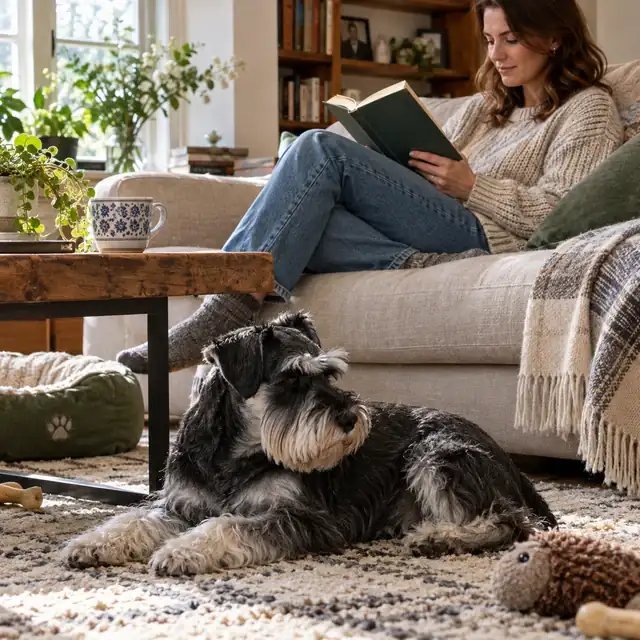
Human orientation
Attached to the family, he gladly participates in everything it does.
THE PAW CATALOG
Origin: Germany
It is believed to have originated from the crossing of smaller standard schnauzers with affenpinschers. It was used to control pests in country yards and as a sentinel giving voice. Over time, the breed became a popular companion.
Miniature Schnauzer is the smallest of the three Schnauzers: males about 36 cm, bitches about 33 cm. Compact, strong, square build, with stiff coat, beard and eyebrows. Vigilant, reliable, easily trainable. A good companion and family dog. Barking is a natural trait that is nurtured from puppyhood.

It is well suited for living in an apartment and in a private house, if there are daily walks. He likes to be close to his family. Because of the loudness, you should work on barking from an early age.
Moderately high. Daily walks, games and mental tasks. Without work, it becomes loud and restless.
Smart and willing to learn. Basic obedience and early socialization are a must. Classes are varied and award-based. Rough methods are avoided.
The stiff double coat needs regular brushing and periodic trimming or cutting. Beard, eyebrows and paws are leveled with scissors. Many owners turn to a groomer. The beard is wiped after eating, the ears and teeth are inspected.
It is considered an excellent family dog. Children and dog under adult supervision. Children are taught to handle a small dog carefully.
Usually sociable with other dogs. The hunter rat's hunting instinct can prompt it to chase rodents and small animals. Acquaintance with cats is carried out gradually.
Estimates help compare breeds. For zooaggression, 5/5 means less tendency to aggression towards dogs. The behavior and health of a particular dog depend on many factors.
Attached to the family, he gladly participates in everything it does.
Clever and trainable, learns commands well.
Generally friendly, but the instinct of a rodent hunter remains.
In the British cohort, the median lifespan of the breed was 13.3 years. Among the described breed risks: cataract, urolithiasis, pancreatitis; examination of the parents is confirmed with the veterinarian.
Hard wool needs regular trimming or cutting.
Cataract: clouding of the lens; regular examinations by a veterinary ophthalmologist, changes in vision or the appearance of the eyes are not ignored.
Urinary stone disease: stones in the urinary bladder are manifested by frequent urination, straining, blood in the urine. Plenty of water and a vet's advice on diet are required.
Pancreatitis: inflammation of the pancreas, which is provoked by fatty food and excess weight. Vomiting, abdominal pain, and lethargy require immediate veterinary attention.
Portosystemic shunt: a congenital disorder of liver blood flow that manifests itself in puppies with growth retardation and behavioral changes. The results of the parents' examinations are requested.