Human orientation
Loyal to the owner, obedient and reliable.
THE PAW CATALOG
Origin: Montenegro
It comes from Montenegro and has common roots with other Balkan hounds. The first standard dates back to 1924, and the FCI recognized the breed in 1969. In the FCI classification, it belongs to group 6 (hounds), medium hounds, with mandatory working tests.
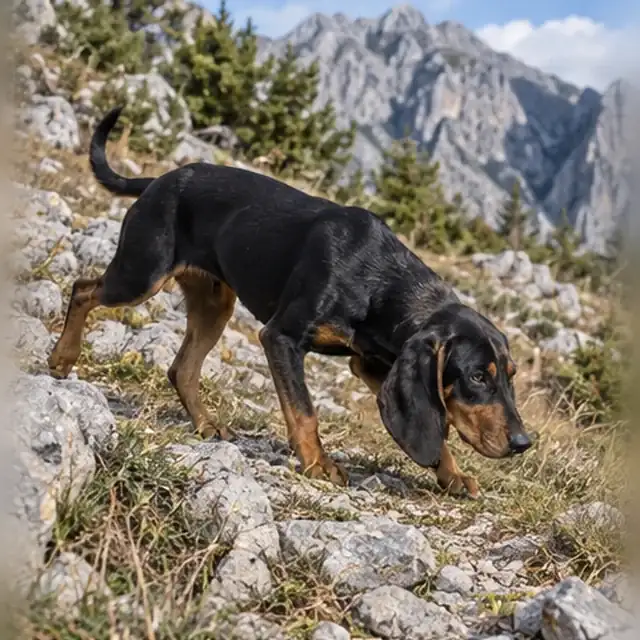
The Montenegrin Mountain Hound is a medium (44-54 cm, ideal 49-50 cm for males and 48-49 cm for females) hound with short, thick, stiff, shiny black hair and red tan. Balanced, loyal to the owner, obedient and reliable. Designed for hunting in the mountains, so it needs a lot of movement. It is also called "black hound".

Best suited for hunters and people who live outside the city with a large fenced area. It is difficult for him to realize his instincts in a city apartment. Prolonged loneliness is undesirable.
High Daily long walks, running in a safe area and sniff work. Designed for mountain hunting.
Obedient and balanced, but the sense of smell prevails. Recall is trained from an early age, and kept off-leash only in a safe area. Classes are short, with a reward.
Short, thick, stiff wool with a well-developed undercoat needs brushing once a week, more often in shedding. Long ears are regularly cleaned. After hunting, the skin and paws are checked.
Balanced and loyal, usually gets along well with children. Due to their size and energy, children and dogs are supervised.
Accustomed to working in a pack, therefore usually tolerant of other dogs. The hunting instinct is aimed at game, so be careful with small animals.
Estimates help compare breeds. For zooaggression, 5/5 means less tendency to aggression towards dogs. The behavior and health of a particular dog depend on many factors.
Loyal to the owner, obedient and reliable.
He is obedient, but his sense of smell often prevails over commands.
In a pack, it gets along well with dogs, and perceives game as prey.
There is no comparable survival estimate for the breed in the British cohort used. The absence of the mentioned risk does not prove the absence of hereditary diseases.
The short coarse coat is easy, but the ears and paws need regular attention.
Breed screening: detailed data on hereditary diseases of the Montenegrin Mountain Hound breed are scarce. Ask the breeder for documentary results of examinations of both parents and current recommendations of the club.
Musculoskeletal system: height, weight and load of the "Montenegro Mountain Hound" breed should correspond to the age. Pain, lameness, or reluctance to move require a veterinary examination.
The condition of the eyes and heart is included in the routine examination. The schedule of in-depth checks is coordinated with the veterinarian and the breed club. Do not delay new symptoms, such as blurred vision or shortness of breath, until your next appointment.