Human orientation
High score: devoted to family. Behavior depends on upbringing.
THE PAW CATALOG
Origin: Italy
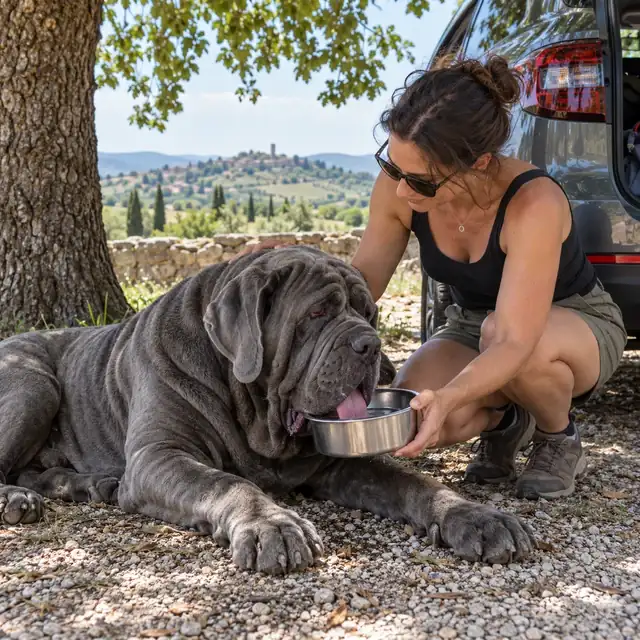
A giant guardian breed from the south of Italy, whose roots go back to ancient Rome. First it was used as a fighting dog, then it became a guard. Formally recognized in the 1940s.
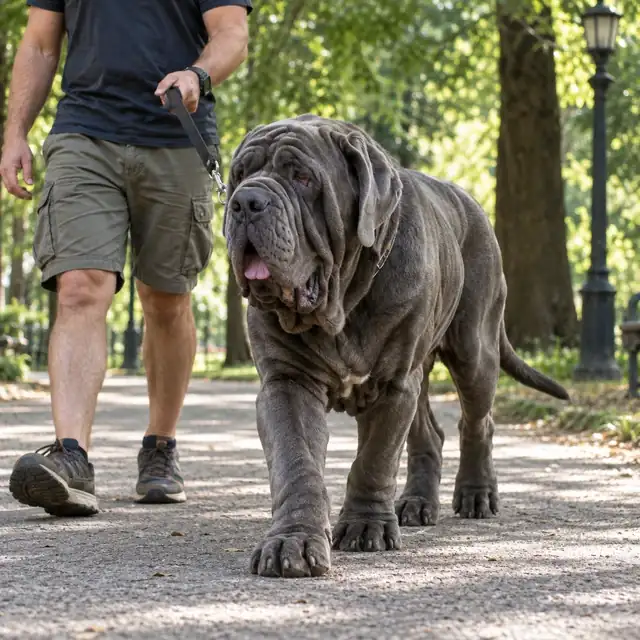
The Neapolitan Mastiff is a giant (60-75 cm, 50-70 kg) Italian guard dog with loose skin, wrinkles and smooth short hair. Calm, devoted, alert and dignified. Needs space, early socialization, careful handling of wrinkles and growth control.

Suitable for a family with a large house and a strong garage: the giant needs space and a secure fenced yard. This is a calm home guard, but not for an apartment.
Moderate: regular short walks. During growth, the load is dosed, stairs and overwork are avoided, and the yard is fenced.
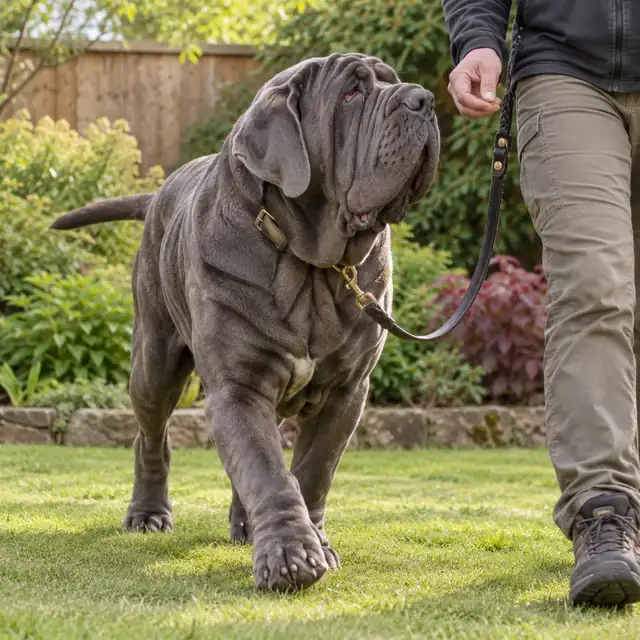
Balanced and loyal, but strong and independent. Early socialization and consistent training are mandatory: an adult mastiff weighs so much that it is impossible to force it.
The smooth coat is combed weekly, bathed as needed. Skin folds are regularly cleaned and dried to avoid inflammation and odor. Ears are examined, claws are trimmed.
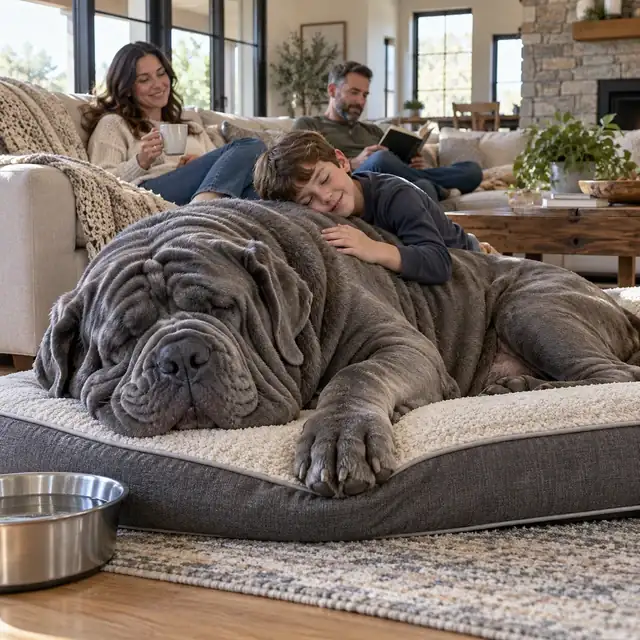
Devoted to the family, calm, but weight and strength require constant supervision, especially in the presence of other people's children.
Vigilant guard, can be intolerant of other dogs and animals on the territory. Acquaintances are carried out gradually.
Estimates help compare breeds. For zooaggression, 5/5 means less tendency to aggression towards dogs. The behavior and health of a particular dog depend on many factors.
High score: devoted to family. Behavior depends on upbringing.
Average score: intelligent, yet independent and strong.
Average score: guard, needs socialization.
In the British cohort, the median lifespan of the breed was 9.3 years. Among the described birth risks: dysplasia of the hip joints, bloat or twisting of the stomach; examination of the parents is confirmed with the veterinarian.
Average score: the coat is short, but the folds of the skin require regular grooming.
Hip Dysplasia: The breeder is asked to confirm examinations of both parents. Excess weight increases the load on the joints, so the puppy should not be overfed. Lameness is shown to the veterinarian.
Bloating or twisting of the stomach is a life-threatening condition. They feed in small portions, avoid loads before and after meals, and immediately go to the veterinarian at the first signs.