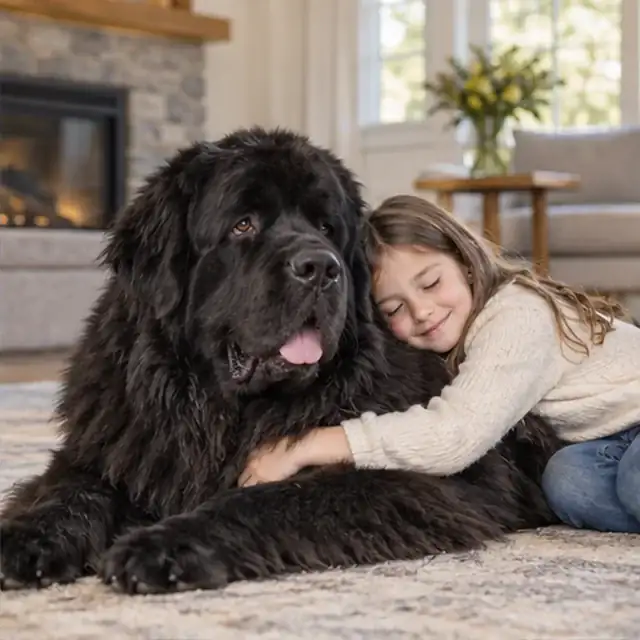
Human orientation
Very high score: gentle, very sociable. Behavior depends on upbringing.
THE PAW CATALOG
Origin: Canada, the island of Newfoundland
Named after the Canadian province of Newfoundland. It is believed to be descended from local dogs and bear dogs brought by the Vikings. Fishing communities used them to drag nets, rescue people from the sea, carry carts, deliver milk and mail. They were also sailors on sailing ships.
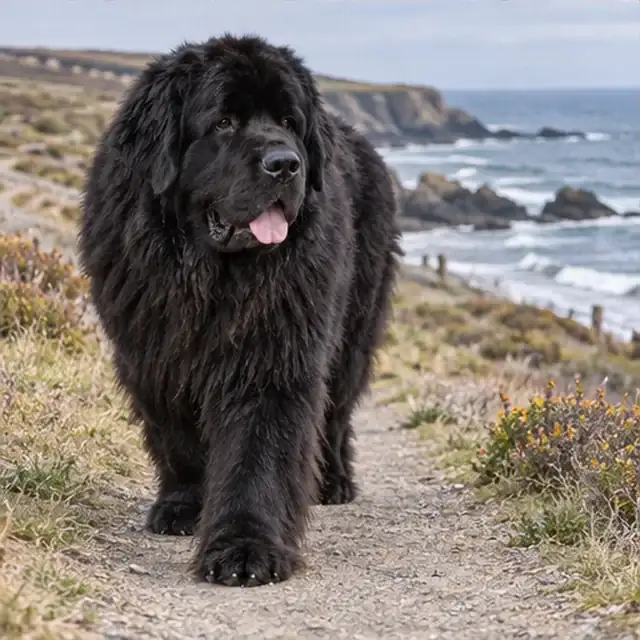
Newfoundland is a massive, deep-chested dog with strong muscles and water-resistant double coat of black, brown or white-black (Landseer) color. Calm, intelligent and gentle, named after a Canadian island. Loves water, but needs space, frequent brushing and attention to joints and heart.
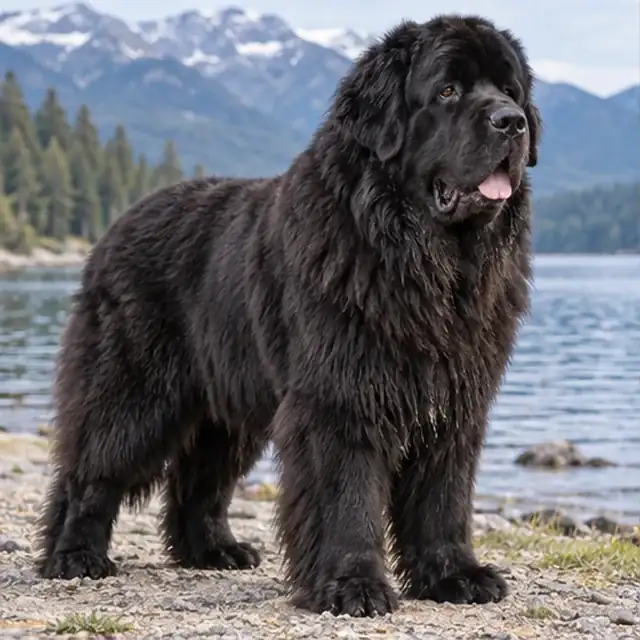
Suitable for a family with a spacious house. Very sociable, can get bored or destructive if left alone for too long. It is a companion dog, not a guard dog.
An adult dog needs about 30 minutes of walking a day. Loads on puppies are minimal in order to preserve the joints. Swimming is the best form of movement, because it spares the joints.
Calm and intelligent, but obedience is taught from an early age: an adult Newfoundland is too big for force methods. Classes are soft, with praise.
The double coat is combed frequently to keep it from straying: sloughs can lead to skin infections that are difficult to treat. The fur around the paws is trimmed, especially between the toes and near the pads. Ears are examined, teeth are cleaned.
Meek, patient, with a soft character. Due to the mass and strength, games with children are supervised.
Generally calm and peaceful with other animals, especially with early socialization.
Estimates help compare breeds. For zooaggression, 5/5 means less tendency to aggression towards dogs. The behavior and health of a particular dog depend on many factors.
Very high score: gentle, very sociable. Behavior depends on upbringing.
Average Score: Smart, but slow and big, needs patience.
Medium-high score: usually peaceful.
In the British cohort, the median lifespan of the breed was 11.0 years. Among the described breed risks: hip dysplasia, heart disease; examination of the parents is confirmed with the veterinarian.
Low rating: thick coat, heavy shedding and needs paw care.
Hip and elbow dysplasia is more common in large breeds. They ask for the results of examinations of both parents, do not overfeed, and show the lameness to the veterinarian.
Heart disease: Newfoundlands are prone to heart disease, so an early heart examination by a veterinarian is recommended.
Cystinuria is a hereditary metabolic disorder that can lead to stones in the urinary tract. Breeders provide the results of the appropriate test.
Overheating: Thick coat and body weight make the dog vulnerable to heat. They provide shade, water and a cool place, and the load in the heat is limited.