Human orientation
Medium-high rating: open and affectionate. Behavior depends on upbringing.
THE PAW CATALOG
Origin: France
Controlled breeding of short-haired French bassets began around 1870. Count Le Coutillo de Cantelier fixed the practical type with straight front legs - "Artois", and Louis Lan brought out a more showy type with curved front legs - "Normand". The name "Norman-Artois basset" was adopted in 1924, and Leon Verrier, who headed the club in 1927, insisted on strengthening the Norman character.
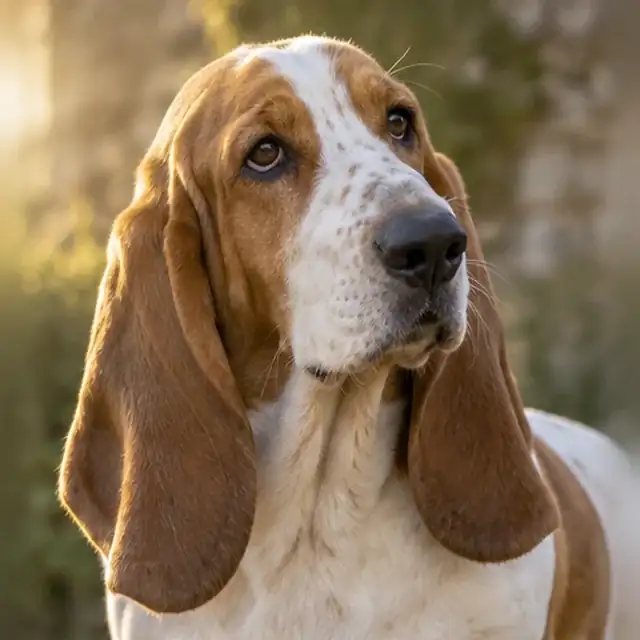
Norman-Artois basset is a short (30-36 cm, 15-20 kg) French hound with a short smooth coat: fawn with a black cap and white or fawn-white. A wonderful sense of smell, a melodious voice, friendly and gentle. Needs walks and supervision of ears and back.

A hunter who works with an archer alone or in a pack. Suitable for a family that walks a lot and is patient with the hound.
Regular olfactory walks are required. Favorite prey is rabbit, but also hunts hare and deer.
Works calmly, without haste, on the trail. A sense of smell is often stronger than a command, so patience, drive and a reliable recall signal are needed.
Short hair is brushed once a week. Long ears are examined especially carefully, claws are trimmed, teeth are cleaned.
Open and very affectionate, gets along well with children. The basset's back is protected: it should be picked up correctly.
He also works in a pack, so he gets along with dogs. Small animals for the prey hunter.
Estimates help compare breeds. For zooaggression, 5/5 means less tendency to aggression towards dogs. The behavior and health of a particular dog depend on many factors.
Medium-high rating: open and affectionate. Behavior depends on upbringing.
Average score: the sense of smell distracts from commands.
Average score: gets along well with dogs, preys on small animals.
There is no comparable survival estimate for the breed in the British cohort used. The absence of the mentioned risk does not prove the absence of hereditary diseases.
High score: Short coat, but ears need attention.
Pedigree screening: There is little reliable data on the hereditary diseases of the Norman-Artois basset breed, so the results of examinations of both parents should be requested in writing.
Musculoskeletal system: growth, weight and load of the Normandy-Artois basset breed should correspond to age. Pain, lameness, or reluctance to move require a veterinary examination.
The condition of the eyes and heart is included in the routine examination. The need for individual tests is determined by club recommendations and the dog's age.