Human orientation
Average score: ready to cooperate, but a hunter of character. Behavior depends on upbringing.
THE PAW CATALOG
Origin: Sweden
It is believed to be derived from small swear words used by prehistoric hunting tribes in the North Cape area. After World War II, fur prices fell, and in 1948 the breed was declared extinct. However, it survived on remote northern farms as a guard and companion, and in 1967 it was re-registered with a new standard.
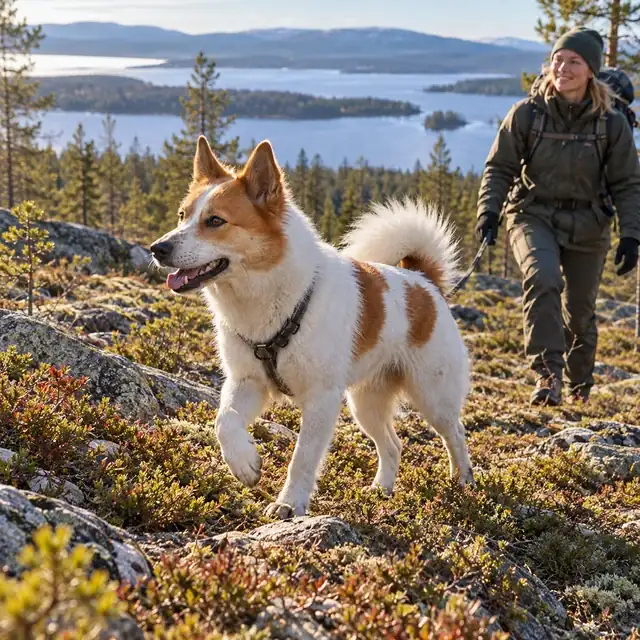
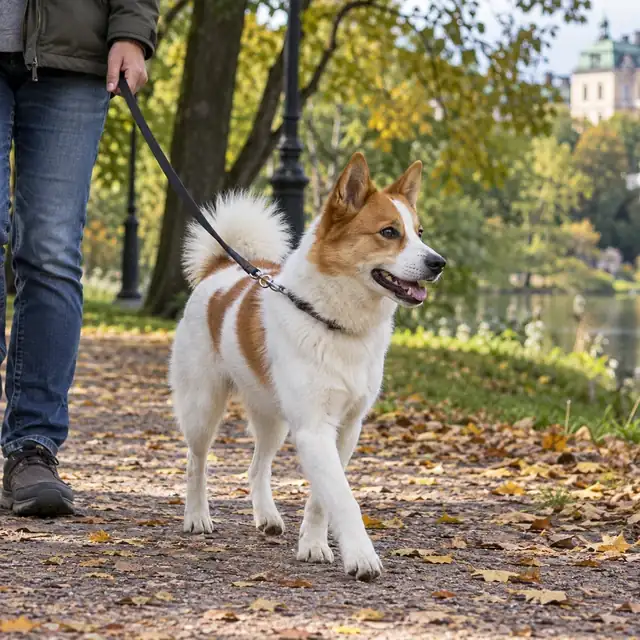
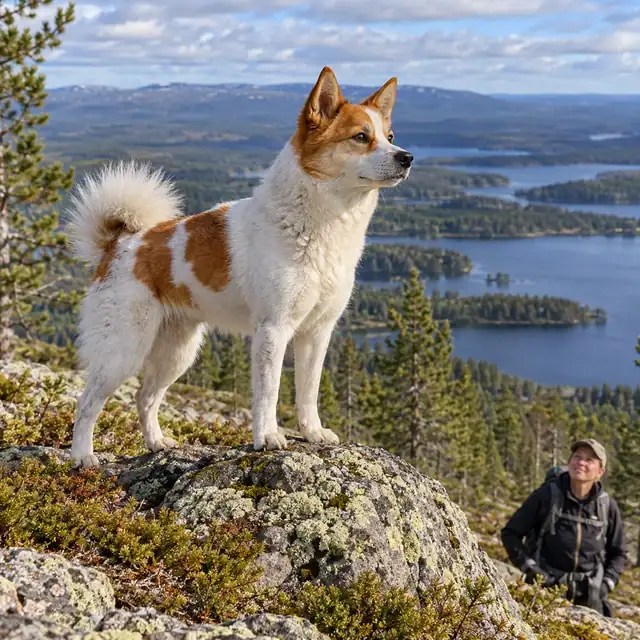
The Norrbotten Spitz is a small (42-45 cm) Swedish hunting spitz with a short stiff coat, pure white with large red, yellow or other markings. Vigilant, smart and very lively, responds by barking. Needs active owner and hunting or replacement.
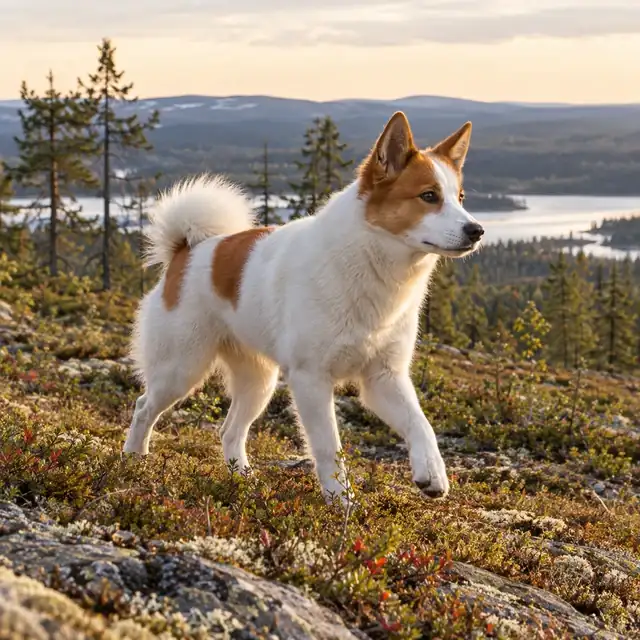
Suitable for active owners who can provide stimulation and training. Hunting instincts are strong, so you need an environment where they can be realized.
High: daily long walks, running, mental and olfactory work.
Smart and ready to cooperate, willingly works outdoors. Regular classes and mental tasks are required.
The short, hard coat is combed once a week, more often during shedding. Ears are examined, nails are trimmed, teeth are cleaned.
Vigilant and lively, needs children's moderation in games. Contacts under supervision.
A forest fowl hunter, so be careful with small animals. Socialization helps to get along with dogs.
Estimates help compare breeds. For zooaggression, 5/5 means less tendency to aggression towards dogs. The behavior and health of a particular dog depend on many factors.
Average score: ready to cooperate, but a hunter of character. Behavior depends on upbringing.
Average score: smart, but independent on the trail.
Average score: hunting instinct is strong.
There is no comparable survival estimate for the breed in the British cohort used. The absence of the mentioned risk does not prove the absence of hereditary diseases.
High rating: short coat requires minimal maintenance.
Breed screening: there are few descriptions of hereditary diseases of the Norrbotten Spitz breed. Ask the breeder for the written results of the parents' examinations and the current requirements of the club.
Musculoskeletal system: the growth and load of the Norrbotten Spitz breed should correspond to its age. Lameness, pain, or reluctance to move require a veterinary examination.
During preventive visits, the veterinarian checks the eyes and the heart. The need for individual tests is determined by club recommendations and the dog's age.