Human orientation
Medium-high rating: family-friendly, active. Behavior depends on upbringing.
THE PAW CATALOG
Origin: Norway
Small spitz from Norway, valued as a working dog for more than 400 years. The first known written mention dates back to 1591. Interest waned when net hunting spread and the dog tax was introduced, so around 1900 the breed was kept mainly in the village of Mostad in Lofoten. A plague of carnivores almost wiped it out during World War II and again in 1963, when only six dogs survived, five from one mother. Careful breeding has increased the population to about 1,500 dogs worldwide (2022), about 900 of them in Norway. A crossbreeding program with Norwegian Bohund, Icelandic Shepherd and Norrbotten Spitz is aimed at reducing deleterious recessive disorders.
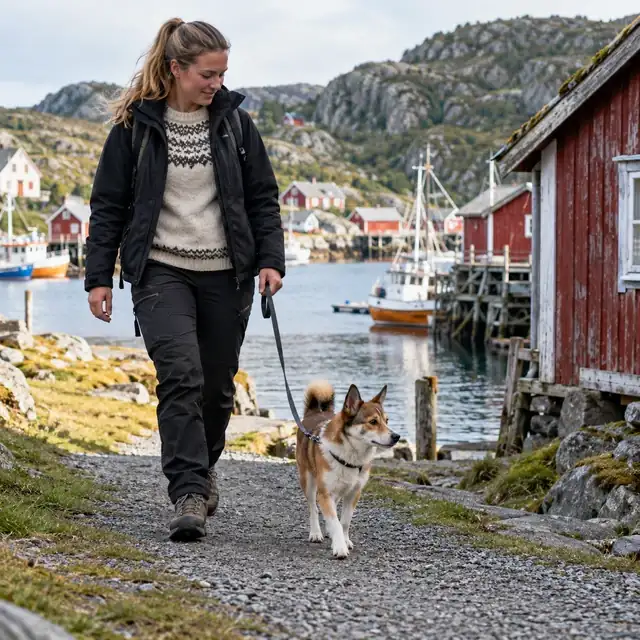
The Norwegian Lundehund is a small (30-40 cm, 5-8 kg) spitz from Norway, bred to hunt puffins on rocks and in caves. It has six full toes, very flexible joints and foldable ears. Active and hardy. Requires special attention to digestion and diet.

Suitable for active owners who are ready for a special diet. The main breed risk is Lundehund's syndrome (intestinal lymphangiectasia), so food is treated carefully: low-fat, protein-rich food often helps. Diarrhea, vomiting or weight loss should be reported to the veterinarian immediately.
Moderate to high activity is required: walking, playing and climbing. Flexible joints allowed the rock to pass through narrow crevices and rocky paths.
Active and smart, needs active activities. Early socialization and positive reinforcement help parenting.
Dense, short or stiff hair is combed once a week, more often during the shedding period. Ears are examined, claws, in particular extra fingers, are trimmed, teeth are cleaned.
It is considered a good family dog that tolerates children with proper socialization. Supervised games.
Generally gets along with dogs during socialization. Hunting instinct is possible for small animals and birds.
Estimates help compare breeds. For zooaggression, 5/5 means less tendency to aggression towards dogs. The behavior and health of a particular dog depend on many factors.
Medium-high rating: family-friendly, active. Behavior depends on upbringing.
Average score: smart, but independent.
Average score: generally gets along, hunting instinct needs control.
There is no comparable survival estimate for the breed in the British cohort used. Among the described breed risks: dislocation of the patella, eye diseases; examination of the parents is confirmed with the veterinarian.
Medium-high rating: wool is easy, but the diet needs special attention.
A dislocation of the patella is often noticeable by short "bounces" on the hind leg during running. Mild forms are often only controlled, and severe ones may require surgery.
Eye diseases: the condition of the eyes is periodically evaluated by a veterinary ophthalmologist. With any changes in the eyes, such as cloudiness or excessive discharge, consult a doctor.