Human orientation
Very high score: sensitive and gentle in the family. Behavior depends on upbringing.
THE PAW CATALOG
Origin: Great Britain
Descends from rat-catcher terriers that have lived throughout Great Britain for centuries. The immediate ancestor is considered to be Rags, the famous rat trapper of the University of Cambridge at the beginning of the 20th century. The breed was recognized by the AKC in 1936, when both standing-eared and pointed-eared dogs were called Norwich Terriers. The dry-eared variety in 1979 became a separate breed - the Norfolk terrier.
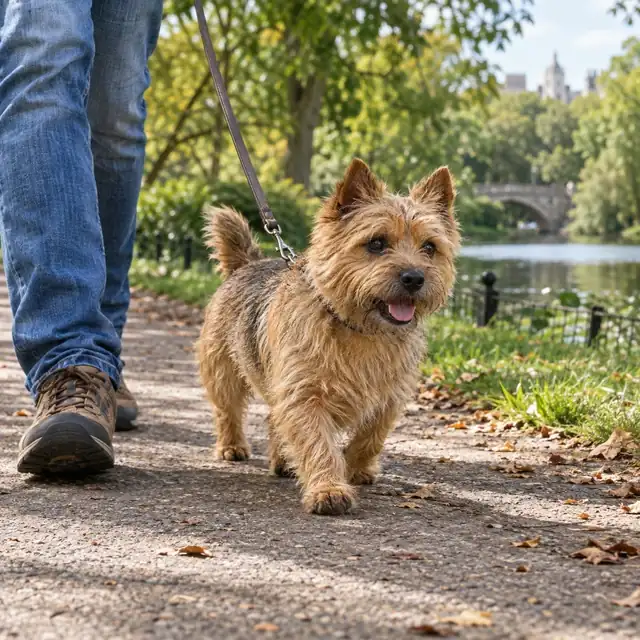
The Norwich terrier is a small (up to 25 cm) English terrier with erect ears and a hard wire coat. Lively, energetic, sensitive and attached to the family. Needs daily movement, creative training and regular trimming.

It is suitable for both an apartment and a house, if it walks and plays every day. He is tenacious, barks, and chases small animals.
Moderate or high: daily walks or games, especially active in the early years of life.
Learns quickly, but can be stubborn and gets bored quickly. Learning should be creative, short and rewarding.
The hard coat is trimmed approximately once every three months, removing dead hairs by hand or with a trimming knife. Haircut is simpler, but changes the structure of the wool. Between sessions, the wool is combed several times a week. Claws are trimmed, ears and teeth are cleaned.
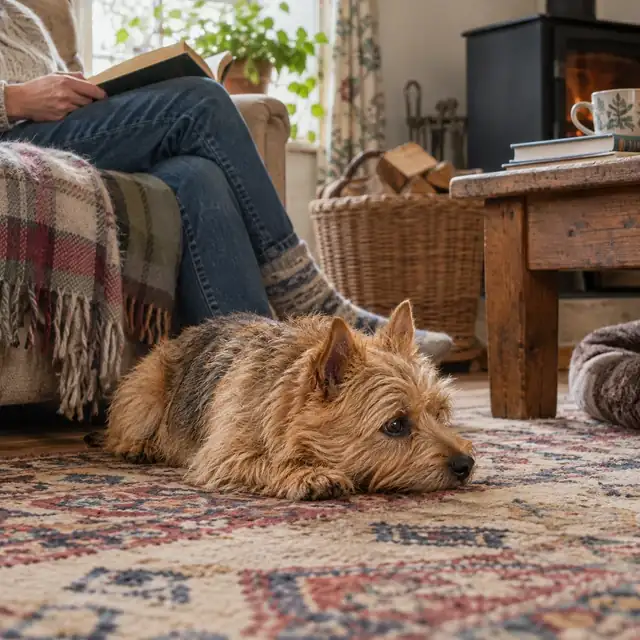
Loves family, usually gets along well with children. Games with children under supervision.
The terrier instinct is preserved: it chases small animals. Gets along with dogs during socialization.
Estimates help compare breeds. For zooaggression, 5/5 means less tendency to aggression towards dogs. The behavior and health of a particular dog depend on many factors.
Very high score: sensitive and gentle in the family. Behavior depends on upbringing.
Average score: A quick learner, but can be stubborn.
Average score: Terrier instinct needs control.
In the British cohort, the median lifespan of the breed was 14.0 years; small sample: 45 deaths. Among the described breed risks: hip dysplasia, epilepsy, degenerative myelopathy; examination of the parents is confirmed with the veterinarian.
Average score: wire wool needs regular trimming.
Hip Dysplasia: Parents look at joint health before choosing a puppy. Excess weight increases the load on the joints, so the puppy should not be overfed. Lameness is shown to the veterinarian.
Epilepsy is manifested by convulsions; the first attacks require a visit to the veterinarian. Hereditary epilepsy is diagnosed after excluding other causes.
Degenerative myelopathy is a progressive lesion of the spinal cord that gradually leads to weakness of the hind limbs. There is a DNA carrier test; the diagnosis is made by a veterinarian.