Human orientation
Very high score: devoted to family. Behavior depends on upbringing.
THE PAW CATALOG
Origin: Great Britain
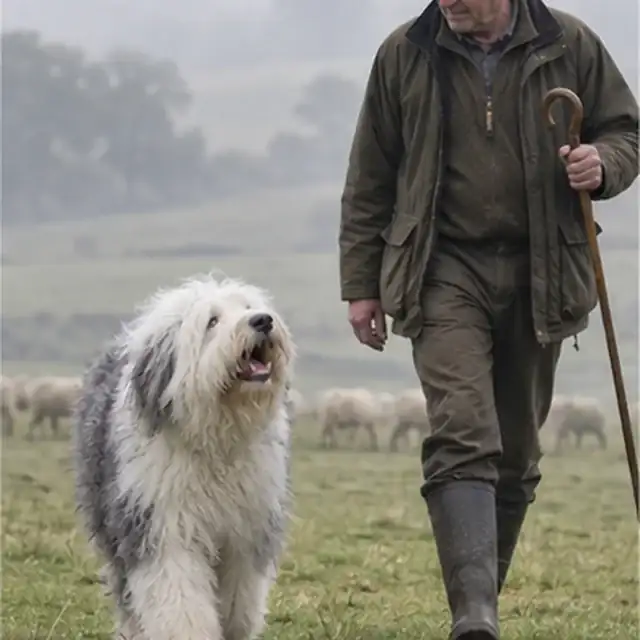
Bred for protection, grazing and racing of sheep. Shepherds relied on intelligent dogs to keep their flocks together in unfenced pastures and drive them to market.
The Old English Sheepdog (bobtail) is a large (from 56 cm) compact herding dog with lush, thick gray, blue or marble hair that does not shed. Equal in temperament, an excellent guard, never aggressive. Requires 2-3 hours of grooming per week.

Suitable for both active people and homemakers, if there is enough time for care. Loves family, but does not tolerate loneliness well.
Moderately high: walks, games and tasks every day.
Intelligent and loyal, but lively. Early obedience and socialization is strongly recommended.
Thick wool does not shed, so it needs daily or almost daily brushing: about 2-3 hours a week. Many owners cut it short. Ears and folds are checked.
Devoted to the family, but small children are not left nearby without supervision.
The herding instinct is preserved, so acquaintance with other animals is gradual.
Estimates help compare breeds. For zooaggression, 5/5 means less tendency to aggression towards dogs. The behavior and health of a particular dog depend on many factors.
Very high score: devoted to family. Behavior depends on upbringing.
Average score: smart but independent.
Average score: shepherd's instinct.
In the British cohort, the median lifespan of the breed was 12.1 years. Among the described breed risks: hip dysplasia, thyroid gland dysfunction, progressive retinal atrophy; examination of the parents is confirmed with the veterinarian.
Very low rating: lush coat requires hours of grooming per week.
Dysplasia of the hip joints: the results of examinations of both parents are requested. The puppy is not forced to make sharp jumps and long runs while the bones are growing. If the dog is limping or reluctant to get up, it is examined by a doctor.
Dysfunction of the thyroid gland: hormones are checked for inactivity, weight gain, and skin problems.
Progressive Retinal Atrophy: The retina is gradually destroyed, and over time the dog can become blind. Genetic tests and ophthalmological examinations of the parents allow you to assess the risk before buying.
Cataract: clouding of the lens; regular examinations by a veterinary ophthalmologist, changes in vision or the appearance of the eyes are not ignored.
Hearing impairment: congenital deafness is confirmed by a puppy hearing test. Kennels check hearing.