Human orientation
High score: good-natured and friendly. Behavior depends on upbringing.
THE PAW CATALOG
Origin: Great Britain
An ancient British hound, which the Kennel Club counts among vulnerable native breeds: there are about 600 dogs in the world. Otter hunting has been known since the early Middle Ages, but the otterhound as a separate breed has been traced only since the beginning of the 19th century.
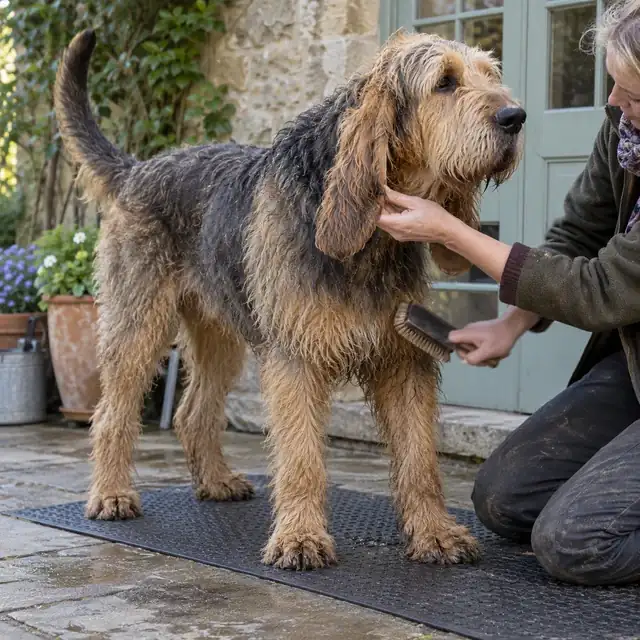
The Otterhound is a large (61-69 cm) old British hound with a coarse, oily double coat and webbed feet. Good-natured, even-tempered, inquisitive, with a low voice. Needs a lot of movement and reliable fencing.

Suitable for a family with a spacious house and a fenced plot. Loves peace, but is also capable of long walks.
Likes heavy workloads, but can relax on the couch at home. Needs a reliable fence: can jump a fence up to one and a half meters, although it rarely does this.
Good-natured and inquisitive, but the tracking instinct is strong: the sense of smell makes it persistent on the trail. Patience and outside supervision are required.
Coarse oily wool is combed several times a week. The ears are especially watched over, the claws are trimmed, and the teeth are cleaned.
Good-natured and even, can be a good family dog. Due to the size, games with children are supervised.
Generally friendly, but the hunting instinct of the tracking hound remains, so small animals are prey.
Estimates help compare breeds. For zooaggression, 5/5 means less tendency to aggression towards dogs. The behavior and health of a particular dog depend on many factors.
High score: good-natured and friendly. Behavior depends on upbringing.
Average score: inquisitive, but sense of smell prevails over commands.
Average score: generally friendly, but the hunting instinct needs to be controlled.
There is no comparable survival estimate for the breed in the British cohort used. Among the described birth risks: dysplasia of the hip joints, epilepsy, bloating or stomach twist; examination of the parents is confirmed with the veterinarian.
Medium-low rating: Coarse long coat requires regular grooming.
Dysplasia of the hip joints: the results of X-ray evaluations of the parents are studied before the purchase. The puppy is not forced to make sharp jumps and long runs while the bones are growing. Lameness is shown to the veterinarian.
Epilepsy is manifested by convulsions; the first attacks require a visit to the veterinarian. Hereditary epilepsy is diagnosed after excluding other causes.
Bloating or twisting of the stomach is a life-threatening condition. They feed in small portions, avoid loads before and after meals, and immediately go to the veterinarian at the first signs.