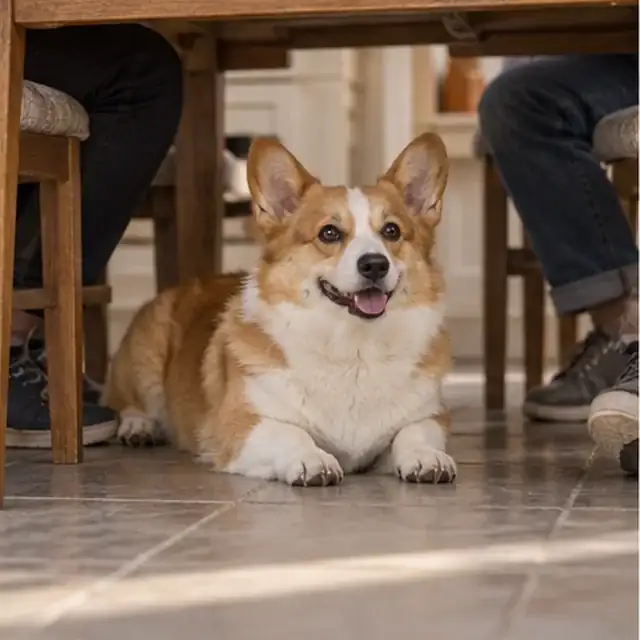
Human orientation
High score: Pembroke is very attached to the family and wants to be close. Behavior depends on socialization.
THE PAW CATALOG
Origin: Great Britain
The Pembroke was bred for cattle racing, hence his habit of nipping at the heels and directing traffic. It comes from Wales, where corgis were kept on farms. The breed is most famous for the British royal family.
The Pembroke Welsh Corgi is a small, sturdy herding dog with a fox face, triangular ears and short paws. Height at withers 25-30 cm, weight about 12-14 kg. Intelligent, alert and confident, with a strong work drive. Needs clear boundaries, daily activity and weight control to protect the back.
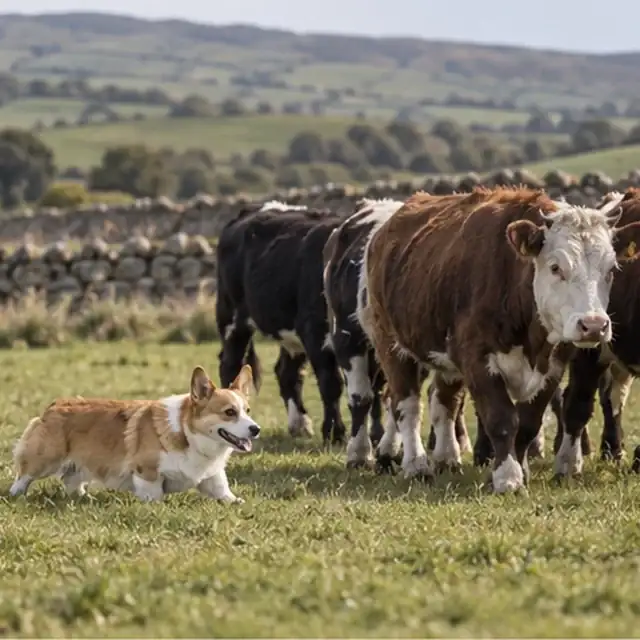
It is suitable for an apartment and a house, if it walks every day and has a mental load. Without work, becomes loud, destructive or prone to excess weight. Likes to be close to people and willingly participates in family affairs.
Daily walks, play and structured activities. Small stature does not mean low energy. Puppies and overweight dogs are restricted from jumping to protect their backs.
Smart and willing to learn, but self-confident. Clear boundaries and consistent structure are required. The desire to pinch the heels and make people fit is redirected from an early age to fetch, smell games, agility and obedience.
The double coat of medium length is combed daily during shedding, and several times a week the rest of the time. In addition, claw trimming and ear cleaning are required. They bathe as needed.
Playful and friendly, but the shepherd's instinct can manifest itself in attempts to catch running children by pinching their heels. Children are taught not to chase the dog, and the dog to obey the command "no".
He usually gets along with dogs during socialization, although he can command. Cats and other pets tolerate his activity better when familiarization takes place from an early age.
Estimates help compare breeds. For zooaggression, 5/5 means less tendency to aggression towards dogs. The behavior and health of a particular dog depend on many factors.
High score: Pembroke is very attached to the family and wants to be close. Behavior depends on socialization.
High Score: A quick learner, but assertiveness requires consistency and clear boundaries.
High score: usually gets along with dogs and other animals, but the shepherd's habit of chasing needs correction.
In the British cohort, the median lifespan of the breed was 13.2 years. Among the described breed risks: hip dysplasia, von Willebrand's disease, degenerative myelopathy; examination of the parents is confirmed with the veterinarian.
Average rating: The coat is combed frequently during the shedding season, and weight control and back care are also required.
Hip dysplasia is listed among the risks of the breed. They ask for the results of the parents' examinations and monitor the dog's weight.
Von Willebrand's disease is a blood coagulation disorder. There is a genetic test, so the breeder is asked about the results. Before operations, the veterinarian is warned.
Degenerative myelopathy - a slow lesion of the spinal cord; weakness of the hind legs occurs in adulthood. There is a genetic test.
Eye diseases include hereditary lesions that can reduce vision. A preventive eye examination by a veterinarian or an ophthalmologist is appropriate annually.