Human orientation
Average rating: hunter in the pack. Behavior depends on upbringing.
THE PAW CATALOG
Origin: France
French breed, official standard published in 1978. This is a hound bred for hunting. In the FCI classification, it belongs to group 6, large hounds, and requires work trials.
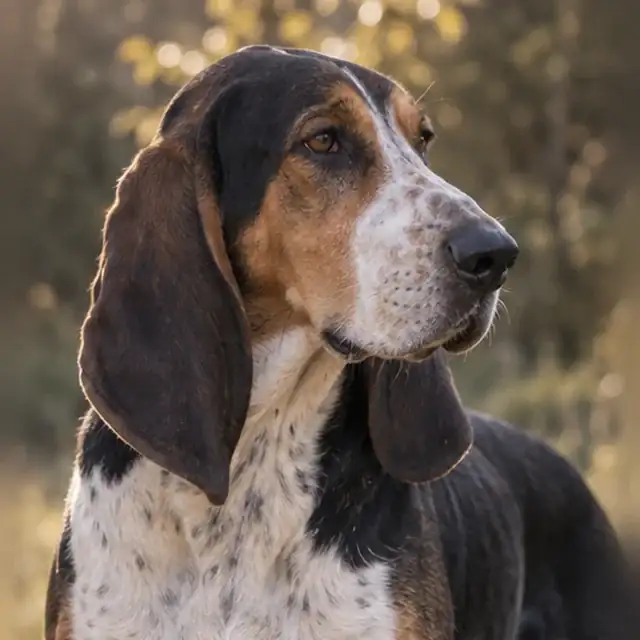
The Poitevin Hound is a large (60-72 cm) French Hound with a short, shiny, tricolor coat, ideal for free-range work. Sophisticated in appearance, with a stable character. For hunters and very active owners.
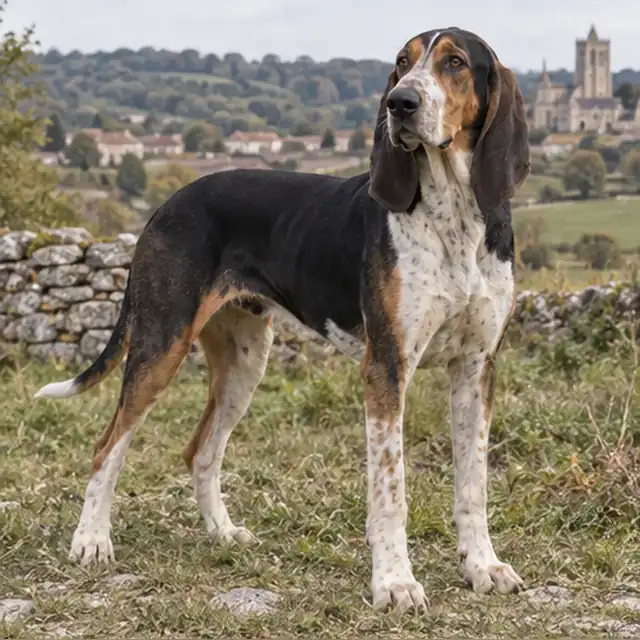
Suitable for hunters with a large territory. Not suitable for an apartment.
High: Long walks and running every day.
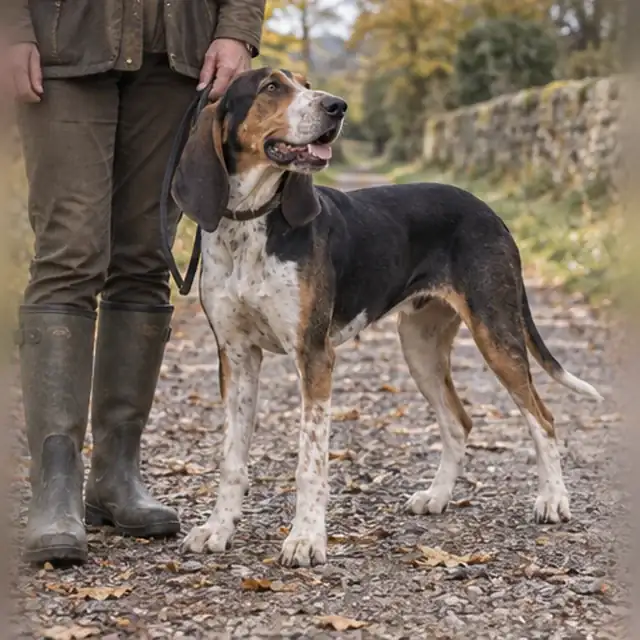
The sense of smell prevails over commands, patience, a leash and a fence are required. Aggressiveness or excessive timidity in the breed is undesirable.
Short hair is combed once a week. Hanging ears are examined, claws are trimmed, teeth are cleaned.
A balanced character is expected. Due to the size and energy, contact with children is supervised.
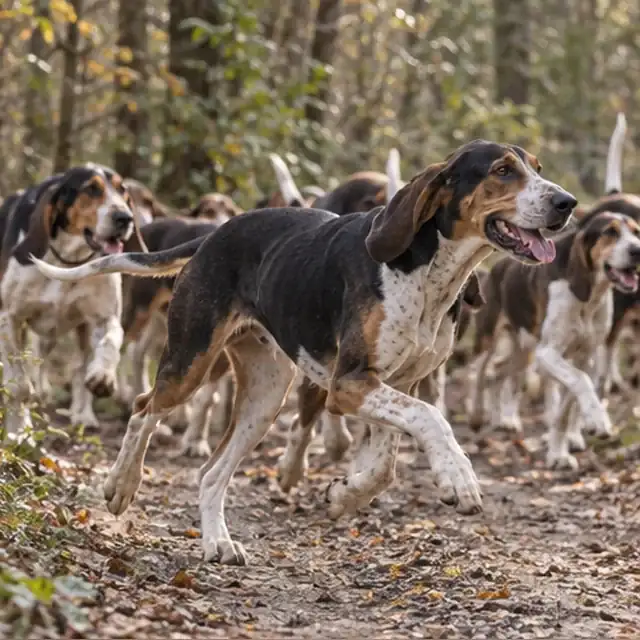
He works in a pack, so he usually gets along with dogs. Small animals are prey.
Estimates help compare breeds. For zooaggression, 5/5 means less tendency to aggression towards dogs. The behavior and health of a particular dog depend on many factors.
Average rating: hunter in the pack. Behavior depends on upbringing.
Average score: the sense of smell is distracting.
Average score: peaceful with dogs, small animals - prey.
There is no comparable survival estimate for the breed in the British cohort used. The absence of the mentioned risk does not prove the absence of hereditary diseases.
High score: short coat.
Breed Screening: Little is known about the hereditary diseases of the Poitevin Hound breed. The breeder is asked for documents with the results of examinations of both parents and current recommendations of the club.
Musculoskeletal apparatus: for the "Poitevensky hound" breed, the load is selected according to age and condition. Limping, pain or reluctance to move is a reason to consult a veterinarian.
Eyes and heart are checked during routine examinations. The schedule of in-depth checks is coordinated with the veterinarian and the breed club. It is useful to keep the results in the veterinary passport.