Human orientation
Medium-high rating: attached to family, reserved with strangers. Behavior depends on upbringing.
THE PAW CATALOG
Origin: Poland
The Polish Greyhound is not a direct relative of the English Greyhound. Greyhounds are mentioned in Polish chronicles of the time of Gallus Anonymous, and the breed is known in hunting literature and art since the 13th century. She is related to the greyhound and greyhound, hunted bustards and wolves, and was a favorite of the Polish nobility. After the Second World War, breeding in Poland almost stopped. In the 1970s, enthusiasts revived the breed, including Stanislav Cherniakovsky. FCI temporarily recognized it in 1989, and finally - in 2001.
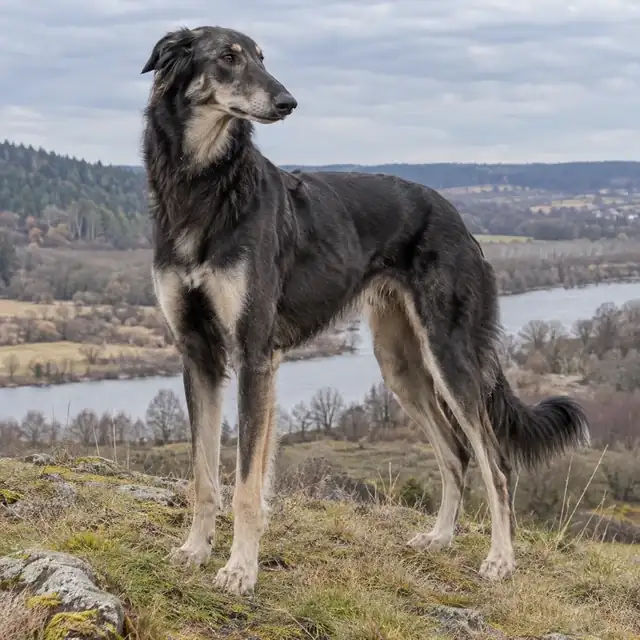
The Polish greyhound (Polish chart) is a large (about 68-81 cm in males) long-legged hunting dog with a strong body and a sickle-shaped tail. Tied to the owners, restrained to strangers, a territorial defender. Needs running, space and reliable fencing.

For active owners with a large area: likes to run fast, but quickly falls asleep at rest. Not suitable for a cramped apartment.
High: a full run in a safe place and long walks.
Independent, like most greyhounds. Classes are short, consistent, with a reward. Due to the hunting instinct, he walks on a leash or in a fenced area.
Double coat with a coarse undercoat that thickens in winter. Combing once a week, more often during shedding. Claws are trimmed, teeth are cleaned.
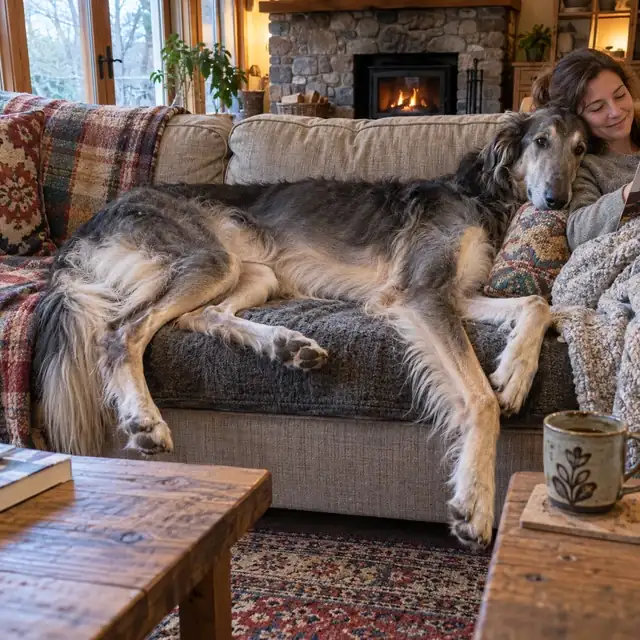
He is gentle with his family, but reserved with strangers. Due to the size, games with children are supervised.
Greyhounds are characterized by persecution, therefore small animals are prey. Acquaintances with dogs are gradual, because he is territorial.
Estimates help compare breeds. For zooaggression, 5/5 means less tendency to aggression towards dogs. The behavior and health of a particular dog depend on many factors.
Medium-high rating: attached to family, reserved with strangers. Behavior depends on upbringing.
Average score: independent.
Average score: hunting instinct and territoriality.
There is no comparable survival estimate for the breed in the British cohort used. The absence of the mentioned risk does not prove the absence of hereditary diseases.
High score: Grooming is easy, but requires movement and space.
Pedigree screening: There is little reliable data on the hereditary diseases of the Polish Greyhound breed, so the results of examinations of both parents should be requested in writing.
Musculoskeletal apparatus: for the "Polish Greyhound" breed, the load is selected according to age and condition. Limping, pain or reluctance to move is a reason to consult a veterinarian.
Heart and eyes are included in the list of annual examination. The frequency of special examinations is determined according to the recommendations of the club and the veterinarian. It is useful to keep the results in the veterinary passport.