Human orientation
Very high score: given to the owner. Behavior depends on upbringing.
THE PAW CATALOG
Origin: Portugal
She comes from Portugal, where she grazed and guarded livestock in the Alentejo region: sheep, cattle, horses, goats and pigs. Strong, hardy, tolerates temperature changes well. Locals jokingly call it a "monkey dog" for its monkey-like appearance and mannerisms.
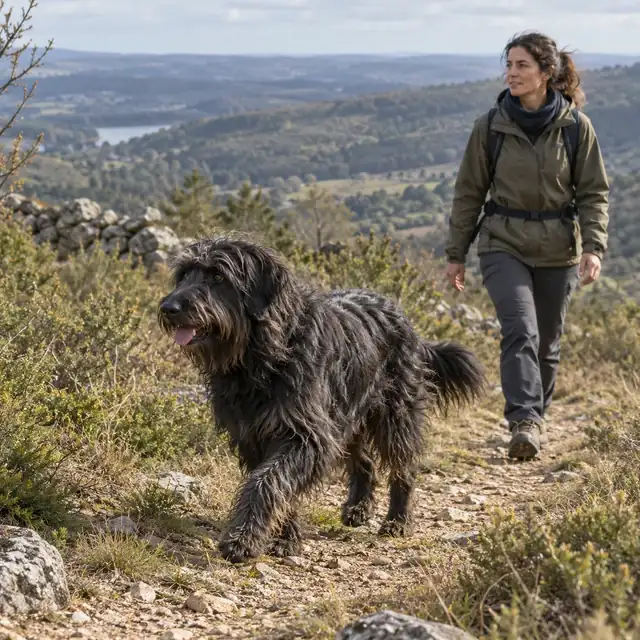
The Portuguese Shepherd (San da Serra de Ayres) is a medium (42-55 cm) herding dog with a long, thick goat-like coat without an undercoat. Extremely intelligent, lively, devoted to his master; wary of strangers. Needs tasks, activity and an experienced owner.

Suitable for active owners who like to work with a dog: agility, grazing, obedience. It is boring in a cramped room without a load.
High: a variety of activities, running and mental tasks every day.
Very smart, sensitive and dependent on its owner. Classes are varied, with rewards. The shepherd's instinct can manifest itself in herding children.
Long thick hair without undercoat, straight or slightly wavy, forms a beard, mustache and eyebrows, but does not cover the eyes. Comb as needed, usually once or twice a week. Ears are examined, claws are trimmed.
Tied to the owner and family. She is energetic and can push the little one, so the games are played under supervision.
The shepherd's instinct is preserved. She is alert, attentive at night, and warns of danger.
Estimates help compare breeds. For zooaggression, 5/5 means less tendency to aggression towards dogs. The behavior and health of a particular dog depend on many factors.
Very high score: given to the owner. Behavior depends on upbringing.
Very High Score: Extremely intelligent.
Average score: herding instinct needs correction.
There is no comparable survival estimate for the breed in the British cohort used. The absence of the mentioned risk does not prove the absence of hereditary diseases.
Average score: long coat without undercoat, but needs regular grooming.
Breed screening: detailed data on hereditary diseases of the Portuguese Shepherd breed are scarce. Ask the breeder for documentary results of examinations of both parents and current recommendations of the club.
Musculoskeletal apparatus: the growth and load of the Portuguese Shepherd breed should be age-appropriate. Lameness, pain, or reluctance to move require a veterinary examination.
The condition of the eyes and heart is included in the routine examination. How often to do special examinations is suggested by the breed club and the doctor. It is useful to keep the results in the veterinary passport.